

 Buy Now

Can Delay Spray Expire? Understanding Shelf Life, Storage, and Product Quality

A delay spray can be a convenient option for men who want more control over ejaculation. However, like other personal-care and topical products, it is not something that should be stored indefinitely. Ingredients may change over time, packaging can deteriorate, and improper storage may affect the product's quality.
Many users focus on how many sprays to apply or how long to wait before sexual activity, but there is another practical question worth considering: How long can you safely keep a delay spray, and how do you know when it is time to replace it?
The answer depends on the product's ingredients, formulation, packaging, expiration date, and storage instructions. A delay spray containing a topical anesthetic may be regulated differently from a product marketed as a cosmetic or personal-care preparation. Even products with similar purposes may have different shelf-life requirements.
This guide explains how expiration dates work, what can affect a delay spray over time, how to store one properly, and what warning signs to look for before using it.

Table of Contents
-
Why Does the Shelf Life of Delay Spray Matter?
-
Do Delay Sprays Have Expiration Dates?
-
What Determines How Long a Delay Spray Lasts?
-
Can Ingredients Change Over Time?
-
How Does Storage Temperature Affect Delay Spray?
-
Should You Keep Delay Spray in the Refrigerator?
-
Does Opening the Bottle Shorten Its Shelf Life?
-
Signs That a Delay Spray May No Longer Be Suitable for Use
-
Can You Still Use Delay Spray After Its Expiration Date?
-
How to Store Delay Spray Properly
-
What Should You Check Before Buying a Delay Spray?
-
Does Product Quality Affect the User Experience?
-
What About Herbal and Plant-Based Delay Sprays?
-
Where Does EjaGuard Fit Into Product Storage and Quality?
-
Frequently Asked Questions
-
Final Thoughts
1. Why Does the Shelf Life of Delay Spray Matter?
A delay spray is designed to be applied to sensitive external skin. Depending on its formulation, it may contain topical anesthetic ingredients, botanical ingredients, solvents, preservatives, fragrance components, or other substances that contribute to its intended performance.
Because these ingredients are part of a formulated product, its quality cannot be assumed to remain unchanged forever. Over time, exposure to heat, sunlight, air, and moisture may affect the formulation or packaging. A product that has been stored incorrectly may also deteriorate before the date printed on its label.
The issue is not simply whether an old spray still produces an effect. A product should remain suitable for its intended use, including maintaining its expected quality and meeting its safety requirements. The U.S. Food and Drug Administration explains that shelf life refers to the period during which a product can be expected to remain acceptable in terms of its condition and performance. Its guidance on cosmetic shelf life and expiration dating also discusses how storage and formulation can influence product stability.
For men who use delay spray occasionally, this question can be particularly relevant. A bottle purchased several months ago may sit in a drawer or travel bag for a long time before being used again. Checking its condition and storage history is a simple way to avoid unnecessary uncertainty.

2. Do Delay Sprays Have Expiration Dates?
Some delay sprays display an expiration date directly on the bottle or outer packaging. Others may provide a batch number, manufacturing information, or a recommended period of use after opening.
The exact labeling depends partly on how the product is classified and regulated. In the United States, certain topical products containing active drug ingredients are subject to drug-labeling requirements. Cosmetic products follow a different set of rules, and cosmetic manufacturers are not generally required by U.S. law to print a specific expiration date on every product.
This distinction matters because not every delay spray should automatically be treated as the same type of product. A spray containing an active topical anesthetic and making drug-related claims may be regulated differently from a product marketed for another purpose. The FDA explains the distinction between drug and cosmetic products in its guidance on cosmetic labeling and product claims.
When an expiration date is provided for an applicable drug product, it is intended to indicate the period during which the product is expected to meet relevant quality standards when stored under the stated conditions. The FDA's explanation of drug expiration dates describes how stability testing helps establish this period.
If a delay spray does not show an obvious expiration date, do not assume that it lasts forever. Check the manufacturer's instructions, look for a batch or lot number, and contact the company if the product's shelf life is unclear.

3. What Determines How Long a Delay Spray Lasts?
There is no universal expiration period that applies to every delay spray. Two products may have similar packaging and purposes but different formulations, manufacturing processes, and stability characteristics.
Several factors can influence shelf life.
Formulation: Different active ingredients and supporting ingredients may have different stability profiles. The type of solvent, preservative system, and overall composition can also affect how the product behaves over time.
Packaging: The bottle and dispensing mechanism help protect the formulation from environmental exposure. A well-designed container may reduce contact with air, light, and contaminants, while a damaged or poorly sealed package may offer less protection.
Manufacturing quality: Consistent production processes and appropriate quality-control procedures are important for maintaining product characteristics between batches.
Storage conditions: Heat, direct sunlight, excessive moisture, and repeated temperature changes may affect product stability. A product stored according to its instructions is more likely to remain within its intended quality period than one left in unsuitable conditions.
The FDA notes that drug expiration dates are supported by stability testing and are related to the storage conditions stated on the label. You can read the relevant regulatory background in 21 CFR § 211.137.
This is why it is not reliable to estimate a delay spray's shelf life simply by looking at its ingredients or comparing it with another brand. The manufacturer's product-specific information should always take priority.

4. Can Ingredients Change Over Time?
Yes. Depending on the formulation, some ingredients may gradually degrade or change when exposed to unfavorable conditions.
For example, exposure to heat or light can affect certain chemical components. Some formulations may also experience changes in color, texture, odor, or consistency. These changes do not necessarily occur in every product, and their appearance alone cannot identify exactly what has happened chemically.
Topical anesthetic products also need to maintain their intended formulation and quality. If an active ingredient changes or the formulation becomes unstable, the product may no longer perform as expected. However, it would be inaccurate to assume that every older spray automatically becomes weaker or stronger. The actual effect depends on the specific ingredients and conditions involved.
Other ingredients matter too. Preservatives help protect certain formulations against microbial growth, while solvents and stabilizing agents contribute to the product's overall characteristics. If the formulation changes, these supporting ingredients may not perform as intended.
The FDA discusses several ways personal-care products can deteriorate, including changes in texture, separation, odor, and the breakdown of preservatives. Its guidance on using cosmetics safely provides useful general information, although the precise requirements for a particular delay spray depend on its classification and formulation.
The important point is that a product's original appearance and performance should not be assumed to remain unchanged indefinitely.

5. How Does Storage Temperature Affect Delay Spray?
Temperature is one of the most important environmental factors to consider when storing a topical spray.
Excessive heat may accelerate certain chemical and physical changes. For example, a product left inside a parked car during warm weather can experience temperatures much higher than those in a typical indoor environment. Repeated exposure to heat may affect the formulation or packaging, depending on the product.
Very low temperatures can also be problematic for some formulations. Depending on the ingredients, cooling may change viscosity or cause temporary separation. Freezing may affect certain liquids or containers, and a product that has been frozen should not automatically be assumed to return to its original condition after thawing.
This does not mean that every delay spray needs to be stored in a temperature-controlled environment. Many products are designed for ordinary room-temperature storage. Others may have specific temperature requirements. The manufacturer's instructions are the most reliable guide.
For example, if a label says to store a product at room temperature, that instruction should be followed rather than placing the bottle in a hot bathroom cabinet or leaving it in a vehicle. The FDA's guidance on drug expiration dating and stability testing explains why storage conditions are part of evaluating product stability.
A practical rule is simple: avoid unnecessary temperature extremes and do not assume that a spray is unaffected just because its bottle still looks normal.

6. Should You Keep Delay Spray in the Refrigerator?
Not necessarily. Refrigeration is not a universal requirement for delay sprays.
Some products may have manufacturer-specific storage instructions that require refrigeration or another controlled temperature. Others are designed to be stored at normal room temperature. Placing a product in the refrigerator without checking its instructions is not automatically safer or better.
There are several reasons for this.
First, a formulation may not have been designed for repeated cooling and warming. Taking a bottle in and out of the refrigerator can expose it to temperature fluctuations. Second, condensation may develop on the outside of a cold container when it is brought into a warmer, more humid environment. Third, a formulation that is sensitive to low temperatures may change in consistency or appearance.
It is also worth distinguishing between refrigeration and freezing. A recommendation to keep a product cool does not mean it should be placed in a freezer.
If a manufacturer explicitly says that a product should be refrigerated, follow that instruction. If it says to store the product at room temperature, there is no reason to invent a different storage routine.
This is especially relevant when comparing products. A delay spray that requires refrigeration may be less convenient for travel or everyday storage than one designed for room-temperature conditions. However, convenience should never take priority over the storage instructions supplied by the manufacturer.

7. Does Opening the Bottle Shorten Its Shelf Life?
Opening a bottle can introduce additional factors that may influence how long a product remains suitable for use.
Before opening, the formulation is generally protected by its original packaging and seal. Once the bottle is in regular use, it may experience repeated contact with air, changes in temperature, and exposure to the surrounding environment.
The dispensing mechanism also matters. A spray nozzle may come into contact with skin, fingers, or other surfaces if it is handled carelessly. This does not mean that every use contaminates the product, but keeping the applicator clean is a sensible precaution.
Some personal-care products display a period-after-opening symbol, often represented by an open jar with a number followed by the letter M. For example, a symbol showing "12M" generally indicates a recommended period of use after opening, where that labeling convention applies. It should not be confused with a manufacturing date or a batch number.
If a delay spray has a specific after-opening instruction, follow it. If it does not, ask the manufacturer rather than assuming that the product can be used indefinitely after its first application.
The FDA also recommends paying attention to container cleanliness and proper storage when using personal-care products. Its consumer advice on cosmetic safety and storage offers useful general precautions.
A practical habit is to write the opening date on the package when you first use a product. This makes it easier to remember how long it has been in regular use.

8. Signs That a Delay Spray May No Longer Be Suitable for Use
An expiration date is important, but it is not the only thing worth checking. A product may become unsuitable before its printed date if it has been damaged or stored incorrectly.
Look out for the following warning signs:
A noticeable change in color: If the spray looks significantly different from when it was first opened, it may indicate a change in the formulation.
An unusual or unpleasant smell: A new, strong, or unexpected odor is a reason to stop using the product and contact the manufacturer.
Separation or visible particles: If a product that was previously uniform develops unusual layers, sediment, or particles, do not assume that shaking it will restore its original quality.
A damaged bottle or nozzle: Cracks, leaks, loose caps, or a malfunctioning spray mechanism may compromise the packaging or make application unreliable.
Unexpected changes in texture: A liquid that becomes unusually thick, sticky, or inconsistent should be treated cautiously.
An unexpected skin reaction: If a product that was previously tolerated suddenly causes burning, redness, itching, or irritation, stop using it. A change in the product may be one possible explanation, although skin reactions can also have other causes.
These signs are not a substitute for laboratory testing. A product can look normal and still be past its appropriate use period. Likewise, a minor visual difference does not necessarily prove that a product is unsafe. When in doubt, do not experiment on sensitive skin.
For further guidance on how to respond to unexpected product changes or reactions, the FDA provides information about using cosmetics safely and reporting product problems.

9. Can You Still Use Delay Spray After Its Expiration Date?
It is best not to use a product beyond its stated expiration date unless the manufacturer or an appropriate healthcare professional provides specific guidance.
For drug products, an expiration date represents the period during which the manufacturer has established that the product meets the applicable quality standards under the stated storage conditions. After that date, there may be insufficient evidence to confirm that the product still meets those standards.
This does not mean that every expired product immediately becomes dangerous. However, it does mean that its quality and suitability can no longer be assumed.
The same caution applies if a spray has been stored in extreme heat, exposed to direct sunlight for long periods, or left in a damaged container. Even if the expiration date has not passed, poor storage may affect the product.
Do not try to compensate for an older spray by applying more. Increasing the amount does not restore a potentially degraded formulation and may increase the chance of irritation or excessive local effects.
The FDA advises consumers not to rely on expired medicines because their strength, quality, or purity may no longer be assured. Its article on the risks of using expired medicines explains why expiration dates should be taken seriously.
If you are unsure whether a particular bottle is still suitable, replacing it is generally a more sensible choice than testing it on sensitive skin.
10. How to Store Delay Spray Properly
Good storage habits do not require much effort. A few simple steps can help protect a product during its intended shelf life.
Keep it away from direct sunlight. Avoid placing the bottle on a sunny windowsill, near a window, or anywhere it receives prolonged direct light.
Avoid excessive heat. Do not leave the spray in a parked car, near a heater, or in another location where temperatures may become unusually high.
Follow the recommended temperature range. Use the storage instructions on the label rather than assuming that all sprays should be refrigerated or kept at room temperature.
Keep the cap closed. Close the bottle securely after each use to reduce unnecessary exposure to the surrounding environment.
Keep the nozzle clean. Avoid touching the opening directly or allowing the applicator to come into contact with unclean surfaces.
Store it in a dry location. A cool, dry cabinet or drawer may be suitable when consistent with the manufacturer's instructions. Avoid damp areas where moisture can accumulate.
Keep it away from children. Store topical products securely and follow any child-safety warnings on the packaging.
Keep the original packaging when practical. The outer box may contain important information such as the batch number, expiration date, ingredient list, and manufacturer details.
These precautions are useful for many personal-care products, but they do not replace product-specific directions. The FDA's advice on cosmetic shelf life and proper storage explains why heat, moisture, and packaging conditions matter.

11. What Should You Check Before Buying a Delay Spray?
Storage and expiration are not only concerns after purchase. They are also worth considering when choosing a product.
Before buying a delay spray, look beyond the front of the bottle. Product descriptions and marketing claims may explain the intended experience, but they do not always provide all the practical information needed to make an informed decision.
Here are several things to check.
1. Ingredient information
Look for a clear ingredient list. If the product contains an active anesthetic, identify the ingredient and its stated concentration where applicable. If it uses botanical ingredients, check whether the manufacturer provides meaningful ingredient information rather than relying only on broad terms such as "natural."
2. Expiration or shelf-life information
Check whether an expiration date, manufacturing date, or after-opening period is provided. If the information is missing or unclear, contact the manufacturer before purchasing.
3. Storage instructions
Look for specific temperature or storage requirements. If a product requires refrigeration, consider whether you can consistently follow that instruction.
4. Manufacturer information
A clearly identified manufacturer or responsible company makes it easier to ask questions about ingredients, storage, batch numbers, and product concerns.
5. Packaging condition
For an in-store purchase, check that the container is intact and that any tamper-evident seal is undamaged. For an online purchase, buy from a reliable seller and inspect the package when it arrives.
6. Directions and warnings
The product should explain how it is intended to be used and identify relevant precautions. A product with unclear directions may create unnecessary uncertainty.
The FDA's overview of the OTC Drug Facts label explains the types of information consumers should look for on applicable nonprescription drug products.
A well-presented package is not proof of quality by itself. Clear labeling, traceable product information, and accessible manufacturer support are more useful indicators when evaluating a product.

12. Does Product Quality Affect the User Experience?
Yes, product quality can influence the overall experience, although it is important not to assume that every difference in results is caused by expiration or storage.
A delay spray is a formulated product. Its consistency, dispensing mechanism, and ingredient characteristics all contribute to how it is applied and how it feels during use.
For example, a malfunctioning nozzle may produce an inconsistent spray pattern. A damaged cap may allow unnecessary exposure to the environment. A formulation that has visibly changed may no longer apply in the same way as it originally did.
However, not every variation in sexual experience is a product-quality issue. Individual sensitivity, application technique, timing, arousal, stress, and other factors can all influence how someone experiences a delay spray.
If a product appears normal and is within its stated use period, but the results vary, it is worth reviewing the directions rather than immediately assuming that the spray has expired. Our guide to how to use delay spray provides additional information about following product instructions.
It is also important to distinguish between consistency and effectiveness. A product that dispenses evenly is not automatically more effective for every user. Likewise, a product that produces a noticeable effect once may not produce exactly the same experience every time.
The goal should be to use a product that is properly manufactured, stored, labeled, and applied according to its instructions—not to chase a particular result by increasing the amount or ignoring safety information.
13. What About Herbal and Plant-Based Delay Sprays?
Herbal and plant-based delay sprays are sometimes viewed as products that do not need the same attention to storage as conventional topical products. That assumption is not reliable.
A botanical ingredient is still a chemical substance, and its stability depends on its composition and the overall formulation. Plant-derived ingredients can be affected by heat, light, oxidation, and other environmental conditions.
The presence of botanical ingredients also does not automatically mean that a product is safer, more stable, or less likely to cause irritation. The FDA specifically cautions consumers against assuming that products labeled "natural" are necessarily safer than products made with other types of ingredients.
Preservative systems are another consideration. Some formulations rely on preservatives to help control microbial growth. The type and effectiveness of the preservation system can influence how the product should be stored and how long it remains suitable for use.
For these reasons, herbal delay sprays should be evaluated according to their own formulation and manufacturer instructions. Do not assume that a plant-based spray can be kept for longer simply because it does not contain a familiar anesthetic ingredient.
The FDA's explanation of natural and organic claims in personal-care products is a useful reminder that ingredient origin alone does not establish product safety.
Consumers should pay attention to the complete formula, packaging, storage instructions, and expiration information rather than relying on a single marketing description.
14. Where Does EjaGuard Fit Into Product Storage and Quality?
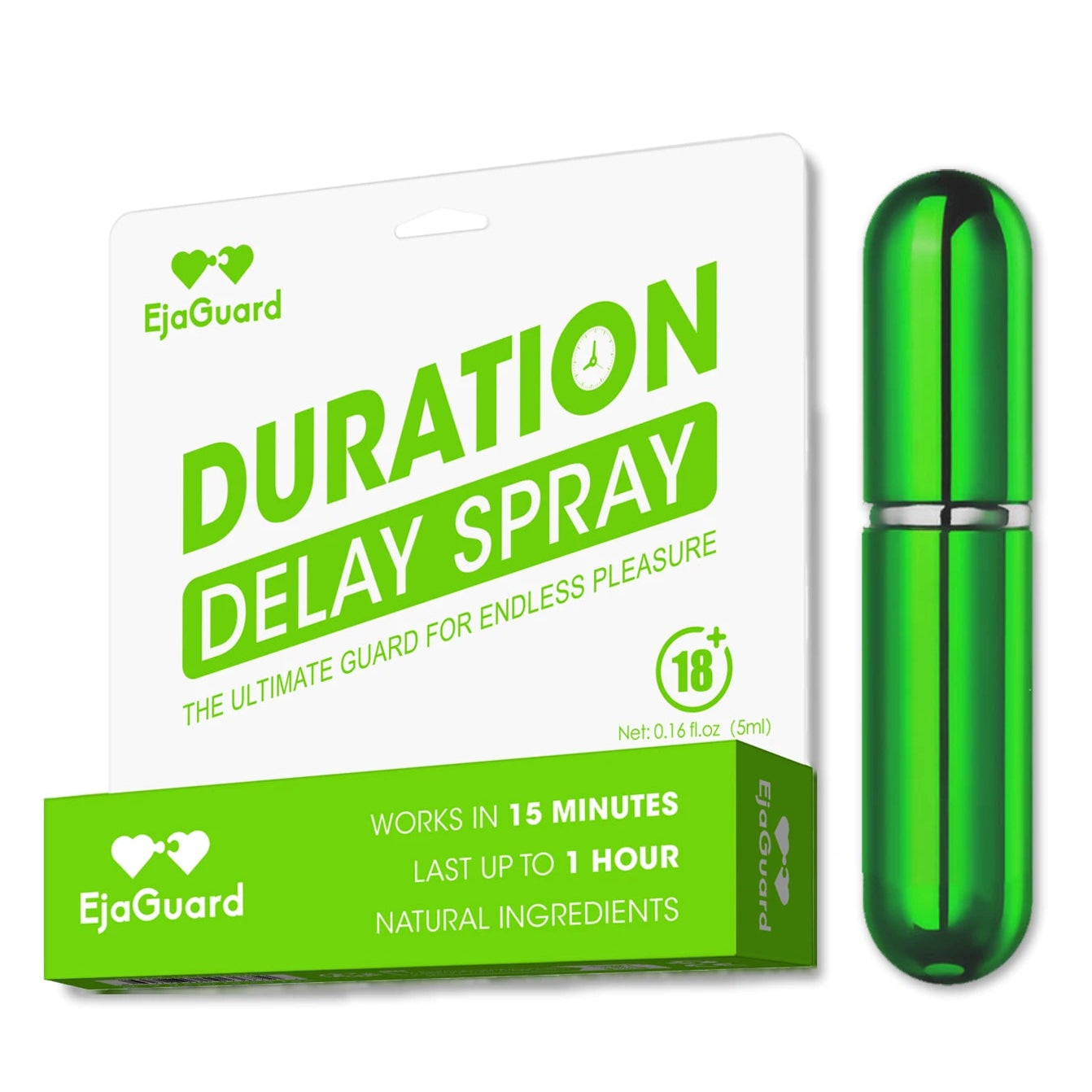
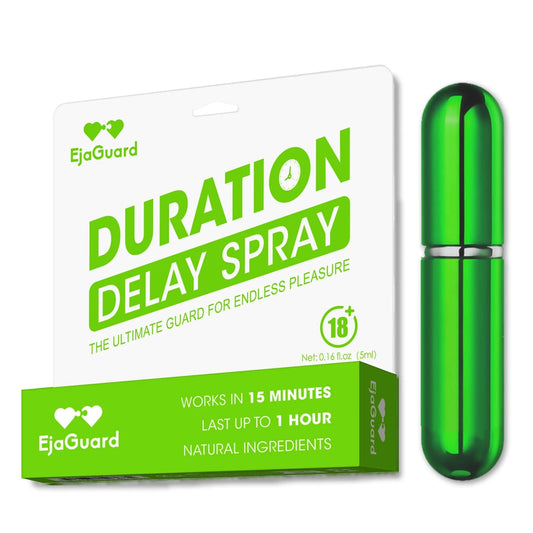
EjaGuard is positioned as a herbal delay spray for men who are interested in a milder, more sensation-conscious approach rather than an experience centered on strong numbing.
For any delay spray, including EjaGuard, the most important storage principle is to follow the product's own packaging and manufacturer instructions. General advice about room temperature, refrigeration, or shelf life should not be treated as a substitute for product-specific guidance.
If you are considering EjaGuard, review its product information and directions before use. You can find the product details on the EjaGuard Delay Spray page.
A few practical habits are worth keeping in mind:
-
Check the bottle and packaging for the relevant product information.
-
Follow the stated storage conditions.
-
Keep the cap and spray nozzle clean.
-
Avoid leaving the bottle in a hot vehicle or in direct sunlight.
-
Do not use a product that is expired, damaged, or showing unusual changes.
-
Contact the manufacturer if you need clarification about a batch number, expiration date, or storage requirement.
EjaGuard's herbal positioning does not remove the need for these precautions. A plant-based formulation still needs appropriate handling and quality control.
The broader principle is simple: choosing a product that fits your preferences is only one part of responsible use. Understanding how to store it and when to replace it matters too.
15. Frequently Asked Questions
How long does an unopened delay spray last?
There is no single shelf-life period for all delay sprays. The expected shelf life depends on the formulation, packaging, manufacturing process, and product classification. Check the expiration date or contact the manufacturer for product-specific information.
How long can I use a delay spray after opening it?
This depends on the product. Some packages provide a period-after-opening instruction, while others provide only an expiration date or manufacturer guidance. Do not assume that every spray has the same recommended period after opening.
Does delay spray need to be refrigerated?
Not necessarily. Some products may have specific refrigeration requirements, while others are designed for room-temperature storage. Follow the instructions printed on the product rather than refrigerating it automatically.
Can heat damage delay spray?
Excessive heat may affect certain ingredients, formulations, or packaging. Avoid leaving a bottle in a hot car, near a heater, or in direct sunlight for extended periods.
Can I use a delay spray if its color has changed?
A noticeable or unexpected color change is a reason to stop using the product and contact the manufacturer. Do not assume that the change is harmless, especially if it occurs alongside an unusual smell, separation, or texture change.
What if the bottle is expired but still looks normal?
Appearance alone cannot confirm that a product remains suitable for use. Follow the expiration information and manufacturer guidance. For applicable drug products, the expiration date is based on stability testing rather than visual appearance.
Can I use more spray if an older bottle seems less effective?
No. Increasing the amount is not a reliable way to compensate for a product that may have deteriorated. Do not exceed the product's directions. If the bottle is expired or has changed, replace it rather than trying to adjust the application.
Are herbal delay sprays more stable than anesthetic sprays?
Not necessarily. Stability depends on the full formulation, ingredients, packaging, and storage conditions. Plant-based ingredients can also change over time, so herbal products still need appropriate shelf-life information.
Should I throw away a delay spray if the nozzle stops working?
A malfunctioning nozzle can make application inconsistent and may indicate a packaging problem. Do not try to repair or modify the container in a way that could contaminate the product. Contact the manufacturer or replace it if necessary.
What should I do if an old delay spray causes irritation?
Stop using it. If irritation persists, becomes severe, or is accompanied by swelling, pain, or another concerning symptom, seek medical advice. Do not continue applying the product to see whether the reaction improves.
16. Final Thoughts
A delay spray is not a product that should be stored indefinitely or used without checking its condition. Its shelf life depends on the formulation, packaging, manufacturing quality, and storage environment.
The most useful habits are straightforward: check the expiration information, follow the recommended storage conditions, keep the bottle properly closed, avoid excessive heat and sunlight, and pay attention to unusual changes in appearance, smell, or texture.
It is also important to remember that different delay sprays may have different requirements. An anesthetic-based product and a herbal formulation should not automatically be treated as interchangeable when it comes to shelf life or storage.
For men who use delay sprays occasionally, checking the bottle before each use is a simple but worthwhile step. A product that is properly stored, within its intended use period, and applied according to its instructions provides a more reliable starting point for a comfortable experience.
Ultimately, responsible product use is not only about choosing the right spray. It is also about understanding the product, respecting its limitations, and knowing when it is time to replace it.
