

 Buy Now
Can Fear of Pregnancy Affect Premature Ejaculation? Understanding Contraception Anxiety and Sexual Response

Introduction: Can Worrying About Pregnancy Change Your Sexual Experience?
Sex is supposed to be an enjoyable and intimate experience, but for some men, it can also come with a considerable amount of mental pressure. Concerns about an unintended pregnancy, whether contraception is being used correctly, or what might happen if a contraceptive method fails can make it difficult to relax and stay focused during sex.
When these concerns become prominent, some men notice changes in their sexual response. They may feel more nervous, become overly aware of their arousal, rush through sex, or find it difficult to maintain a comfortable rhythm. Others may experience the opposite problem, such as difficulty maintaining an erection or reaching orgasm.
This raises an interesting question: Can fear of pregnancy contribute to premature ejaculation (PE)?
The relationship is more complicated than it may initially seem. Pregnancy-related concerns can affect sexual behavior, emotional comfort, and intimacy, but there is limited direct evidence that fear of pregnancy itself causes premature ejaculation. Sexual response is influenced by a combination of physical, psychological, relational, and situational factors.
Understanding how these concerns work may help men approach sexual health more realistically, without assuming that every change in ejaculation timing is a medical problem or that anxiety is necessarily the cause.

Table of Contents
-
What Is Pregnancy Anxiety in Sexual Relationships?
-
Can Fear of Pregnancy Directly Cause Premature Ejaculation?
-
How Pregnancy Concerns Affect the Brain During Sex
-
Why Some Men Rush During Sexual Activity
-
Can Contraception Concerns Affect Erectile Function?
-
The Difference Between Pregnancy Anxiety and Performance Anxiety
-
How Pregnancy Concerns Can Affect Both Partners
-
Does Condom Use Eliminate Pregnancy Anxiety?
-
How to Make Sex Feel Less Stressful
-
What If Pregnancy Anxiety Happens Even With Reliable Contraception?
-
Can Premature Ejaculation Increase Fear of Pregnancy?
-
Practical Ways to Manage Pregnancy-Related Sexual Stress
-
Where Do Delay Sprays Fit Into PE Management?
-
When Should You Seek Professional Help?
-
Final Thoughts
1. What Is Pregnancy Anxiety in Sexual Relationships?
Pregnancy anxiety refers to the worry, fear, or uncertainty surrounding the possibility of becoming pregnant. It can occur even when contraception is being used, particularly when someone is unsure whether a method was used correctly or how reliable it is.
For some couples, these concerns are occasional and manageable. For others, they become a recurring source of stress before, during, or after sexual activity. A missed pill, a condom that slips, uncertainty about contraceptive effectiveness, or simply a lack of confidence in one's knowledge can create considerable worry.
Pregnancy concerns are not limited to people who have experienced an actual contraceptive failure. Someone may be using contraception consistently but still feel anxious because they do not fully understand how it works. In these situations, the uncertainty itself can become the source of stress.
Learning how sexual health concerns are evaluated can help put these experiences into context. The CDC's contraception information provides a useful starting point for understanding available contraceptive methods, their effectiveness, and how they are used.

2. Can Fear of Pregnancy Directly Cause Premature Ejaculation?
There is currently no strong evidence establishing fear of pregnancy as a direct cause of premature ejaculation. PE is a multifactorial condition, and researchers have investigated neurological, biological, psychological, and relationship-related factors that may contribute to it.
However, pregnancy concerns may influence the circumstances surrounding sexual activity. A man who feels anxious about the consequences of sex might experience heightened tension, become distracted by intrusive thoughts, or feel pressure to finish quickly. These responses could potentially affect his subjective experience of arousal and control, although the relationship is not predictable or the same for everyone.
Sexual medicine literature recognizes that reproductive concerns can influence sexual response. Interestingly, concerns about conception and semen loss have also been discussed in relation to delayed ejaculation, demonstrating that psychological factors do not always produce the same response in every individual.
The European Association of Urology's guidelines on ejaculation disorders explain that PE can involve several different patterns and contributing factors. This is an important reminder that ejaculation problems should not be reduced to a single explanation, such as anxiety, sensitivity, or a specific sexual situation.

3. How Pregnancy Concerns Affect the Brain During Sex
Sexual response involves more than physical stimulation. The brain processes sensations, emotions, expectations, attention, and the surrounding environment, all of which can influence how a person experiences sexual activity.
When someone is worried about pregnancy, their attention may shift away from pleasurable sensations and toward monitoring potential risks. Instead of staying mentally present, they may repeatedly think about questions such as:
-
Did we use contraception correctly?
-
What if the condom breaks?
-
Is there a chance of pregnancy?
-
Should we stop and check?
-
What would happen if something went wrong?
This type of mental monitoring can make sexual activity feel less spontaneous. It may also interfere with relaxation, communication, and the ability to respond naturally to changes in arousal.
Psychological attention during sex is complex. Being distracted does not automatically cause PE, and some men may actually experience reduced arousal or difficulty maintaining an erection when they are worried. Others may feel more stimulated or tense. The same concern can therefore produce different responses depending on the person and situation.
For a broader understanding of how psychological and physical factors interact, the National Institute of Mental Health provides educational information about anxiety, stress, and emotional well-being.

4. Why Some Men Rush During Sexual Activity
When pregnancy is a concern, some men may develop a habit of rushing through sexual activity. This is not necessarily a conscious decision. It may happen because they want to finish before something goes wrong, avoid prolonged uncertainty, or minimize the time they spend feeling anxious.
For example, a man who worries about condom failure may find himself focusing on the possibility of an accident rather than the experience itself. He might unconsciously increase his pace, become more tense, or feel that sex needs to end quickly.
Over time, if rushing becomes a repeated pattern, it may make it harder to recognize changes in arousal or develop a comfortable sexual rhythm. However, this does not mean that rushing automatically creates a lasting ejaculation problem. A temporary response to a stressful situation is not the same as a persistent sexual dysfunction.
This is one reason it can be helpful to distinguish between occasional early ejaculation and a recurring problem that causes significant distress. Our article on how premature ejaculation is diagnosed and why it is more than just a stopwatch explores how timing, control, consistency, and personal distress all contribute to understanding PE.

5. Can Contraception Concerns Affect Erectile Function?
Pregnancy-related anxiety may affect erection quality in some men, especially when worry becomes strong enough to interfere with arousal or concentration.
An erection depends on coordinated nervous system activity, blood flow, and mental and physical stimulation. When a man feels tense, distracted, or under pressure, he may have difficulty becoming fully aroused or maintaining an erection. This does not mean that every episode of erection difficulty is psychological, but stress can be one contributing factor.
Some men respond to erection concerns by trying to rush penetration or sexual activity before they lose their erection. If ejaculation happens sooner than they intended, they may interpret the experience as PE. In other cases, the main issue may actually be erectile difficulty rather than ejaculation control.
These conditions can overlap, and understanding which problem is occurring is important. The American Urological Association's sexual health resources offer information on the evaluation of male sexual dysfunctions and the importance of identifying the underlying issue rather than treating symptoms in isolation.
If erection difficulties and early ejaculation occur together regularly, it may be useful to discuss both with a healthcare professional instead of assuming that ejaculation timing is the only concern.

6. The Difference Between Pregnancy Anxiety and Performance Anxiety
Pregnancy anxiety and sexual performance anxiety can overlap, but they are not exactly the same.
Pregnancy anxiety is generally centered on the potential consequences of sexual activity, particularly the possibility of an unintended pregnancy. Performance anxiety, on the other hand, involves concerns about sexual ability, such as lasting long enough, maintaining an erection, satisfying a partner, or meeting expectations.
In practice, one concern can trigger the other.
A man who is worried about pregnancy may become anxious during sex. If he then ejaculates sooner than expected, he may begin worrying about his sexual performance as well. During the next sexual encounter, he may carry both concerns into the experience.
This can create a cycle:
-
Concern about pregnancy creates mental tension.
-
Tension makes sex feel less comfortable.
-
A difficult sexual experience creates new worries about performance.
-
Anticipatory worry increases during the next encounter.
-
The person begins monitoring his sexual response more closely.
The cycle does not happen to everyone, and it should not be assumed to be the cause of persistent PE. But recognizing the difference between the original concern and the secondary performance worry can make it easier to address the problem.
The European Society for Sexual Medicine's educational and professional resources discuss sexual health in a broader biopsychosocial context, including the interaction of psychological and interpersonal factors with sexual function.

7. How Pregnancy Concerns Can Affect Both Partners
Pregnancy anxiety is often a shared concern, even though partners may experience it differently.
One partner may be worried about contraception, while the other feels responsible for making sure everything is safe. Sometimes both partners feel anxious but do not discuss it openly. This can lead to misunderstandings, awkwardness, or a feeling that sex is becoming more stressful than enjoyable.
A couple may also have different levels of comfort with pregnancy risk. One partner might feel reassured by the contraceptive method they are using, while the other continues to worry. Without communication, each person may assume the other is relaxed or confident when that is not actually the case.
These differences can influence intimacy. Some couples may avoid sex altogether, while others may experience less spontaneity or find it difficult to stay emotionally connected during sexual activity.
The goal is not to eliminate every possible concern. Responsible sexual health naturally involves thinking about contraception, consent, and consequences. The goal is to prevent these concerns from becoming constant sources of tension that interfere with intimacy.
For men experiencing PE, open communication may also help reduce the pressure to perform or hide their concerns. The AUA/SMSNA ejaculation disorder guideline recognizes the importance of evaluating psychological and interpersonal factors as part of PE care.

8. Does Condom Use Eliminate Pregnancy Anxiety?
Condoms are an important contraceptive option, but using one does not necessarily eliminate anxiety about pregnancy.
Some people feel reassured as soon as a condom is used. Others remain concerned about whether it was put on correctly, whether it slipped, whether it was damaged, or whether it was removed too soon. These concerns may persist even when the condom appears to have been used correctly.
Understanding proper condom use can help reduce uncertainty. Checking expiration dates, using condoms correctly from the beginning of genital contact, choosing an appropriate fit, and avoiding practices that can damage condoms are practical steps that support safer sex.
It is also important to understand that condoms are not the only contraceptive option. Couples may choose to discuss other methods with a healthcare provider depending on their needs, preferences, and health circumstances.
The Planned Parenthood guide to birth control explains different contraceptive methods and provides practical information that may help people make more informed decisions.
For men who experience PE, condom use may sometimes change sensation, but it is not a guaranteed way to delay ejaculation. Some men find condoms helpful, while others notice little difference. A condom should be selected for protection and fit rather than relied on as the sole solution for ejaculation control.

9. How to Make Sex Feel Less Stressful
If pregnancy concerns are affecting sexual comfort, it may be helpful to address the worry before sexual activity rather than trying to manage it entirely in the moment.
One practical approach is to discuss contraception outside the bedroom. Conversations about protection can be more productive when neither partner feels rushed or pressured. Couples can review what method they are using, how it works, and what they would do if an unexpected situation occurred.
It may also help to avoid treating intercourse as the only goal of sexual activity. When the experience is focused entirely on penetration, erection quality, or ejaculation timing, it can become easier to feel pressured. Allowing room for other forms of intimacy can make sexual experiences feel less like a test.
A few practical ideas include:
-
Agreeing on contraception and protection before sex.
-
Keeping condoms accessible so there is less interruption or uncertainty.
-
Taking time to relax before sexual activity.
-
Communicating if either partner feels uncomfortable.
-
Slowing down without treating it as a failure.
-
Avoiding constant checking of erection or ejaculation timing.
-
Remembering that sexual experiences do not have to follow a fixed script.
These steps do not guarantee a change in ejaculation timing, but they may help reduce unnecessary pressure and make sex more comfortable.
10. What If Pregnancy Anxiety Happens Even With Reliable Contraception?
Some people continue to feel anxious even when they are using contraception consistently and have no specific reason to believe that it has failed.
This may happen because they overestimate the likelihood of pregnancy, have difficulty tolerating uncertainty, have had a previous stressful experience, or repeatedly seek reassurance without feeling fully reassured.
For example, a man may check the condom several times after sex, search online for pregnancy symptoms, or repeatedly ask his partner whether everything is okay. These behaviors may temporarily reduce anxiety but can also keep the concern active if reassurance never feels sufficient.
In these circumstances, simply learning more about contraception may not completely resolve the worry. It can be helpful to distinguish a practical sexual health question from an ongoing anxiety pattern.
If there is a genuine contraceptive concern, appropriate medical or contraceptive guidance should be sought promptly rather than relying on guesswork. If the worry is persistent despite reasonable reassurance, mental health support may help address the anxiety itself.
The NHS information on contraception provides practical information about methods and what to do when contraception may not have worked as intended.
11. Can Premature Ejaculation Increase Fear of Pregnancy?
Although pregnancy concerns may influence sexual behavior, the relationship can also work in the opposite direction.
Men who experience PE may feel that sex is unpredictable or that they have less control over the experience. If they already worry about pregnancy, an early ejaculation may add another layer of stress, particularly if they are unsure whether ejaculation occurred while contraception was being used correctly.
This can lead to questions such as:
-
Did ejaculation happen before the condom was put on?
-
Was the condom used correctly throughout intercourse?
-
Did it slip or break?
-
Is there any contraceptive concern that needs to be addressed?
It is important to separate the ejaculation-control issue from the pregnancy-risk issue. Ejaculation occurring earlier than expected does not automatically mean contraception has failed. The actual risk depends on the circumstances, including contraceptive use and whether sperm could have entered the vagina.
For this reason, men experiencing PE may benefit from having reliable information about both sexual function and contraception. Addressing one concern without understanding the other may leave unnecessary worry.
The CDC's guidance on condom use provides practical information on correct condom use and protection.
12. Practical Ways to Manage Pregnancy-Related Sexual Stress
Managing pregnancy-related anxiety involves more than simply telling yourself to relax. If the worry is connected to uncertainty about contraception, the most useful first step is often to address that uncertainty directly.
Build confidence in contraception
Understand the contraceptive method you and your partner are using. Know how to use it correctly, what can reduce its effectiveness, and what to do if something goes wrong. Avoid relying on social media anecdotes or incomplete information to make decisions.
Talk about concerns before sex
If one partner feels worried, it is better to discuss it openly than to pretend everything is fine. A short conversation about protection, comfort, and expectations can reduce the pressure to handle everything silently.
Avoid turning sex into a performance test
Constantly measuring how long sex lasts, checking erection quality, or worrying about whether your partner is satisfied may make the experience more stressful. Sexual intimacy is not a competition or a timed task.
Develop a more flexible approach to intimacy
Not every sexual encounter needs to follow the same sequence. Focusing on closeness, pleasure, and mutual comfort can reduce the feeling that intercourse must happen perfectly.
Recognize when the anxiety is bigger than the situation
If worry persists even after contraception questions have been reasonably addressed, consider whether anxiety itself is becoming a problem. Counseling or mental health support can help people understand and manage persistent worries.
For men who want to improve ejaculation control, behavioral approaches such as stop-start practice, relaxation, and awareness of arousal may also be considered. Our guide to using delay spray discusses one practical tool that some men use as part of a broader approach to PE management.

13. Where Do Delay Sprays Fit Into PE Management?
Delay sprays are designed to reduce penile sensitivity temporarily, helping some men manage ejaculation timing. They are generally separate from the issue of pregnancy anxiety: a delay spray does not provide contraception and should never be used as a replacement for condoms or another appropriate contraceptive method.
For men whose main concern is ejaculation control, a topical product may be one option to consider. However, it does not resolve worries about contraceptive failure, relationship communication, or emotional stress surrounding pregnancy.

Different products can also produce different experiences. Some men prefer stronger numbing effects, while others prefer a milder sensation that allows them to remain more aware of physical stimulation. Choosing a product should involve realistic expectations and careful attention to its instructions and safety information.
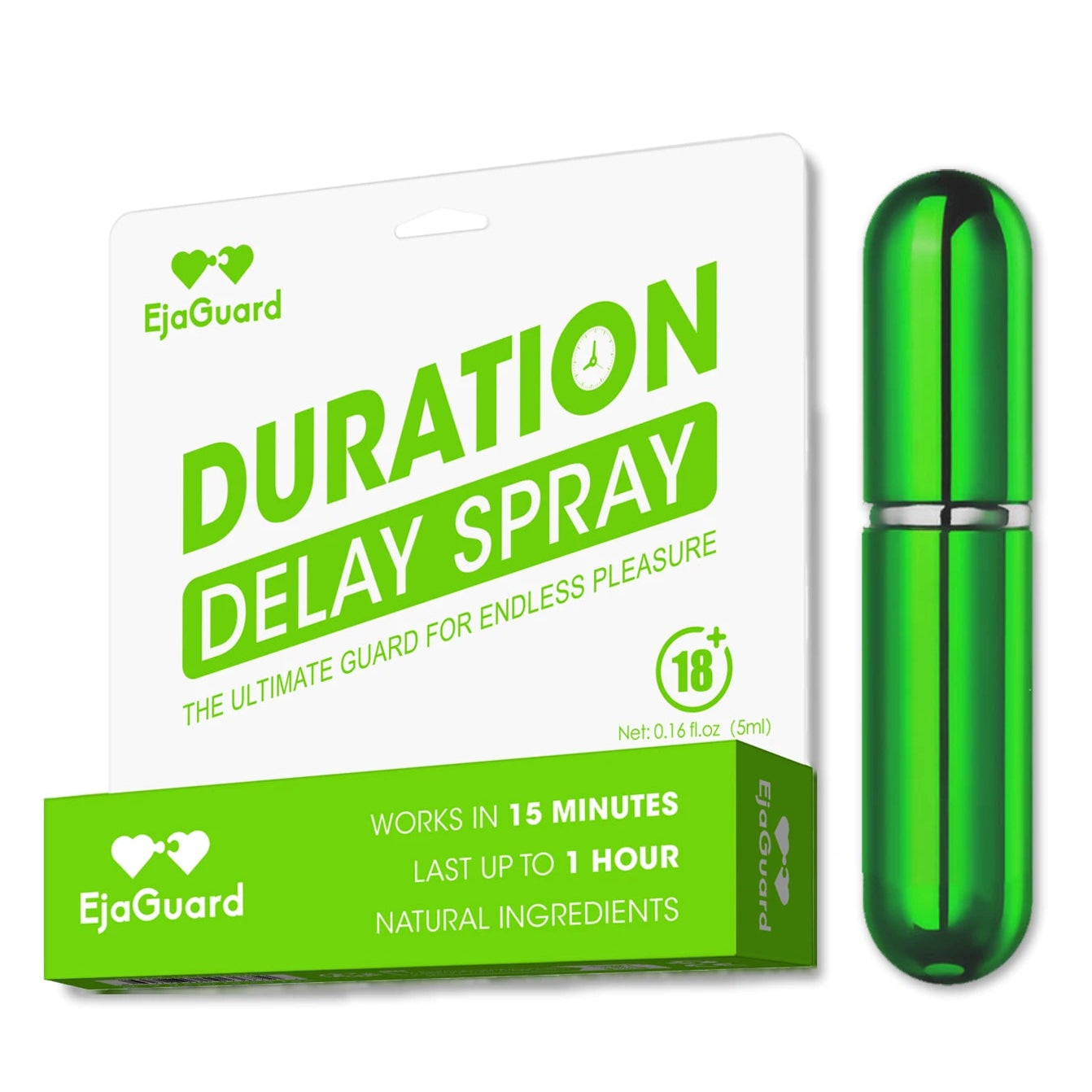
EjaGuard, for example, is positioned as a herbal delay spray for men looking for a more gradual, sensation-conscious approach. It may be considered by those who want to explore a topical option for ejaculation control, but it should not be presented as a treatment for pregnancy anxiety or as a substitute for addressing the underlying concern.
Men who experience persistent PE may benefit from discussing available treatment options with a healthcare professional rather than relying on a single product. The AUA/SMSNA guideline on ejaculation disorders provides a professional framework for evaluation and management.

14. When Should You Seek Professional Help?
Occasional early ejaculation or temporary anxiety does not necessarily indicate a medical condition. However, professional advice may be helpful when the problem becomes frequent, distressing, or begins affecting the relationship or quality of life.
Consider speaking with a healthcare professional if:
-
Ejaculation happens earlier than desired consistently and feels difficult to control.
-
You experience persistent erection problems alongside early ejaculation.
-
Pregnancy concerns are interfering with your ability to enjoy sex.
-
You or your partner experience ongoing distress, avoidance, or conflict around sexual activity.
-
You have significant anxiety about contraception despite using it correctly.
-
You have developed a sudden change in ejaculation timing or other sexual symptoms.
A healthcare professional can help determine whether the concern is primarily related to PE, erectile function, contraception anxiety, another health issue, or a combination of factors. Depending on the situation, they may recommend a medical evaluation, sexual health counseling, psychological support, or a combination of approaches.
The important thing is not to self-diagnose based on one experience. Sexual function varies, and the pattern over time matters more than a single encounter.
15. Final Thoughts
Fear of pregnancy is a common and understandable concern, particularly when couples are uncertain about contraception or the consequences of an unintended pregnancy. While pregnancy anxiety is not an established direct cause of premature ejaculation, it may influence the emotional environment in which sex occurs, potentially affecting relaxation, attention, confidence, and sexual comfort.
For some men, the concern may lead to rushing or increased tension. For others, it may interfere with erections or reduce sexual desire. The response is highly individual, and pregnancy-related worry should not automatically be blamed for every ejaculation problem.
A more balanced approach involves separating contraception concerns from ejaculation-control concerns, making informed decisions about protection, communicating openly with a partner, and seeking professional advice when persistent anxiety or sexual difficulties interfere with daily life.
Sexual health is not simply about how long intercourse lasts. It also involves feeling safe, comfortable, informed, and able to enjoy intimacy without unnecessary pressure. Addressing both physical and emotional concerns can help create a healthier and more confident sexual experience over time.
