

 Buy Now
Can Low Testosterone Affect Premature Ejaculation? What the Evidence Actually Shows

Table of Contents
- Can Low Testosterone Cause Premature Ejaculation?
- What Testosterone Actually Does in Men
- Low Testosterone and Sexual Function
- Why Low Testosterone Is More Clearly Linked to Libido and Erections
- What About Ejaculation Specifically?
- Is Low Testosterone a Risk Factor for PE?
- Why the Relationship Between Hormones and PE Is Complicated
- Low Testosterone vs. Low Sexual Desire
- Low Testosterone vs. Erectile Dysfunction
- Could Erectile Problems Make PE Feel Worse?
- What Symptoms Might Suggest Low Testosterone?
- Should Every Man With PE Have Testosterone Tested?
- How Testosterone Is Actually Diagnosed
- What Causes Testosterone to Be Low?
- Can Treating Low Testosterone Improve Sexual Function?
- Does Testosterone Therapy Treat Premature Ejaculation?
- Where Does Delay Spray Fit Into This?
- When Should You Talk to a Healthcare Professional?
- The Bottom Line
Can Low Testosterone Cause Premature Ejaculation?
When men think about hormones and sexual performance, testosterone is usually one of the first things that comes to mind.
Testosterone is strongly associated with male sexual health, so it is understandable that someone experiencing premature ejaculation (PE) might wonder whether low testosterone is part of the problem.
But the relationship isn't as simple as:
Low testosterone → premature ejaculation.
Current evidence does not establish low testosterone as a straightforward cause of PE. In fact, modern clinical guidelines describe PE as a multifactorial condition involving biological, psychological, relationship and sexual factors rather than a single hormone abnormality.
At the same time, testosterone absolutely matters for male sexual function. Low testosterone can be associated with reduced libido, erectile dysfunction, fewer spontaneous erections, fatigue and other symptoms that can change the overall sexual experience.
So the more useful question isn't simply whether testosterone "causes" PE.
It's whether testosterone deficiency can influence the broader sexual environment in which ejaculation problems occur.
That distinction is important.

What Testosterone Actually Does in Men
Testosterone is an androgen hormone produced primarily by the testes, with regulation involving the hypothalamus and pituitary gland.
It contributes to a wide range of functions, including sexual development, libido, muscle and bone health, red blood cell production and aspects of mood and energy.
Testosterone also interacts with other hormonal and physiological systems rather than working independently.
The European Association of Urology's current male hypogonadism guidance describes male hypogonadism as a clinical syndrome involving symptoms or signs of testosterone deficiency together with biochemical evidence of low testosterone.
That definition matters because having a testosterone result that happens to fall toward the lower end of a laboratory range doesn't automatically mean someone has hypogonadism.
Diagnosis requires context.
A man can have a relatively low testosterone measurement without having clinically significant testosterone deficiency, while another man with a similar number may have symptoms that warrant further investigation.
This is one reason hormone testing shouldn't be interpreted in isolation.
The Endocrine Society's guidance on testosterone deficiency similarly emphasizes that diagnosis should involve compatible symptoms and consistently low testosterone measurements rather than relying on a single test result.

Low Testosterone and Sexual Function
One thing is much clearer than the relationship between testosterone and PE:
Testosterone deficiency can affect sexual function.
Men with clinically significant hypogonadism may experience reduced sexual desire, erectile problems and fewer spontaneous or morning erections.
The EAU also lists delayed ejaculation among the less-specific sexual symptoms that may occur with late-onset hypogonadism.
That point is interesting because it shows why the relationship between testosterone and ejaculation shouldn't be reduced to "low T makes you ejaculate too quickly."
Hormonal deficiency can potentially affect ejaculation in different directions depending on the individual and the underlying problem.
For some men, the issue may be reduced desire.
For another, it may be erectile difficulty.
For another, it may involve difficulty reaching orgasm or delayed ejaculation.
And for someone else, testosterone may not be the relevant factor at all.
The EAU sexual and reproductive health guidelines emphasize that sexual dysfunctions often require looking at multiple interacting systems rather than assuming a single explanation.

Why Low Testosterone Is More Clearly Linked to Libido and Erections
One reason testosterone gets blamed for PE is that it plays such an obvious role in other areas of male sexual health.
Low testosterone is associated with reduced libido.
That means a man with testosterone deficiency may notice that he simply doesn't feel as interested in sex as he used to.
This is different from premature ejaculation.
PE is primarily about ejaculation occurring sooner than desired, with limited perceived control and associated personal or relationship distress depending on the subtype and clinical context.
A person can have high sexual desire and PE.
A person can have low sexual desire without PE.
And a person can have both.
The Endocrine Society's patient information on hypogonadism lists reduced sex drive and erectile dysfunction among the more recognizable symptoms of testosterone deficiency.
Erectile function is another important distinction.
Testosterone is not the only factor involved in erections, but adequate androgen function contributes to normal sexual function, and testosterone treatment can improve certain aspects of sexual function in appropriately diagnosed hypogonadal men.
The EAU notes that testosterone therapy may improve erectile function and libido in men with confirmed hypogonadism, while there is no evidence that testosterone therapy should be used to treat sexual dysfunction in men who have normal testosterone levels.

What About Ejaculation Specifically?
This is where things become much more interesting.
Ejaculation is not controlled by testosterone alone.
The process involves the nervous system, sensory input, neurotransmitters, smooth muscle activity, psychological factors and hormonal pathways.
The EAU guidelines on disorders of ejaculation describe ejaculation as a complex physiological process involving interconnected neurological, hormonal and anatomical pathways.
That means it is theoretically possible for hormonal changes to influence ejaculation without testosterone being the direct "switch" that determines when ejaculation happens.
In other words, hormones may be part of the background environment, but they are not necessarily the main explanation for PE.
This distinction becomes especially important when looking at the available research.
The EAU notes that while low testosterone has historically been considered a possible factor in ejaculation disorders, more contemporary studies have not established a consistent association between serum testosterone levels and ejaculation time.
That's a very different conclusion from saying:
"Low testosterone causes premature ejaculation."
The evidence doesn't support such a simple statement.
Is Low Testosterone a Risk Factor for PE?
Based on current guidelines, low testosterone should not be treated as a universal explanation for premature ejaculation.
The causes of PE are still considered multifactorial.
Depending on the type of PE, relevant factors may include anxiety, relationship dynamics, erectile dysfunction, sexual conditioning, neurobiological mechanisms and other medical conditions.
The EAU specifically recommends looking for underlying causes in men with acquired PE rather than automatically assuming that every case is caused by penile sensitivity or one biological variable.
This is particularly relevant when PE develops later in life.
Suppose someone has never experienced ejaculation problems before and suddenly develops a persistent change.
That situation deserves a broader look.
The change could be related to erectile difficulties, medication, psychological stress, urinary or prostate symptoms, endocrine problems or other health factors.
Low testosterone could potentially be one piece of that medical picture if the person also has symptoms suggesting hypogonadism.
But it shouldn't be assumed to be the cause without evidence.
The 2026 EAU guideline update specifically incorporated new evidence in both the hypogonadism and ejaculation sections, reflecting how actively these areas continue to be studied.
Why the Relationship Between Hormones and PE Is Complicated
One major problem with trying to connect testosterone directly to PE is that sexual function is not one single system.
Think about everything that has to happen during sex.
You need sexual interest.
You need adequate arousal.
You need an appropriate erection.
You need sensory stimulation.
Your nervous system has to process that stimulation.
Your brain has to interpret the experience.
You also have psychological and relationship factors influencing the situation.
And ejaculation ultimately depends on a coordinated physiological response.
Testosterone interacts with some of these systems, but it doesn't independently control all of them.
This is why a low testosterone result doesn't automatically explain a man's ejaculation pattern.
The EAU male hypogonadism guideline emphasizes that symptoms associated with low testosterone are not specific to hypogonadism and need to be interpreted alongside biochemical results and the broader clinical picture.
For example, fatigue can occur for many reasons.
Low libido can have psychological or relationship causes.
Erectile difficulties can be associated with vascular, metabolic, neurological or psychological factors.
And ejaculation problems can have multiple contributing factors.
This makes hormone testing useful when clinically appropriate, but not as a universal answer to every sexual problem.

Low Testosterone vs. Low Sexual Desire
This is one of the easiest things to confuse.
A man might say:
"My sex life isn't working properly, so maybe my testosterone is low."
But what exactly has changed?
If the main change is that you rarely feel interested in sex anymore, low testosterone could be worth discussing with a healthcare professional, particularly if other symptoms are present.
If you still have strong sexual desire but consistently ejaculate earlier than you'd like, that's a different pattern.
PE isn't defined simply by having "too much testosterone" or having a high sex drive.
The EAU describes reduced libido as one of the more specific sexual symptoms associated with hypogonadism, while ejaculation problems can have different causes.
This distinction can make conversations with a doctor much more useful.
Instead of simply saying:
"I think my testosterone is low."
it can help to describe exactly what changed:
- sexual desire
- erection quality
- morning erections
- ejaculation
- orgasm
- energy
- mood
- sleep
- body composition
- overall physical function
That broader picture gives a healthcare professional more information to work with.
Low Testosterone vs. Erectile Dysfunction
Erectile dysfunction creates another important overlap.
A man with PE may sometimes experience erection-related anxiety.
If he worries about losing his erection, he may become more focused on sexual performance and less relaxed during sex.
Conversely, someone with erectile dysfunction may rush sexual activity because he is worried that the erection won't last.
That can potentially change the sexual experience even if testosterone isn't the underlying cause.
This is one reason the EAU recommends assessing erectile function and other sexual health factors when evaluating ejaculation problems.
Testosterone can be relevant here because clinically significant hypogonadism can contribute to erectile dysfunction and low libido.
But erection problems are not automatically caused by low testosterone either.
Blood-vessel health, diabetes, medications, neurological conditions, psychological factors and many other issues can contribute.
The EAU guidance on erectile dysfunction recommends assessing cardiovascular, endocrine, vascular and neurological factors when evaluating ED, and includes early-morning testosterone testing when appropriate.
Could Erectile Problems Make PE Feel Worse?
This is an area where the relationship can become circular.
Imagine someone who is worried about maintaining an erection.
He may become highly focused on performance.
That additional pressure can change arousal and sexual behavior.
If he also experiences PE, he may become even more concerned about "performing correctly."
Over time, the sexual problem can become a combination of physical and psychological factors rather than a single hormonal issue.
This is one reason acquired PE is often evaluated differently from lifelong PE.
The EAU recommends treating underlying causes such as erectile dysfunction, prostatitis, lower urinary tract symptoms, anxiety or hyperthyroidism when they are contributing to acquired PE.
That doesn't mean every man with PE needs an extensive medical investigation.
In fact, routine laboratory testing is not recommended for PE without specific indications from the medical history or physical examination.
The goal is targeted evaluation rather than ordering every possible hormone test.
What Symptoms Might Suggest Low Testosterone?
Low testosterone doesn't have one universal symptom profile.
Some men primarily notice sexual changes.
Others notice more general physical or psychological symptoms.
The more specific sexual symptoms described in current EAU guidance include:
- reduced libido
- erectile dysfunction
- fewer spontaneous or morning erections
Less-specific symptoms can include reduced sexual activity, delayed ejaculation, lower energy, fatigue, sleep disturbances and mood changes.
The EAU patient information on male hypogonadism also explains that testosterone deficiency can affect energy, mood and sexual health and should be evaluated in the appropriate clinical context.
The important word here is pattern.
One symptom by itself doesn't prove low testosterone.
Feeling tired after a stressful week doesn't mean you have hypogonadism.
Having a lower libido for a short period doesn't automatically mean your testosterone has dropped.
And experiencing PE doesn't automatically mean your hormones are abnormal.
Should Every Man With PE Have Testosterone Tested?
Generally, no.
Current EAU guidance does not recommend routine laboratory or physiological testing for every man with PE.
Testing should be guided by the medical history and physical examination.
That approach makes sense.
If a man has lifelong PE, normal libido, normal erections and no other symptoms suggesting hormonal problems, testosterone testing may not provide the explanation he is looking for.
But the situation changes if PE appears alongside other symptoms.
For example, testing may be more reasonable to discuss if there is a combination of:
- newly reduced libido
- erectile dysfunction
- loss of morning erections
- persistent fatigue
- reduced physical function
- unexplained changes in body composition
- delayed ejaculation or other significant sexual changes
The EAU's current hypogonadism recommendations specifically recommend screening for late-onset hypogonadism in symptomatic men rather than screening the general population without symptoms.
How Testosterone Is Actually Diagnosed
This is an area where online discussions often oversimplify things.
You shouldn't diagnose low testosterone from a single random blood test.
Testosterone naturally fluctuates throughout the day and is generally higher in the morning.
The current EAU guidance recommends measuring total testosterone between 7:00 and 10:00 AM, in a fasting state, using a reliable laboratory assay. If the result is low, it should be repeated on another occasion before treatment is considered.
The EAU uses 12 nmol/L (about 3.5 ng/mL) as a reliable threshold to help diagnose late-onset hypogonadism when it is considered together with compatible symptoms and clinical context.
The Endocrine Society similarly emphasizes the combination of symptoms and consistently low testosterone rather than diagnosing hypogonadism based on symptoms alone.
This is important because testosterone levels can temporarily fall during acute illness, poor nutrition, excessive physical stress and certain other situations.
A single low result may therefore need confirmation.

What Causes Testosterone to Be Low?
Low testosterone isn't necessarily just an age-related issue.
Hypogonadism can have many causes.
Some originate in the testes themselves.
Others involve the hypothalamus or pituitary gland, which regulate testosterone production.
Functional suppression can also occur in association with obesity, chronic illness and certain medications.
The EAU notes that obesity and comorbidities account for many cases of functional hypogonadism and that some of these changes may be reversible when underlying factors are addressed.
This is another reason it can be misleading to think about testosterone as simply an "energy hormone."
If testosterone is genuinely low, the important question isn't only:
"How can I raise it?"
It's also:
"Why is it low?"
Depending on the situation, a clinician may investigate other hormones such as luteinizing hormone, follicle-stimulating hormone and prolactin to help identify the underlying cause.

Can Treating Low Testosterone Improve Sexual Function?
For men who genuinely have hypogonadism, testosterone therapy can improve some aspects of sexual function.
The EAU reports benefits in areas including libido, mild erectile dysfunction, orgasm and overall sexual satisfaction in appropriately diagnosed hypogonadal men.
However, this does not mean testosterone therapy is a general treatment for every sexual problem.
In men who have normal testosterone levels, there is no evidence that testosterone therapy should be used simply to improve sexual function.
This distinction is extremely important.
Taking testosterone because you want better sexual performance is not the same thing as treating medically confirmed testosterone deficiency.
The Endocrine Society's testosterone therapy guidance stresses the importance of an appropriate diagnostic workup and monitoring rather than treating based solely on symptoms or performance concerns.
Testosterone therapy also isn't something to self-prescribe.
There are situations in which treatment may be inappropriate or require particular caution, and fertility considerations are important because exogenous testosterone can suppress sperm production.
Does Testosterone Therapy Treat Premature Ejaculation?
This is probably the biggest misconception worth clearing up.
Testosterone therapy is not an established first-line treatment for premature ejaculation simply because testosterone is a male sex hormone.
PE treatment depends on the type of PE and the factors contributing to it.
For lifelong PE, established treatment approaches can include behavioral/psychological strategies and pharmacological treatments, including certain topical anesthetic formulations and oral medications where appropriate.
For acquired PE, guidelines emphasize identifying and treating underlying conditions when they are present.
So if a man has confirmed testosterone deficiency plus PE, treating the testosterone deficiency may improve aspects of his overall sexual health.
But that doesn't mean the testosterone treatment itself should be considered a direct PE medication.
The distinction is similar to treating an underlying health condition that affects sexual function versus treating ejaculation directly.

Where Does Delay Spray Fit Into This?
This is where delay sprays occupy a completely different category.
Testosterone works systemically and is relevant to hormone deficiency.
A topical delay spray is designed to act locally by temporarily reducing penile sensitivity.
The two approaches therefore address very different parts of the sexual experience.
For men whose main issue is rapid ejaculation despite otherwise normal libido and erectile function, a topical option can be considered as one of the approaches used to manage ejaculation timing.
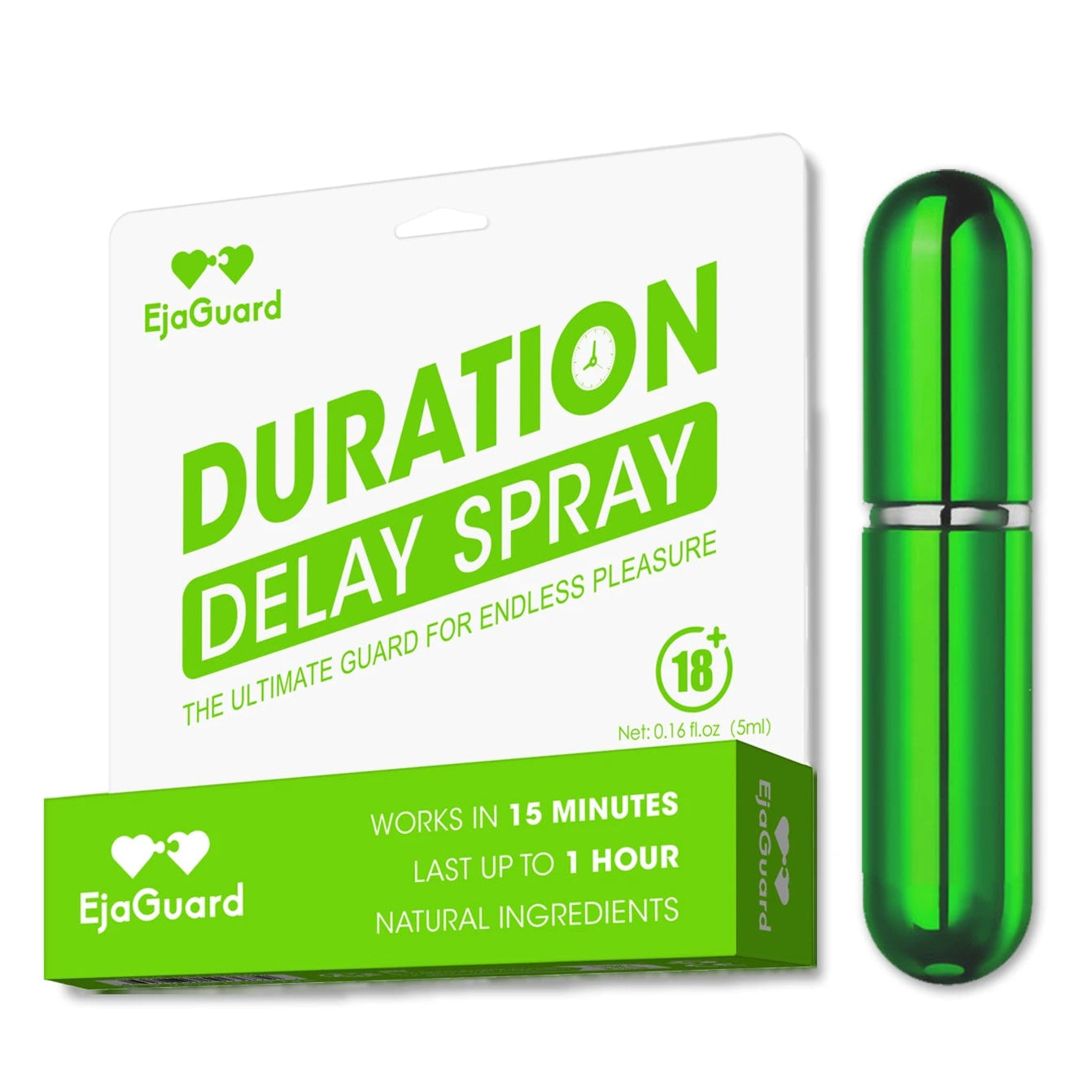
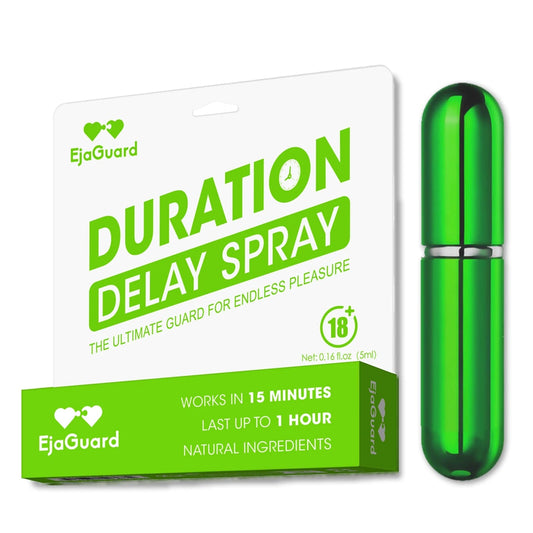
EjaGuard, for example, describes its product as a delay spray intended to temporarily reduce penile sensitivity and slow the onset of ejaculation. Its current FAQ recommends starting with 3 sprays, with 3–10 sprays listed as the usage range, and waiting 15–30 minutes before intercourse.
That doesn't mean a delay spray treats low testosterone.
It doesn't.
And it shouldn't be presented as a replacement for medical evaluation when someone has symptoms suggesting an endocrine problem.
Instead, it can be thought of as a local ejaculation-management tool, while testosterone evaluation belongs to the broader medical assessment when symptoms suggest possible hypogonadism.

Why It's Important Not to Blame Every Sexual Problem on Testosterone
Testosterone has become a popular explanation for almost everything related to male sexual performance.
Low libido?
"Must be testosterone."
Erectile problems?
"Must be testosterone."
Premature ejaculation?
"Probably testosterone."
But real sexual health is rarely that simple.
A man can have normal testosterone and still experience PE.
Another man can have low testosterone and primarily experience low libido or erectile dysfunction.
Another can have several conditions at the same time.
And someone else may have normal hormone levels but significant performance anxiety.
The current EAU guidelines reflect this complexity by separating hypogonadism, erectile dysfunction and ejaculation disorders into related but distinct clinical problems.
This is ultimately a better way to think about sexual health.
Instead of looking for one number that explains everything, look at the complete pattern.
When Should You Talk to a Healthcare Professional?
A new or persistent change in sexual function is worth discussing with a healthcare professional when it is accompanied by other concerning symptoms or significantly affects your quality of life.
For example, consider seeking an evaluation if you notice several changes at the same time:
- PE that develops after previously normal sexual function
- a significant reduction in sexual desire
- persistent erectile difficulties
- loss of morning erections
- unexplained fatigue
- substantial changes in body composition
- persistent mood changes
- reduced physical function
- fertility concerns
- other symptoms suggesting an endocrine disorder
The point isn't to assume that low testosterone is responsible.
The point is to avoid overlooking a potentially treatable medical issue.
The Endocrine Society's 2026 statement on testosterone replacement reiterates that accurate diagnosis requires both compatible symptoms and consistently low, accurately measured testosterone levels.
For PE itself, the EAU recommends a detailed sexual and medical history and physical examination, with additional testing directed by specific findings rather than automatically performed on everyone.

The Bottom Line
So, can low testosterone affect premature ejaculation?
Possibly as part of a broader sexual-health picture, but current evidence does not support treating low testosterone as a simple or universal cause of PE.
Testosterone is clearly important for male sexual health.
Clinically significant testosterone deficiency can contribute to reduced libido, erectile dysfunction and other sexual symptoms. It may also be associated with changes in ejaculation, including delayed ejaculation.
But premature ejaculation is different.
PE is multifactorial, and current guidelines do not identify low testosterone as a straightforward explanation for most cases.
That's why the most useful approach is to look at the whole picture.
If your only problem is ejaculating sooner than you'd like, low testosterone may not be the missing piece.
If PE appeared alongside reduced libido, erectile problems, loss of morning erections, persistent fatigue or other symptoms of possible hormone deficiency, however, it may be worth discussing testosterone testing with a healthcare professional.
And if your testosterone levels are normal, there is no reason to assume that increasing testosterone will automatically solve PE.
For men whose primary concern is ejaculation control, approaches specifically aimed at ejaculation management—including behavioral strategies, appropriate medical treatments and topical delay products—may be more directly relevant.
The important thing is to match the solution to the actual problem.
Testosterone deficiency is a medical condition. Premature ejaculation is a sexual-health condition. They can overlap, but they are not the same thing.
Understanding that difference can help men avoid chasing hormone treatments when the real issue may lie somewhere else—and recognize when a broader medical evaluation actually makes sense.

