

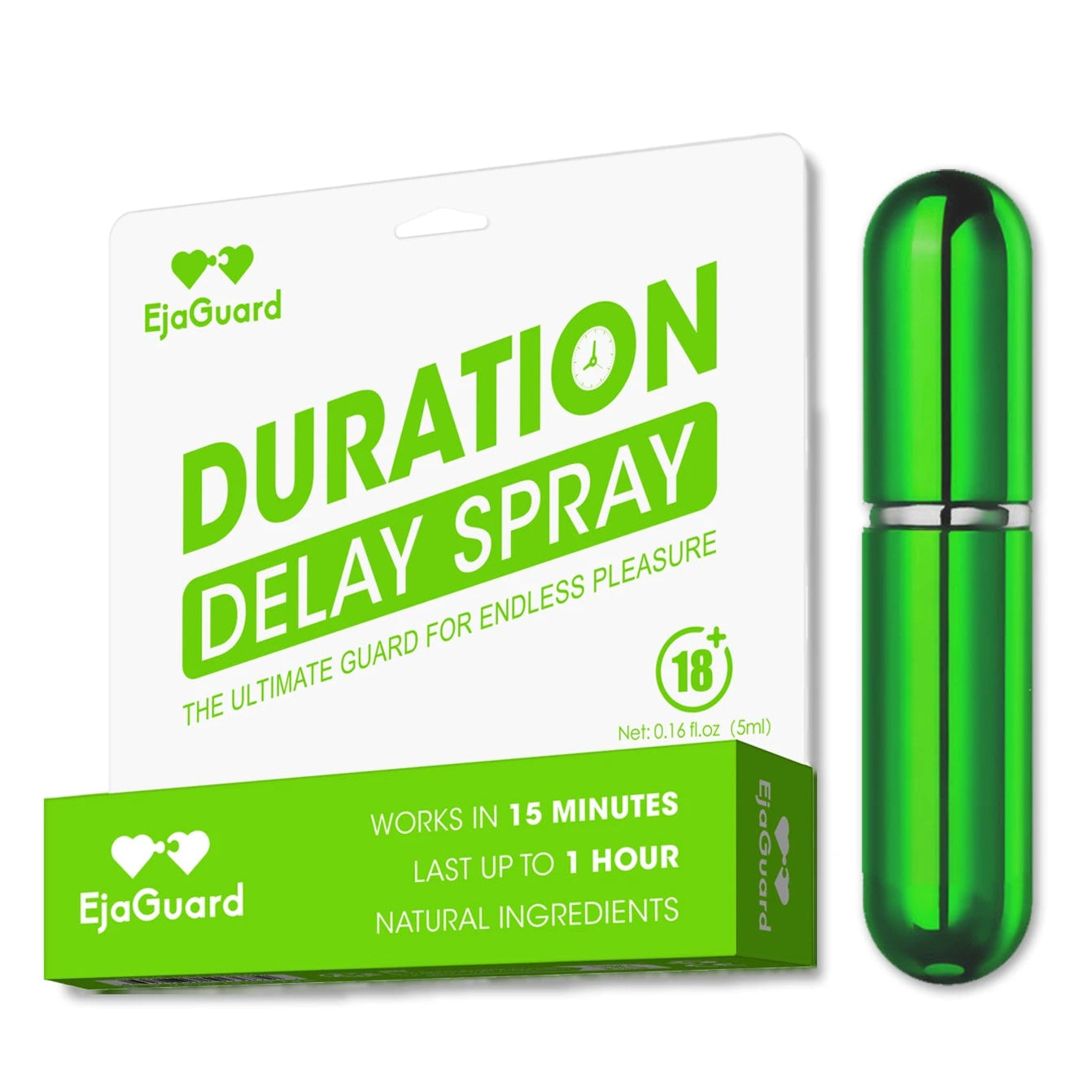
 Buy Now
How Long Should We Wait After Applying Delay Spray?

Why Timing Matters More Than Most People Think
One of the most common questions people ask after buying their first delay spray is surprisingly simple:
"How long should I wait before having sex?"
At first glance, it sounds like an easy question. You'd think there would be a universal answer that applies to every product and every person.
In reality, there isn't.
Browse through Reddit, forums, or product reviews and you'll quickly notice how inconsistent the advice can be. One person says five minutes is enough. Another swears by waiting half an hour. Someone else claims they don't wait at all. Then you'll find another user saying the exact same spray didn't work for them despite following the instructions.
It's easy to assume the product is inconsistent.
Sometimes that's true.
But surprisingly often, the real problem is much simpler.
People underestimate how important timing actually is.
Many first-time users spend almost all of their attention thinking about dosage.
Should I use one spray?
Should I use two?
Would three work even better?
Meanwhile, the amount of time they allow the product to absorb barely crosses their mind.
The reality is that dose and timing work together. Changing one without understanding the other can dramatically change the experience.

Delay Sprays Don't Work Like an On/Off Switch
One of the biggest misconceptions surrounding delay sprays is the idea that they work instantly.
Someone sprays the product, waits a minute or two, and expects to feel an obvious difference.
When nothing happens, they often conclude that the spray is ineffective.
In reality, that's simply not how these products are designed to work.
After application, the active ingredients need time to spread across the skin, begin absorbing, and reach a level where they can influence sensitivity.
That process doesn't happen immediately.
Think about sunscreen.
You don't apply sunscreen and expect instant protection the second it touches your skin. It needs time to settle and absorb before it reaches its intended effect.
Delay sprays work in a similar way.
Different ingredients absorb at different speeds, which means the ideal waiting time depends not only on the product itself but also on how it's formulated.

Why Waiting Time Can Completely Change Your Experience
Imagine two people using the exact same spray.
Both apply the exact same amount.
Both have similar levels of sensitivity.
The only difference?
One waits five minutes.
The other waits twenty-five.
Their experiences could be completely different.
The first person might think:
"Honestly, I barely noticed anything."
The second person might say:
"This actually worked really well."
Nothing about the product changed.
Only the timing did.
This is one reason online reviews can seem so contradictory. Two people aren't necessarily describing different products—they may simply be describing different ways of using the same one.

Why People Often Blame the Product Too Quickly
Most beginners have a natural expectation that if something is working, they'll immediately feel it.
That's understandable.
Many over-the-counter products provide obvious feedback.
Painkillers reduce pain.
Eye drops soothe irritation.
Nasal sprays clear congestion.
Delay sprays can be different.
Some products are designed to create an obvious reduction in sensitivity.
Others are designed to be much more subtle.
That subtlety can be confusing.
If someone expects an immediate feeling of numbness, they may mistake a gradual change for "no effect."
Ironically, some of the products that feel the most natural are also the ones that are easiest to underestimate during the first few uses.
Understanding the Two Main Categories
Although every manufacturer has its own formula, most delay sprays fall into one of two broad categories.
The first category is lidocaine-based sprays.
These products rely on a local anesthetic to temporarily reduce sensitivity. Because lidocaine is well studied and widely used, these sprays usually begin working relatively quickly.
For many products in this category, 10 to 15 minutes is a reasonable starting point.
The second category includes herbal or botanical formulas.
Rather than relying primarily on a local anesthetic, these products often produce a more gradual change in sensation.
As a result, they typically require 20 to 30 minutes before reaching their intended effect.
That difference alone explains why two sprays can feel completely different even if users follow what they believe are "normal" instructions.

Lidocaine-Based Sprays: Fast, Predictable, and Strong
Lidocaine products have remained popular for a good reason.
They tend to work quickly.
For many users, that's exactly what they're looking for.
If you're preparing for sex on relatively short notice, waiting ten or fifteen minutes is convenient.
The reduction in sensitivity is often noticeable, and for men with severe PE, that stronger effect can make a meaningful difference.
However, that strength also comes with trade-offs.
Many users report that once they go beyond their ideal dose, the experience changes rapidly.
Instead of simply gaining more control, they begin sacrificing sensation.
Some describe feeling disconnected.
Others report difficulty maintaining arousal if they accidentally use too much.
This doesn't mean lidocaine sprays are bad products.
It simply means their margin for error can be relatively small for some users.
A single extra spray may feel much more significant than expected.
That is one reason why careful dosing is so important with this category.
Herbal Formulas: Slower Doesn't Mean Weaker
Herbal delay sprays are often misunderstood because people judge them using the same expectations they developed from lidocaine products.
That comparison isn't always fair.
Many herbal formulas aren't trying to produce the same type of sensation.
Instead of creating obvious numbness, they're often designed to reduce overstimulation more gradually while preserving as much natural sensation as possible.
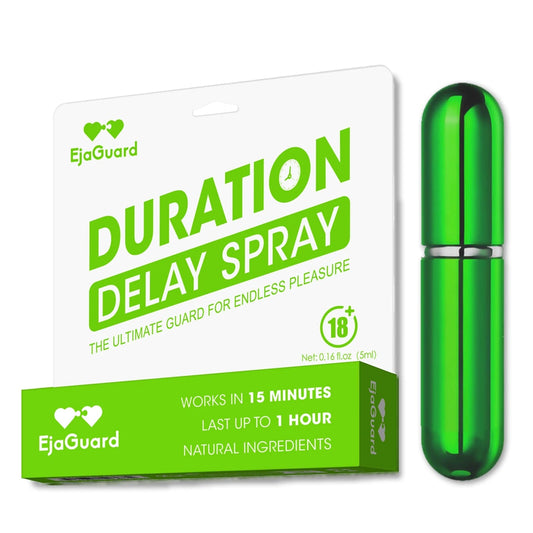
Products like EjaGuard, for example, generally benefit from waiting around 20 to 30 minutes before sexual activity.
For someone expecting an immediate effect after ten minutes, that can feel disappointing.
They may conclude the product simply doesn't work.
But if they repeat the same experiment while allowing additional absorption time, the experience can be surprisingly different.
Rather than feeling dramatically numb, many users describe the effect as feeling calmer, more manageable, or easier to control.
The physical sensation remains largely intact.
What changes is how overwhelming that sensation becomes.
For some people, that's exactly what they're looking for.
For others, especially those expecting an obvious anesthetic effect, it can initially seem too subtle.
Neither reaction is necessarily wrong.
They're simply different expectations applied to different kinds of products.
What Happens If You Don't Wait Long Enough?
If there's one mistake that probably causes more disappointment than any other, it's starting too soon.
It's incredibly common, especially among first-time users.
Someone buys a delay spray, applies it a few minutes before sex, notices little or no difference, and immediately assumes the product doesn't work.
The reality is often much less dramatic.
The spray simply hadn't finished doing what it was designed to do.
When a product hasn't fully absorbed, you're essentially judging it before it has had the chance to reach its intended effect. That's like pulling a cake out of the oven halfway through baking and deciding the recipe failed.
The frustrating part is that this first experience often changes what people do next.
Instead of questioning the timing, they question the dose.
"I guess two sprays wasn't enough."
Next time they use four.
Or five.
Or they apply another round halfway through waiting.
Now they've changed two variables at once—both the amount and the timing—which makes it almost impossible to know what actually caused the different result.
Sometimes this leads to a completely different problem.
The product finally has enough time to absorb, but because they doubled the dose, it suddenly feels far stronger than expected.
Instead of saying, "I used too much," many people conclude that the product is inconsistent.
In reality, they accidentally skipped over the dosage that may have worked perfectly.
This pattern happens more often than most people realize.

More Product Doesn't Always Mean Better Results
There's a natural tendency to think that if something works, then more of it should work even better.
Delay sprays don't always behave that way.
Every person has a point where additional product stops adding meaningful control and starts reducing overall comfort.
Think of it like adjusting the volume on a speaker.
Going from 20% to 40% is noticeable.
Going from 40% to 60% might still be an improvement.
But eventually, turning it up further doesn't make the music better.
It simply becomes too loud.
Delay sprays are similar.
Many users discover that their ideal experience isn't achieved with the maximum possible effect.
It's achieved by finding the point where control improves while sensation still feels natural.
That balance often requires patience.
And patience requires giving each attempt enough time before deciding whether something needs to change.

Can You Wait Too Long?
Interestingly, people spend much more time worrying about waiting too long than they probably need to.
In most situations, starting five minutes early is a much bigger problem than waiting an extra five or ten minutes.
That doesn't mean timing becomes irrelevant after the recommended window.
Several factors can gradually influence how a product performs over time.
For example, if you apply a spray and then immediately take a hot shower, some of the product may be affected.
Heavy sweating during exercise or spending a long period engaging in vigorous activity before sex may also influence the overall experience.
Long periods of foreplay can naturally change the timeline as well.
None of these situations automatically mean the product will stop working.
They're simply reminders that delay sprays exist in the real world, where timing is rarely perfect.
Instead of chasing an exact number on a stopwatch, it's usually more helpful to think in terms of a comfortable window.
For example, if a product generally performs best after twenty to thirty minutes, treating that as a flexible range is often more realistic than trying to begin exactly twenty-three minutes after application.
Consistency matters far more than precision.
Why the Same Spray Can Feel Different Every Time
One of the questions people ask most often is:
"Why did this spray work perfectly last week but feel weaker today?"
It's tempting to blame the product.
But our bodies are far less consistent than we often assume.
Sensitivity isn't fixed.
It's constantly changing.
Sometimes only slightly.
Sometimes dramatically.
Even if you use the exact same spray, at the exact same dose, after the exact same waiting time, the experience can still feel different.
That doesn't necessarily mean anything went wrong.
It simply means your body isn't exactly the same every day.

Your Lifestyle Changes More Than You Realize
Sleep is one of the biggest examples.
Most people have experienced days where everything feels slightly different after a poor night's sleep.
Energy levels change.
Mood changes.
Stress tolerance changes.
Sexual responsiveness changes too.
Some men notice they're more sensitive when they're tired.
Others find the opposite.
The important point isn't the direction of the change.
It's recognizing that change exists.
Stress can have a similar effect.
For some people, anxiety increases sensitivity because they're hyper-focused on every sensation.
Others become distracted enough that sensitivity seems lower.
Again, both experiences are completely possible.
Alcohol is another variable that people often overlook.
Some men report lasting longer after drinking.
Others find erections become more difficult to maintain.
The relationship between alcohol and sexual performance is rarely straightforward.
Exercise can also play a role.
After a hard workout, blood flow, fatigue, hormone levels, and overall physical state may all be different compared to a day spent sitting at a desk.
Even something as simple as being excited because you're seeing a new partner after several weeks apart can influence how your body responds.
These changes aren't flaws.
They're part of being human.

Your Mind Affects Timing Too
Absorption is physical.
Experience is psychological.
Those two things interact much more than people think.
Imagine someone applying a delay spray while already convinced it won't work.
They're likely to monitor every sensation, constantly asking themselves:
"Is it working yet?"
"Do I feel different?"
"Maybe this product is useless."
Ironically, that constant monitoring often makes people more aware of stimulation rather than less.
On the other hand, someone who feels relaxed and trusts the process may stop paying attention to every tiny change.
The physical effect may be identical.
The mental experience isn't.
This doesn't mean delay sprays are placebo.
It simply means that expectations shape how we interpret physical sensations.
Psychologists sometimes refer to this as expectancy effects.
Medicine often talks about placebo and nocebo responses.
Sexual performance is especially influenced by these psychological factors because confidence, anxiety, attention, and arousal are already deeply connected.
That's one reason two users can report completely opposite experiences with the exact same product.
They're not necessarily disagreeing about the chemistry.
They're describing different combinations of chemistry, expectations, and individual biology.

Stop Looking for the "Perfect" Number
People often ask questions like:
- Should I wait exactly 15 minutes?
- Is 20 minutes better than 18?
- Does 25 minutes beat 30?
The truth is that there usually isn't a magical number.
The goal isn't mathematical precision.
The goal is repeatability.
Once you find a routine that consistently works for your body, being within a reasonable window is usually much more valuable than trying to optimize every single minute.
Think less about perfection.
Think more about consistency.
Because consistency is what eventually allows you to stop thinking about the product—and start paying attention to your partner instead.

