

 Buy Now
Can Delay Spray Be Combined With Behavioral Techniques for PE? Understanding a Combined Approach

Premature ejaculation (PE) is often approached as if there were one single problem and, therefore, one single solution.
For some men, the main issue may involve rapid arousal or high sensitivity. For others, anxiety, relationship factors, erectile difficulties, learned sexual patterns, or a combination of physical and psychological factors may be involved.
That is one reason why PE treatment does not always fit into a simple “one product, one solution” model.
Delay sprays are one option that can temporarily reduce penile sensitivity and help some men delay ejaculation. Behavioral approaches, meanwhile, are designed to improve awareness of arousal and develop better control over time.
This raises an interesting question:
Can a delay spray and behavioral techniques be used as part of the same overall approach?
The answer is potentially yes, but it is important to understand what each approach is actually trying to accomplish.
A topical product and a behavioral technique are not doing the same thing. One primarily changes the sensory input during sexual activity, while the other focuses on awareness, arousal regulation, sexual habits, and control.
Understanding that difference can help explain why some men may find a combined approach useful while others may not need both.

Table of Contents
- Why PE Is Not Just a Sensitivity Problem
- What Behavioral Techniques Are Designed to Do
- What a Delay Spray Does Differently
- Can the Two Approaches Work Together?
- The Role of Stop-Start Techniques
- Where Mindfulness and Awareness Fit In
- Why a Delay Spray May Sometimes Make Behavioral Work Easier
- Why More Sensory Reduction Is Not Always Better
- Can Behavioral Techniques Still Matter Without a Spray?
- What the Research Actually Says About Combined Approaches
- Where EjaGuard Fits Into the Bigger Picture
- When It May Be Worth Talking to a Healthcare Professional
- The Bottom Line
Why PE Is Not Just a Sensitivity Problem
One of the most common assumptions about premature ejaculation is that it simply means the penis is “too sensitive.”
Sensitivity can certainly be part of the experience, but PE is more complicated than that.
Clinical definitions of PE involve several factors, including relatively short ejaculation latency, difficulty delaying ejaculation, and personal distress or bother. This means that simply measuring how long intercourse lasts does not capture the entire condition.
PE can also involve different contributing factors depending on the individual.
For some men, the problem has been present since their earliest sexual experiences. For others, ejaculation becomes difficult to control after previously having more control. Erectile difficulties, anxiety, relationship factors, and other health conditions may also be relevant.
That is why treatment approaches can look very different from one person to another.
For a broader introduction, see our guide to how premature ejaculation is diagnosed and why diagnosis involves more than ejaculation time.
The American Urological Association and Sexual Medicine Society of North America guideline describes PE management within a broader clinical framework rather than treating it as simply a sensitivity problem. The guideline discusses both pharmacological and behavioral/psychological considerations when managing ejaculation disorders.
This broader perspective is important when discussing delay sprays.
A delay spray does not need to “fix” every possible cause of PE in order to be useful. It has a much narrower role: temporarily changing penile sensitivity during sexual activity.
Behavioral approaches have a different goal.
Rather than changing sensitivity directly, they may help a person recognize arousal earlier, understand the sensations that occur before ejaculation, and develop strategies for responding to those sensations.
That distinction is the foundation for understanding why the two approaches can potentially complement one another.

What Behavioral Techniques Are Designed to Do
Behavioral techniques for PE have been discussed in sexual medicine for decades.
They include approaches such as stop-start exercises, pause techniques, sensate focus, and other forms of structured sexual therapy.
The exact methods vary, but many of them share a common idea:
Learn to recognize what happens before ejaculation becomes difficult to control.
This can be surprisingly important.
Many people only become aware of their arousal when it is already extremely high. At that point, there may be very little room to change what happens next.
Behavioral approaches attempt to move that awareness earlier.
Instead of thinking only in terms of “I ejaculated too quickly,” the person learns to pay attention to the stages leading up to ejaculation.
What does moderate arousal feel like?
What changes as arousal becomes stronger?
Are there changes in breathing, muscle tension, attention, or stimulation?
Does the feeling of urgency appear suddenly, or does it build gradually?
These questions can make the experience less automatic.
A systematic review of behavioral therapies found evidence that techniques such as stop-start, squeeze approaches, and sensate-focused methods may improve some outcomes for PE, although the researchers also noted limitations in the quality and consistency of the available evidence.
This is an important qualification.
Behavioral therapy should not be presented as a guaranteed cure, and the evidence does not suggest that every technique works equally well for every person.
Instead, behavioral approaches are best understood as tools that may help some men develop greater awareness and control.

What a Delay Spray Does Differently
A delay spray operates through a completely different mechanism.
Instead of asking the person to change how they respond to stimulation, a topical delay product changes the amount of sensory input reaching the person during sexual activity.
Traditional topical anesthetic sprays commonly use ingredients such as lidocaine or other local anesthetics to reduce penile sensitivity.
The intended effect is relatively straightforward:
Less sensitivity can mean more time before ejaculation for some users.
But this is not the same thing as learning ejaculation control.
A spray can change the sensory environment during one sexual encounter. A behavioral technique is intended to develop skills or awareness that may be useful across different situations.
That difference matters.
Imagine someone who becomes highly aroused very quickly. A topical product may reduce the intensity of stimulation enough to create more room before ejaculation.
That extra room may make the experience feel less rushed.
But the person may still benefit from learning how to recognize rising arousal and respond before reaching the point where control becomes difficult.
In that sense, the two approaches can target different parts of the same experience.
You can also read our guide to how delay sprays work for a more detailed explanation of topical desensitization.
Another important point is that delay sprays are not designed to eliminate sensation.
Reducing sensitivity too much can create a different problem: the experience may become less pleasurable, or ejaculation may become difficult.
The goal of a topical product is therefore not simply to produce the maximum possible reduction in sensitivity.
It is to provide an appropriate amount of sensory reduction for the individual.

Can the Two Approaches Work Together?
Conceptually, there is a simple reason why combining the two approaches may make sense.
A behavioral technique works with arousal awareness and response.
A delay spray works with sensory intensity.
Those are related, but they are not identical.
For example, someone may use a topical product and notice that the initial intensity of stimulation is lower. Because arousal rises more gradually, they may have more time to recognize the sensations associated with approaching ejaculation.
That does not prove that the spray is “training” the body.
Rather, the reduced sensory intensity may make it easier for some people to practice paying attention to their arousal without feeling as though ejaculation is immediately unavoidable.
This is one possible reason a combined approach can be appealing.
At the same time, it is important not to overstate the evidence.
There is not enough evidence to say that combining a delay spray with behavioral techniques will produce the same result for everyone.
Clinical guidance and research reviews have considered behavioral treatment alongside pharmacological approaches, but much of the available evidence involves specific drug treatments rather than delay sprays specifically.
So the practical takeaway is not:
“Everyone with PE should use both.”
It is:
Different approaches may address different parts of the problem, and combining them can be considered when appropriate.

The Role of Stop-Start Techniques
Stop-start is one of the better-known behavioral techniques associated with PE.
The basic concept is not complicated.
The person learns to identify increasing arousal and temporarily reduce stimulation before reaching the point where ejaculation feels unavoidable.
After arousal decreases, stimulation can resume.
The purpose is not simply to “hold back” ejaculation through willpower.
It is to develop greater awareness of the transition from manageable arousal to very high arousal.
With repeated practice, the person may become more familiar with their own arousal pattern.
This can be useful because PE is often discussed as though ejaculation happens at one single moment.
In reality, arousal develops over time.
There can be a period when a person still feels highly aroused but has meaningful control, followed by a point where ejaculation becomes much harder to delay.
Behavioral techniques try to improve awareness of that earlier stage.
Our article on ways to understand ejaculation control without focusing only on the clock discusses why perceived control can be a useful part of evaluating PE.
Research on behavioral therapy has produced mixed results, but the systematic review by Cooper and colleagues found that several randomized trials reported benefits from behavioral approaches, while also noting that the overall evidence base was limited and had methodological concerns.
Some studies have also investigated behavioral techniques in combination with medical treatment.
That makes stop-start particularly relevant to the discussion of delay sprays.
A topical product may reduce the intensity of stimulation.
The behavioral technique, meanwhile, focuses on recognizing the body's response to stimulation.
These are two different interventions rather than two versions of the same intervention.

Where Mindfulness and Awareness Fit In
Mindfulness is another approach that has attracted attention in research on PE.
The concept can sound abstract, but in this context it is relatively practical.
The goal is not to stop thinking.
Instead, mindfulness-based approaches often focus on paying attention to present sensations without immediately reacting to them.
That can be relevant to sexual performance because anxiety and excessive self-monitoring can sometimes become part of the experience.
A person may begin thinking:
“Am I going to finish?”
“Am I lasting long enough?”
“What if it happens again?”
Those thoughts can pull attention away from the actual experience.
Sexual therapy and mindfulness-oriented approaches attempt, in different ways, to change the relationship with those thoughts.
The British Society for Sexual Medicine's 2025 position statement discusses behavioral and psychological approaches as part of the broader management of PE and emphasizes that PE can involve multiple dimensions rather than a single physical mechanism.
This does not mean mindfulness should replace medical treatment.
Instead, it highlights an important principle:
Ejaculation is influenced by more than physical stimulation alone.
Attention, arousal, expectations, and emotional state can all form part of the sexual experience.
That is another reason a treatment strategy that only focuses on sensitivity may not address every aspect of PE.

Why a Delay Spray May Sometimes Make Behavioral Work Easier
There is an important distinction between saying a delay spray “treats the psychological side of PE” and saying it may create a more manageable environment for behavioral practice.
The second statement is much more reasonable.
Suppose someone becomes highly stimulated very quickly.
Practicing awareness in that situation may feel difficult because the transition from moderate arousal to ejaculation happens very quickly.
A temporary reduction in sensitivity could potentially give that person more time to notice what is happening.
This does not mean the spray itself creates a long-term behavioral change.
It simply changes the conditions under which the person is practicing.
This concept is similar to using support while learning a new skill.
The support may make the task more manageable, while the actual skill still has to be learned through practice.
For general background on topical options, see our delay spray education guide before comparing individual products.
This is also where expectations matter.
A person should not assume that using a spray automatically means their ejaculation control will improve permanently.
If the spray is removed and the underlying difficulties remain, the original problem may still be present.
That does not make the product useless.
It simply means its role is different from that of behavioral therapy.
Why More Sensory Reduction Is Not Always Better
A combined approach also needs balance.
It may be tempting to assume that if some reduction in sensitivity helps, more reduction must help even more.
That is not necessarily true.
Too much desensitization can reduce pleasure, make stimulation less noticeable, or make orgasm difficult.
It can also make it harder to understand your natural arousal response because the sensory environment has been changed significantly.
This is especially relevant if behavioral practice is part of the overall goal.
The objective is not to remove sensation.
The objective is to create a manageable level of stimulation while maintaining enough awareness to recognize what is happening.
The AUA/SMSNA guideline on disorders of ejaculation includes topical anesthetics among treatment options for PE and places treatment within the broader context of ejaculation disorders.
This is why a combined approach should not be interpreted as “use every available treatment at maximum strength.”
A better way to think about it is:
Use each tool for the problem it is actually designed to address.
A topical product may provide temporary sensory support.
Behavioral techniques may help with awareness and control.
Psychosexual therapy may address anxiety, expectations, relationship factors, or other psychological components.
Medical evaluation may be important when PE is acquired or occurs alongside other sexual or health problems.
These approaches can overlap, but they are not interchangeable.

Can Behavioral Techniques Still Matter Without a Spray?
Absolutely.
A delay spray is not a requirement for behavioral work.
Behavioral techniques can be practiced independently, and clinical literature continues to examine behavioral and psychosexual approaches as part of PE management.
This is worth emphasizing because it prevents an overly product-focused view of PE.
A person does not need to use a delay spray simply because they have PE.
Likewise, someone who chooses to use a topical product does not necessarily need to use it every time.
The appropriate approach depends on the individual.
Our EjaGuard FAQ provides the manufacturer's current product information for its delay spray, including application and product-specific usage information.
Behavioral work may also be useful for someone who wants to understand their arousal patterns better.
Even when a person eventually chooses medication or a topical product, understanding their own sexual response can still be valuable.
The larger goal is not dependence on a single intervention.
It is having more options and a better understanding of what affects your sexual experience.
What the Research Actually Says About Combined Approaches
The research on combined treatment is interesting but should be interpreted carefully.
A systematic review of behavioral therapies found that some trials reported improvements in ejaculation latency and other outcomes with behavioral interventions.
More importantly for this discussion, the review identified three trials in which combined behavioral and drug treatment produced better results than drug treatment alone, although the differences in ejaculation latency were relatively small and the review emphasized limitations in the available evidence.
This suggests that combination treatment is a legitimate area of clinical interest.
However, most research has focused on behavioral therapy combined with specific medical treatments rather than delay sprays specifically.
That distinction is important.
It would be inaccurate to take evidence showing that behavioral therapy can complement a particular medication and automatically conclude that the same effect has been proven for every topical delay spray.
A review of integrated psychotherapy and pharmacotherapy for premature ejaculation describes PE treatment from biological, psychological, and relational perspectives and argues for an integrated approach when appropriate.
There is also evidence from individual studies that combining behavioral treatment with pharmacological therapy may produce better outcomes than pharmacological therapy alone in some populations.
But individual studies have limitations.
Sample sizes may be relatively small.
Treatment protocols can differ.
The type of PE can differ.
And improvements in ejaculation latency do not necessarily tell the entire story about sexual satisfaction, anxiety, relationship quality, or long-term outcomes.
For that reason, a responsible article should describe combination treatment as a potential strategy rather than a guaranteed formula.

Where EjaGuard Fits Into the Bigger Picture
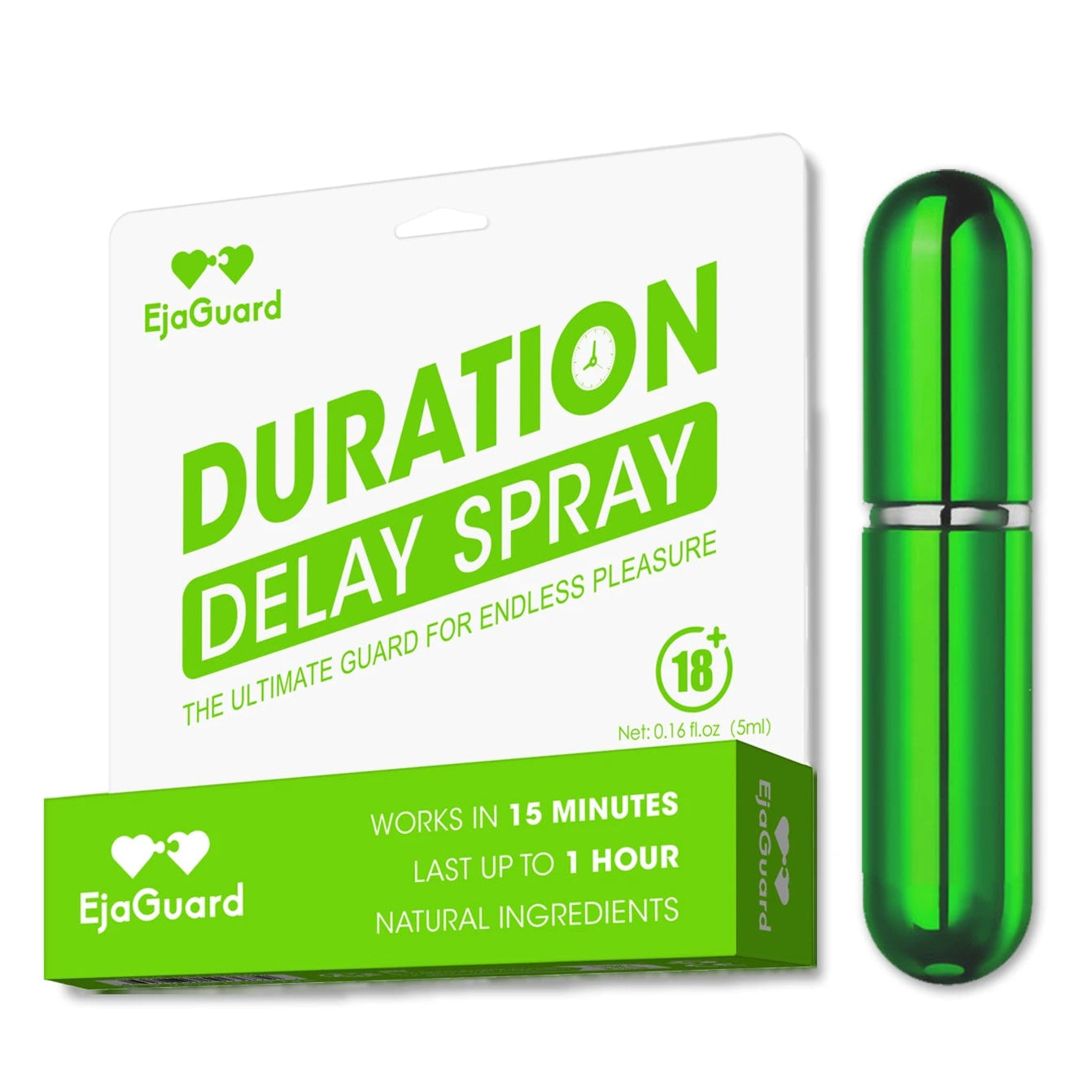
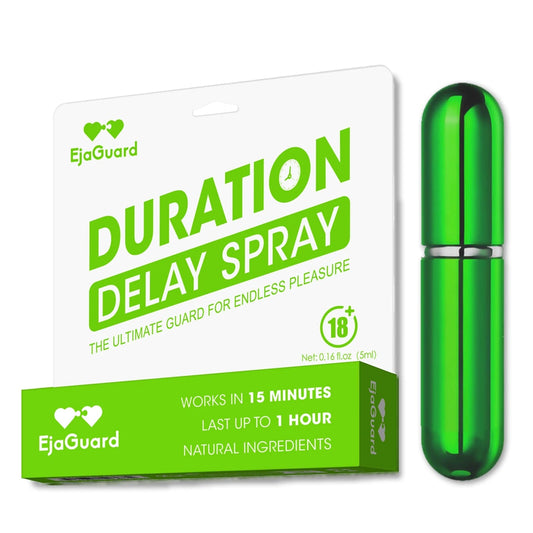
EjaGuard is one example of a delay spray that can be considered within the broader category of topical support for ejaculation delay.
The current EjaGuard website describes EjaGuard as a herbal delay spray intended to help slow the onset of ejaculation. Its current FAQ provides product-specific instructions for application and use.
The more important point for this article is where a product such as EjaGuard fits conceptually.
It can be viewed as a temporary sensory-management tool, rather than a replacement for behavioral awareness, psychosexual therapy, or medical evaluation.
For someone exploring a combined approach, that distinction can help set realistic expectations.
A delay spray may change the immediate sensory experience.
Behavioral techniques may focus on recognizing and managing arousal.
Professional therapy may address anxiety, relationship dynamics, or persistent psychological factors.
These approaches do not have to be viewed as competitors.
They can represent different layers of a broader strategy.
For more information about the product itself, see the EjaGuard Delay Spray product page.
It is also worth separating product information from clinical evidence.
EjaGuard's own website provides information about its formulation and intended use, but product-specific claims should not be treated as equivalent to independent clinical evidence for PE treatment.
That distinction is important for anyone researching delay sprays online.

When It May Be Worth Talking to a Healthcare Professional
Not every case of ejaculation that happens sooner than expected requires medical treatment.
Sexual experiences naturally vary, and an occasional episode of rapid ejaculation is not necessarily a sign of PE.
However, persistent or distressing problems deserve more attention.
A healthcare professional can help determine whether the problem is lifelong or acquired and whether other factors may be contributing.
This can be particularly important if ejaculation problems appear alongside erectile difficulties, significant anxiety, pain, urinary symptoms, medication changes, or other changes in sexual function.
The AUA/SMSNA guideline provides a clinical framework for evaluating and managing ejaculation disorders.
Professional support can also be useful when self-directed approaches have not helped.
A clinician may discuss behavioral therapy, psychosexual counseling, topical anesthetics, oral medications, or combinations of approaches depending on the individual situation.
The goal is not necessarily to find the strongest treatment.
It is to identify an approach that addresses the actual factors involved.
That is particularly important with acquired PE, where a change in sexual function may sometimes point toward another underlying issue that deserves evaluation.
The Bottom Line
Delay sprays and behavioral techniques are not really two versions of the same treatment.
They work on different parts of the sexual experience.
A delay spray temporarily changes sensitivity.
Behavioral techniques focus more on awareness, arousal recognition, and learned responses.
Psychological or sex therapy can address anxiety, expectations, relationship factors, and other issues that may contribute to distress around ejaculation.
Because these approaches target different factors, there is a reasonable clinical basis for considering them together in some situations. Research has found some evidence that behavioral therapy combined with drug treatment can outperform drug treatment alone in certain studies, but this evidence should not be automatically generalized to every delay spray or every person with PE.
So the most useful way to think about a combined approach is not:
“What is the strongest combination?”
Instead, ask:
“What part of my experience actually needs help?”
If sensitivity is a major factor, a topical option may provide temporary support.
If recognizing rising arousal is difficult, behavioral techniques may be worth exploring.
If anxiety or relationship factors are contributing significantly, psychosexual support may be relevant.
And if the problem is persistent, new, or accompanied by other sexual or health changes, professional evaluation can help identify the underlying factors.
Ultimately, managing PE does not have to mean choosing between a product and a behavioral approach.
For some people, the most useful strategy may involve understanding how different tools address different parts of the problem—and using that information to build a more individualized approach to sexual health.

