

 Buy Now

How Ejaculation Actually Works: Understanding the Male Ejaculatory Reflex and Premature Ejaculation

Ejaculation is something most men experience regularly, but surprisingly few people understand what is actually happening inside the body when it occurs.
It is easy to think of ejaculation as a simple physical reaction: stimulation increases, arousal builds, and eventually semen is released.
In reality, ejaculation is a highly coordinated process involving the brain, spinal cord, nerves, reproductive organs, muscles, and sensory signals.
Understanding this process can also change the way you think about premature ejaculation (PE).
PE isn't simply a matter of having "too much sensitivity." The timing of ejaculation is influenced by several interacting biological and psychological systems, which is why different men can experience very different patterns of ejaculation.
For a broader introduction to PE, you can also read this complete guide to premature ejaculation for an overview of symptoms, causes, diagnosis, and treatment approaches.

Table of Contents
- What Actually Triggers Ejaculation?
- Ejaculation Is More Than One Event
- Phase One: The Emission Phase
- Phase Two: The Expulsion Phase
- Where Does the Brain Fit Into Ejaculation?
- What Is the Ejaculatory Reflex?
- Why the Spinal Cord Matters
- The Role of Penile Sensory Signals
- Serotonin and the Ejaculatory Threshold
- Dopamine, Arousal, and Sexual Motivation
- Why Premature Ejaculation Is More Complicated Than Sensitivity
- What Is the “Point of No Return”?
- Why Some Men Reach Ejaculation Faster Than Others
- How Anxiety Can Influence the Process
- Where Do Delay Sprays Fit Into This Process?
- Why Reducing Sensation Doesn't Completely “Switch Off” Ejaculation
- Why More Numbing Doesn't Necessarily Mean Better Control
- Understanding Ejaculation Can Change How You Think About PE
- When Ejaculation Problems May Need Medical Evaluation
- The Bottom Line
What Actually Triggers Ejaculation?
Before ejaculation occurs, sexual stimulation produces sensory signals that travel from the genital area through the nervous system.
The glans penis is particularly important because it contains sensory nerve endings that respond to mechanical stimulation. These signals are transmitted through sensory nerves toward the spinal cord, where they interact with neural circuits involved in sexual response.
But the process isn't simply:
stimulation → ejaculation
There are multiple layers of control between the initial physical stimulus and the final ejaculation.
The brain can influence these pathways, while the spinal cord contains important neural circuitry that coordinates the physical events required for ejaculation.
Research describing the physiology of ejaculation has found that the process involves both peripheral sensory input and central nervous system control.
This is one reason why two men can receive similar physical stimulation but have completely different responses.
One person's nervous system may reach the threshold for ejaculation relatively quickly, while another may require considerably more stimulation.
That difference isn't necessarily explained by penile sensitivity alone.

Ejaculation Is More Than One Event
One of the most useful things to understand about male sexual physiology is that ejaculation isn't a single event.
It is generally described as having two coordinated phases:
- Emission
- Expulsion
These two stages happen in rapid succession, but they involve different muscular and nervous-system mechanisms.
The European Association of Urology describes ejaculation as a complex physiological process involving neurological, hormonal, and anatomical pathways.
That distinction matters when discussing PE because ejaculation isn't simply about semen suddenly leaving the body.
Before semen is expelled, the reproductive system has already undergone a series of coordinated changes.
So when someone says they "ejaculated too quickly," the event they experience as ejaculation is actually the end result of a process that began earlier.

Phase One: The Emission Phase
The first major phase is called emission.
During emission, sperm and fluids from different parts of the male reproductive system are transported into the urethra.
The vas deferens help move sperm from the epididymis toward the reproductive ducts, while secretions from structures such as the seminal vesicles and prostate contribute to semen.
At the same time, the bladder neck closes, helping prevent semen from moving backward into the bladder during normal ejaculation.
This phase is largely controlled by the autonomic nervous system.
The process is remarkably coordinated considering that several different structures have to respond in the correct sequence.
The Cleveland Clinic describes emission as the stage in which sperm and glandular fluids combine to form semen before the expulsion phase pushes it out of the penis.
This also explains why ejaculation isn't simply a matter of the penis becoming "too sensitive."
Sensitivity can influence the sensory input that contributes to the process, but the actual movement of semen depends on coordinated activity throughout the reproductive and nervous systems.

Phase Two: The Expulsion Phase
After emission comes expulsion.
This is the part most people associate with ejaculation.
During expulsion, rhythmic contractions of muscles around the urethra and base of the penis propel semen outward.
These contractions happen automatically once the ejaculatory process reaches the appropriate stage.
According to the Cleveland Clinic, contractions during ejaculation occur at regular intervals and push semen out of the penis in several spurts.
The important point is that by this stage, ejaculation is no longer something you can simply stop through conscious decision-making.
Once the reflex has progressed far enough, the body is essentially carrying out a coordinated neurological and muscular program.
This is why people often describe a feeling that ejaculation has become "inevitable."
It isn't just a psychological feeling.
There is a real physiological transition occurring.

Where Does the Brain Fit Into Ejaculation?
If ejaculation involves a spinal reflex, does the brain actually matter?
Absolutely.
The brain doesn't simply sit back and watch the spinal cord do everything.
Instead, the brain continuously sends both facilitating and inhibiting signals that can influence the ejaculatory process.
Sexual desire, emotional state, anxiety, attention, anticipation, and sensory perception can all affect the overall sexual response.
Research on ejaculation physiology has identified a network involving areas of the brain and spinal cord, with neurotransmitters such as serotonin and dopamine participating in the regulation of sexual behavior and ejaculation.
This helps explain why ejaculation can behave differently under different circumstances.
The same person may respond differently depending on stress, arousal, anxiety, relationship circumstances, or other factors.
So ejaculation should not be thought of as a simple mechanical timer.
It is better understood as the result of several systems communicating with each other.
What Is the Ejaculatory Reflex?
The ejaculatory reflex is essentially the coordinated neural process that produces ejaculation once the body reaches the necessary threshold.
Sensory information from the penis travels through nerves toward the spinal cord.
The spinal cord processes this information and coordinates the autonomic and somatic responses involved in emission and expulsion.
At the same time, signals from the brain can influence whether the process is facilitated or inhibited.
A review of ejaculation physiology describes ejaculation as a complex spinal reflex whose essential circuitry is located in the lumbosacral spinal cord, while remaining under strong influence from the brain.
This is an important distinction.
The spinal cord provides much of the machinery for the reflex, but the brain helps regulate the threshold at which that machinery is activated.
In simple terms:
The penis provides sensory information.
The spinal cord coordinates the reflex.
The brain helps regulate the process.
The reproductive organs and muscles carry out the physical response.
That is a much more accurate picture than simply thinking "more sensitivity equals faster ejaculation."

Why the Spinal Cord Matters
The spinal cord is sometimes overlooked when people discuss sexual function.
However, ejaculation depends heavily on neural circuits located in the spinal cord.
Specialized spinal networks coordinate signals from the genital region with the muscles and organs involved in ejaculation.
This allows the body to perform a complicated sequence automatically.
The process also explains why ejaculation is not completely under conscious control.
You can influence arousal and stimulation, but you cannot simply decide at any moment that your nervous system will ignore an established reflex.
Studies of male sexual responses have found that spinal circuits can mediate sexual reflexes while also being modulated by signals from the brain.
This is also why neurological conditions or injuries affecting the spinal cord can sometimes cause major changes in ejaculation.
When the communication between the brain, spinal cord, and reproductive system is disrupted, ejaculation can become delayed, absent, retrograde, or otherwise altered.
The Role of Penile Sensory Signals
If the nervous system is the control center, penile sensation is part of the incoming information.
When the penis is stimulated, sensory receptors detect mechanical changes and send signals through peripheral nerves.
The glans is particularly important because it contains a high concentration of sensory structures involved in sexual sensation.
These signals contribute to the buildup toward ejaculation.
But again, sensory input isn't the entire story.
The same amount of stimulation doesn't automatically produce the same response in every man.
The nervous system interprets sensory information in the context of the person's overall arousal state.
That means the threshold for ejaculation can be affected by much more than the physical intensity of stimulation.
This is one reason modern discussions of PE increasingly recognize that the condition has multiple contributing factors rather than one universal cause.
The European Association of Urology's guidelines on ejaculation disorders describe PE as having a multifactorial background involving biological and psychological factors rather than one single mechanism.
Serotonin and the Ejaculatory Threshold
One of the most studied neurotransmitters in ejaculation research is serotonin, also known as 5-HT.
Serotonin has an important inhibitory role in the central control of ejaculation.
In simplified terms, serotonergic activity can raise the threshold required for ejaculation.
This is one reason serotonin-related medications have been studied extensively in the treatment of PE.
Research has identified several serotonin receptor subtypes that participate in the regulation of ejaculation, although the system is much more complicated than simply having "more serotonin" or "less serotonin."
This is also why certain antidepressants can affect ejaculation.
Selective serotonin reuptake inhibitors (SSRIs), for example, can delay ejaculation and have been used off-label for PE.
But this doesn't mean serotonin alone determines how quickly someone ejaculates.
Multiple neurotransmitter systems interact with each other, and the relationship between brain chemistry and ejaculation is complex.

Dopamine, Arousal, and Sexual Motivation
If serotonin is often associated with inhibition of ejaculation, dopamine has a different role.
Dopamine is heavily involved in motivation, reward, arousal, and sexual behavior.
That doesn't mean dopamine simply "causes ejaculation."
Instead, dopamine participates in several aspects of sexual behavior and interacts with other neural systems.
Reviews of male sexual behavior have found that dopaminergic pathways are involved in sexual motivation, arousal, genital reflexes, and reward-related behavior.
This is another reason why ejaculation shouldn't be reduced to a single variable.
A man's sexual response depends on the interaction between:
- sensory stimulation
- arousal
- motivation
- brain chemistry
- spinal reflexes
- psychological state
- genital sensation
All of these factors can influence the overall process.

Why Premature Ejaculation Is More Complicated Than Sensitivity
This is where the physiology becomes especially relevant to PE.
A common assumption is:
"I ejaculate quickly because my penis is too sensitive."
Sensitivity can certainly be part of the picture.
But it isn't the only possible explanation.
The European Association of Urology notes that proposed biological and psychological contributors to PE include anxiety, penile hypersensitivity, serotonergic mechanisms, erectile dysfunction, prostatitis, thyroid problems, and other factors depending on the type of PE.
Mayo Clinic also describes PE as involving a complex interaction of psychological and biological factors rather than a single cause.
This distinction matters because treating one part of the system doesn't necessarily address every contributing factor.
For example, reducing penile sensory input may help some men.
But if anxiety, erectile concerns, or another underlying factor is contributing to rapid ejaculation, changing penile sensitivity alone may not completely solve the problem.

What Is the “Point of No Return”?
Many men are familiar with the idea of a point of no return.
This refers to the stage during sexual stimulation when ejaculation becomes essentially unavoidable.
Before this point, changes in stimulation or arousal may still influence whether ejaculation occurs.
After the reflex has progressed beyond a certain threshold, however, consciously trying to stop it becomes much more difficult.
This is not a precise anatomical switch that can be measured by one universal sensation.
Rather, it is a practical description of the transition from controllable arousal toward the involuntary ejaculatory reflex.
Understanding this distinction can be useful when thinking about PE.
A man who feels that ejaculation arrives almost immediately may have very little perceived control over the transition from high arousal to ejaculation.
A man with better control may recognize changes in arousal earlier and have more opportunity to modify stimulation or slow down.
That difference is one reason why control and ejaculation time aren't necessarily identical concepts.
Why Some Men Reach Ejaculation Faster Than Others
There isn't one universal reason why one man reaches ejaculation faster than another.
Differences can exist at several levels.
Some men may have different sensory responses to genital stimulation.
Others may have differences in how their central nervous system regulates the ejaculatory threshold.
Psychological factors can also influence the process.
Medical conditions may contribute as well.
And in some cases, several factors may be operating at the same time.
This is why PE can look very different from person to person.
For some men, it has been present since their first sexual experiences.
For others, it develops after previously normal sexual function.
Some experience it consistently, while others experience rapid ejaculation only in certain situations.
Modern clinical definitions recognize these different patterns rather than treating every case as exactly the same condition.
How Anxiety Can Influence the Process
The brain's role in ejaculation also helps explain why psychological factors can have physical consequences.
Performance anxiety doesn't just exist as a thought in your head.
Anxiety changes attention, arousal, muscle tension, and the way you interpret physical sensations.
If someone is constantly thinking:
"Am I going to finish too quickly?"
they may become hyper-aware of every change in sensation.
That increased attention can make the experience feel more intense and can create a cycle where worrying about ejaculation becomes part of the problem.
Mayo Clinic lists anxiety, stress, worry about PE, and concerns about erectile function among psychological or related factors that can contribute to PE.
This doesn't mean PE is "all in your head."
Quite the opposite.
It shows how closely the brain and body interact during sexual function.
The physical reflex is real.
The psychological influence on that reflex is real too.
Where Do Delay Sprays Fit Into This Process?
This is where delay sprays become interesting from a physiological perspective.
A topical delay spray primarily works at the peripheral sensory level.
Instead of changing serotonin or dopamine in the brain, a topical desensitizing product is intended to reduce penile sensory input.
In other words, it changes part of the information entering the nervous system.
That can potentially make it harder for stimulation to push someone toward the ejaculatory threshold too quickly.
Clinical guidelines recognize topical anesthetics as one treatment option for PE, and studies of lidocaine/prilocaine sprays have shown improvements in ejaculation latency and patient-reported outcomes.
This is an important distinction:
A delay spray doesn't “turn off” ejaculation.
It changes one component of the sensory pathway that contributes to the process.
That is a much more accurate way to understand what these products are designed to do.

Why Reducing Sensation Doesn't Completely “Switch Off” Ejaculation
Imagine the ejaculatory process as a system receiving information from several sources.
Penile stimulation is one input.
But the brain, spinal cord, psychological state, arousal level, and reproductive system are all involved too.
Reducing one input doesn't necessarily shut down the entire system.
This is why a topical delay spray can potentially reduce the likelihood of reaching ejaculation too quickly without completely preventing ejaculation.
It also explains why different men can experience very different effects from the same type of product.
The goal isn't necessarily to eliminate sensation.
Instead, the goal is to reduce sensory stimulation enough to create more room between sexual stimulation and the ejaculatory threshold.
For men interested in understanding the broader category, EjaGuard's delay spray guide provides an overview of how topical delay products are generally used and how they are intended to work.

Why More Numbing Doesn't Necessarily Mean Better Control
Once you understand the physiology, another common misconception becomes easier to explain.
If reducing sensory input can delay ejaculation, why not reduce as much sensation as possible?
Because the relationship isn't necessarily linear.
Sexual pleasure itself depends partly on sensory input.
If sensation is reduced too aggressively, the experience can become less enjoyable or stimulation may become insufficient for normal arousal and orgasm.
Clinical guidance on topical treatments also recognizes local adverse effects such as genital hypoesthesia and, in some cases, erectile difficulties.
That doesn't mean topical products are inherently problematic.
It means that more sensory reduction isn't automatically better.
The goal of a delay product is to change the sensory input enough to be useful, not to eliminate normal sensation.
For anyone using EjaGuard specifically, the current EjaGuard FAQ states that the product should be started at 3 sprays, with current instructions allowing adjustment up to 10 sprays, and recommends waiting 15–30 minutes before intercourse.
Product-specific directions should always take priority over copying someone else's routine from an online discussion.
Understanding Ejaculation Can Change How You Think About PE
One of the biggest benefits of understanding ejaculation physiology is that it removes some of the mystery surrounding PE.
Ejaculation isn't a single muscle you need to "control."
It isn't simply a matter of being mentally strong enough.
And it isn't necessarily caused by one physical problem.
It is a coordinated process involving sensory signals, spinal circuits, brain pathways, neurotransmitters, reproductive organs, and psychological influences.
That means there can also be multiple ways of approaching ejaculation problems.
Some treatments work primarily on penile sensitivity.
Some affect neurotransmitter systems.
Some approaches focus on psychological factors.
Others address conditions such as erectile dysfunction or other medical issues that may contribute to ejaculation difficulties.
The appropriate approach depends on the individual and the underlying problem.
This is also why a general PE guide is useful as a starting point, but it shouldn't replace a medical evaluation when symptoms are persistent or changing.
When Ejaculation Problems May Need Medical Evaluation
Occasional rapid ejaculation doesn't automatically mean that someone has a medical disorder.
Mayo Clinic notes that PE is common and can happen occasionally without necessarily being a cause for concern. Diagnosis generally involves a persistent pattern of early ejaculation, difficulty delaying ejaculation, and associated distress.
However, a noticeable change in ejaculation can be worth discussing with a healthcare professional.
This is especially true if ejaculation problems appear suddenly after previously normal sexual function, or if they occur alongside other symptoms such as erectile problems, pain, urinary symptoms, or significant psychological distress.
The same principle applies in the opposite direction.
If ejaculation becomes unusually difficult or takes much longer than before, that can also have multiple possible causes, including medications, health conditions, neurological problems, psychological factors, and alcohol use.
The goal isn't to diagnose yourself based on one symptom.
It's to recognize when ejaculation has changed enough that understanding the underlying cause is more useful than simply trying another product.
The Bottom Line
Ejaculation is much more complicated than it looks.
What feels like one quick event is actually the final stage of a coordinated process involving the penis, sensory nerves, spinal cord, brain, reproductive organs, muscles, and multiple neurotransmitter systems.
The basic sequence can be thought of like this:
Sexual stimulation → sensory signals → nervous-system processing → ejaculatory threshold → emission → expulsion
The brain can influence the process.
The spinal cord coordinates critical parts of the reflex.
The reproductive system prepares and transports semen.
Muscles then contract to complete ejaculation.
Premature ejaculation can occur when the overall system reaches ejaculation sooner than desired, but the reasons for that can vary considerably between individuals.
Penile sensitivity is one possible factor, but it is only one piece of a much larger system.
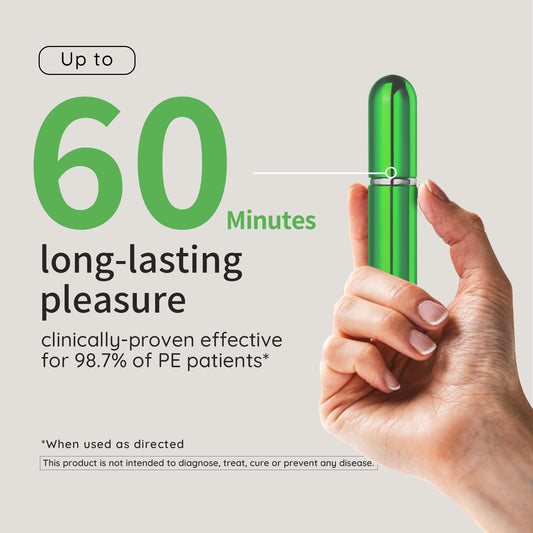
This also explains why delay sprays work differently from treatments that act on the central nervous system. A topical product such as EjaGuard is designed to act primarily by reducing penile sensitivity, potentially lowering the amount of sensory stimulation reaching the pathways involved in ejaculation.
The bigger lesson is that ejaculation isn't controlled by a single switch.
It is a coordinated neurological and physiological process.
And understanding that process can make PE easier to understand too.
Instead of asking only:
“Why am I so sensitive?”
it can be more useful to ask:
“What is influencing my ejaculatory threshold, and which part of the process am I actually trying to change?”
That shift in perspective can lead to a much more informed approach to premature ejaculation.

