

 Buy Now
How to Talk to Your Partner About Premature Ejaculation

Premature ejaculation (PE) can affect more than just the person experiencing it.
It can also affect communication, confidence, intimacy, and the way couples approach sex.
Yet talking about it can feel surprisingly difficult.
Someone experiencing PE may worry that bringing it up will make their partner think something is wrong with them. Their partner may not know whether to mention it, avoid the subject, or simply wait for things to improve.
As a result, both people can end up thinking about the issue without actually talking about it.
The good news is that premature ejaculation is common, and experiencing it does not mean that something is fundamentally wrong with you or your relationship.
More importantly, couples do not have to treat PE as a personal failure.
It can be approached as something that two people can understand and work around together.
This guide explains why conversations about PE can be difficult, how to start one, what to say, what to avoid, and how couples can make the conversation productive rather than uncomfortable.
Table of Contents
- Why Talking About PE Can Feel So Difficult
- Choose the Right Time to Start the Conversation
- How to Bring Up Premature Ejaculation Without Making It Awkward
- Talk About Your Experience, Not Just the Problem
- Give Your Partner a Chance to Share Their Feelings
- Avoid Blame and Performance Pressure
- Discuss What You Can Try Together
- Where Delay Sprays Fit Into the Conversation
- What If Your Partner Doesn't Know Much About PE?
- How to Keep the Conversation Going
- When It May Be Time to Seek Professional Help
- The Bottom Line

Why Talking About PE Can Feel So Difficult
Sexual problems often involve more than physical symptoms.
They can become connected to identity and self-confidence.
Someone experiencing premature ejaculation may think:
-
“My partner is going to be disappointed.”
-
“They'll think I'm bad at sex.”
-
“What if they lose interest in me?”
-
“I should be able to control this.”
-
“Maybe I shouldn't bring it up.”
These thoughts can make a relatively straightforward conversation feel much more serious than it actually is.
There is also a social expectation that men should naturally know how to control ejaculation.
That expectation isn't particularly helpful.
Premature ejaculation is a recognized sexual health concern, and it can involve multiple factors, including psychological, relationship, and biological influences.
Understanding what PE is can therefore be a useful first step.
Learn more: What Is Premature Ejaculation?
Instead of thinking:
“Something is wrong with me.”
It can be more productive to think:
“This is something I'm experiencing, and I want to understand it better.”
That small change in perspective can make it much easier to talk about.
You Don't Have to Start the Conversation During Sex
One of the biggest mistakes couples can make is trying to have a serious conversation about PE in the middle of sex.
If someone has just ejaculated sooner than they wanted, emotions may already be running high.
They might feel embarrassed or frustrated.
Their partner might also be unsure how to react.
That isn't necessarily the best environment for a calm conversation.
Instead, consider talking at a neutral time.
It could be while you're relaxing together, taking a walk, or having a normal conversation about your relationship.
The goal isn't to make the conversation feel like a formal medical appointment.
It should simply feel like two partners talking about something that affects their sex life.

You Don't Need the Perfect Opening Line
A lot of people delay difficult conversations because they're trying to figure out exactly what to say.
You don't need a perfect speech.
Something simple can work.
For example:
“There's something about sex I've been a little worried about, and I think I'd rather talk about it than keep stressing over it.”
Or:
“Sometimes I finish much faster than I'd like, and I've been thinking about whether we should talk about it.”
That is enough to open the door.
You don't need to immediately explain every possible cause.
You don't need to diagnose yourself.
And you don't need to have a solution ready.
The first conversation is simply about making the subject less uncomfortable.
Focus on the Problem, Not on Blame
Another important part of the conversation is how you frame the issue.
Try to avoid language that makes either person responsible for the problem.
For example:
“You make me finish too quickly.”
is very different from:
“I sometimes get overwhelmed by stimulation really quickly, and I'd like to figure out how we can make things more comfortable for both of us.”
The second version creates a shared problem rather than assigning blame.
This matters because sexual difficulties can become much harder to address when one partner feels responsible for causing them.
PE isn't necessarily caused by a partner, and a partner shouldn't be expected to “fix” it.
Instead, the conversation can focus on what both people can do to make sex more enjoyable.

Explain What You Are Actually Experiencing
“I'm bad at sex” isn't very useful information.
It doesn't tell your partner what is actually happening.
Try to describe the experience instead.
For example:
-
You may feel that ejaculation happens sooner than you want.
-
You may find it difficult to recognize the point where you're getting too close.
-
You may become anxious because you're worried about finishing quickly.
-
You may find that your control changes from one sexual encounter to another.
-
You may be frustrated because you want to spend more time being intimate.
These details can help your partner understand what you're experiencing without turning the conversation into self-criticism.
It also creates space for your partner to explain their perspective.
Ask Your Partner What They Experience Too
A conversation about PE shouldn't be a one-person monologue.
Your partner may have their own thoughts about your sex life that you haven't heard before.
They might say that they already enjoy other parts of sex.
They might say they don't view your ejaculation as negatively as you assumed.
They might want more time with other forms of stimulation.
Or they might have concerns that they've been hesitant to mention.
You won't know unless you ask.
Questions such as:
“How do you actually feel about our sex life?”
or:
“Is there anything you'd like us to do differently?”
can create a much more productive conversation.
You may discover that your partner's perspective is very different from the one you've been imagining.

PE Doesn't Define the Quality of Sex
One of the most useful things couples can recognize is that intercourse duration isn't the same thing as sexual satisfaction.
Sex can involve many different forms of intimacy and stimulation.
For some couples, penetration is only one part of the experience.
That means a person experiencing PE does not automatically have an unsatisfying sex life.
The pressure to make intercourse last for a specific amount of time can sometimes make the situation feel worse.
Instead of asking:
“How long did I last?”
it can be more useful to ask:
“Did we both enjoy ourselves?”
That doesn't mean duration is irrelevant.
If you want more control over ejaculation, that's a completely valid goal.
But it shouldn't become the only measurement of sexual satisfaction.

Talk About What You Both Want to Change
Once you've talked about the problem, the next step is figuring out what you actually want to improve.
Maybe you want to have more control during penetration.
Maybe your partner wants more time for other activities.
Maybe you want to reduce the anxiety you experience before sex.
Maybe you simply want to stop thinking about PE so much.
These are different goals.
Being specific makes it easier to decide what to try.
For example, a couple might decide to focus on slowing things down rather than trying to achieve a specific duration.
Another couple might experiment with different types of stimulation.
Someone else might decide to learn more about behavioral approaches to PE.
Learn more: Start-Stop Technique for Premature Ejaculation
There is no requirement that every couple solve the issue in exactly the same way.

Don't Turn Sex Into a Performance Test
This is one of the biggest risks after a couple starts talking about PE.
The conversation is supposed to reduce pressure.
But sometimes couples accidentally create a new kind of pressure.
For example:
“Let's see if you can last ten minutes tonight.”
That might sound motivating, but it can turn sex into a test.
Now every sexual encounter has a score.
If you last longer, you succeeded.
If you finish quickly, you failed.
That mindset can make intimacy feel stressful.
Instead, focus on the process.
Pay attention to comfort, communication, arousal, and enjoyment.
If duration improves, that's great.
But it doesn't need to become the only goal.

Consider Different Approaches
There are several approaches that may help people manage premature ejaculation.
Some involve behavioral techniques.
Others involve counseling or sex therapy.
Some people explore topical delay products designed to temporarily reduce penile sensation.
And in some situations, prescription treatment may be appropriate.
Explore premature ejaculation treatment options
The right approach depends on the individual.
What works for one person may not work for another.
That's one reason it can be useful to discuss options with a healthcare professional rather than assuming there is one universal solution.
Where Delay Products May Fit
Topical delay products are one option some people use to manage PE.
The basic idea is to temporarily reduce penile sensitivity, which may make stimulation easier to manage.
Products can differ substantially in their active ingredients, concentrations, formulations, and directions.
Some use topical anesthetics such as lidocaine or benzocaine.
Others are marketed around different formulations or ingredients.
Because these products are applied directly to sensitive skin, it's important to learn how to use delay spray correctly and read the product instructions carefully rather than assuming that every delay product should be used in the same way.
FDA: Understanding Over-the-Counter Medicines
For people interested in trying a topical product, the goal should not simply be maximum desensitization.
Too much reduction in sensation can make sex less enjoyable and may create other problems, including changes in perceived arousal or erection quality.
The better goal is finding an approach that provides enough control while preserving comfortable sensation.
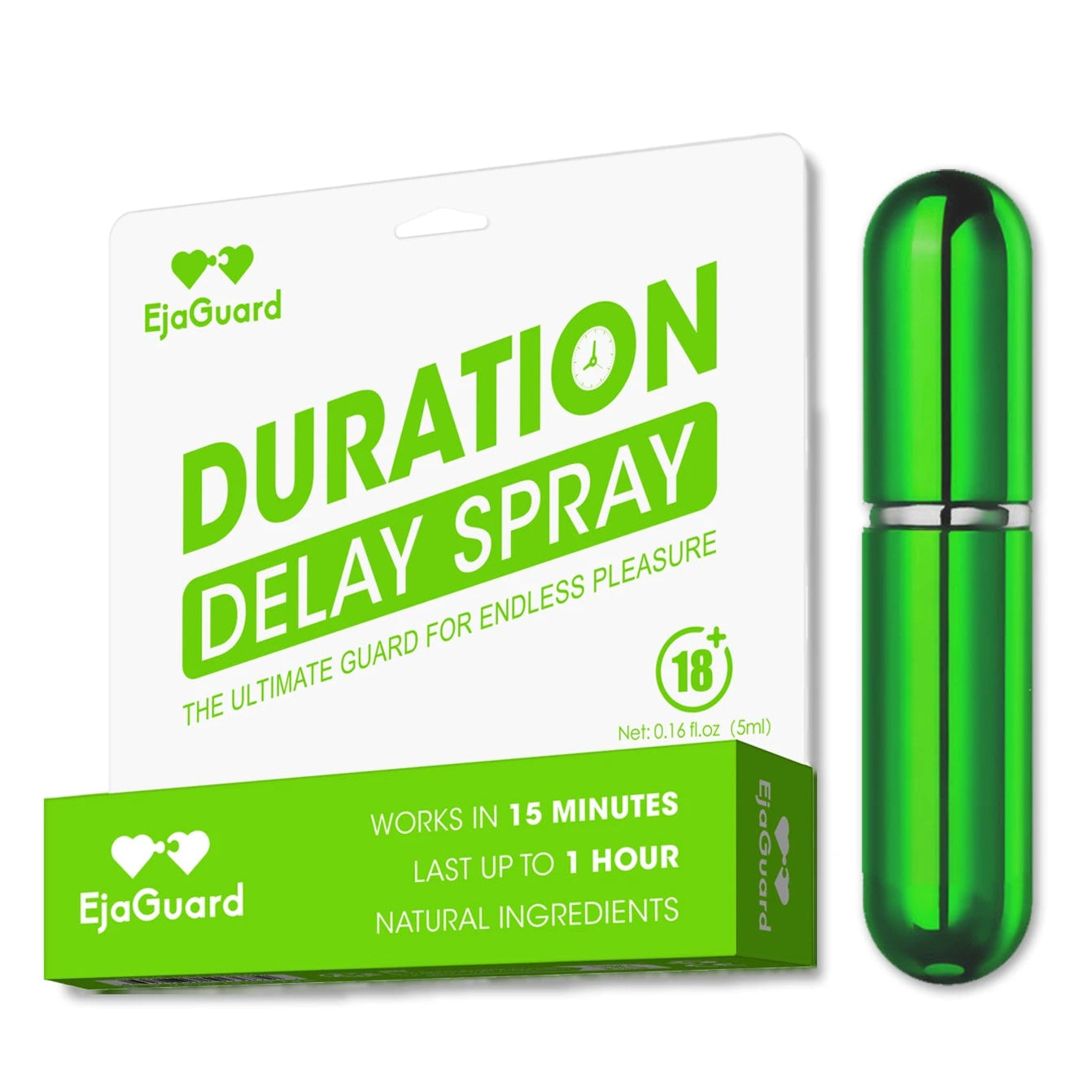
Products such as Ejaguard can be considered as one option within the broader category of delay products, but individual responses can vary, so following the specific product's directions is important.

Don't Hide Product Use From Your Partner
If you're considering using a delay product, it may be worth talking about it with your partner.
You don't necessarily need to make it a dramatic conversation.
Something as simple as:
“I've been trying something that may help me have a little more control.”
can be enough.
This can prevent your partner from being surprised by a change in sensation or routine, especially because some delay sprays can transfer to a partner.
It also turns the product into a shared part of your sexual experience rather than something you feel you have to hide.
That can be particularly useful if you're already dealing with performance anxiety.
The less secrecy and uncertainty surrounding the issue, the easier it may be to relax.
What If Your Partner Doesn't Think It's a Problem?
This can be an interesting situation.
You may feel frustrated about ejaculating quickly, while your partner may genuinely feel satisfied with your sex life.
Neither person is necessarily wrong.
Your experience matters even if your partner isn't bothered by the same thing.
At the same time, your partner's perspective matters too.
You don't have to convince them that your sex life is bad.
Instead, you can explain:
“I know you're not necessarily unhappy, but I'd still like to have a little more control for myself.”
That keeps the conversation honest without creating unnecessary concern.
What If Your Partner Is Clearly Frustrated?
The opposite can happen too.
Your partner may want longer intercourse or may feel that they aren't getting enough time for their own sexual needs.
That can be difficult to hear.
Try not to immediately interpret their frustration as rejection.
Instead, ask what specifically they would like to change.
Maybe they want more foreplay.
Maybe they want to try different sexual activities.
Maybe they want you to slow down.
Maybe they simply want reassurance that you're working on the issue.
A specific conversation is much more useful than assuming what your partner wants.
What Not to Say
Certain phrases can make conversations about PE harder.
Try to avoid statements like:
“I'm terrible at sex.”
“You'll eventually get tired of me.”
“There's nothing I can do about it.”
“It's your fault.”
“I have to last longer or this relationship won't work.”
These statements can turn a solvable sexual concern into a much bigger relationship problem.
Instead, try to describe the situation without catastrophizing it.
For example:
“This is something I've been struggling with, and I'd like us to figure out what works for both of us.”
That communicates vulnerability without turning the issue into a disaster.
What If You're Embarrassed?
You probably will feel at least a little embarrassed.
That's normal.
You don't have to eliminate that feeling before starting the conversation.
You can even acknowledge it.
“This is kind of embarrassing for me to talk about, but I think it would be better if we did.”
Sometimes saying that out loud makes the conversation easier.
Your partner may also feel awkward.
That's okay.
There may be a few uncomfortable seconds.
That doesn't mean the conversation is going badly.
Don't Expect One Conversation to Solve Everything
A single conversation may not solve PE.
It shouldn't have to.
Think of the first conversation as the beginning of communication rather than the final answer.
Over time, you may discover that certain situations are easier than others.
You may learn that certain approaches work better for you.
You may become more comfortable discussing sex with your partner.
You may also decide that professional help would be useful.
All of those are valid outcomes.
The important thing is that PE stops being a silent issue that only exists inside one person's head.
When Professional Help May Be Useful
If premature ejaculation is causing significant distress, affecting your relationship, or consistently interfering with your sex life, talking to a healthcare professional can be worthwhile.
A doctor or qualified sexual-health professional can help determine whether what you're experiencing fits the clinical definition of premature ejaculation and discuss appropriate treatment options.
This can be especially important if the problem appeared suddenly after previously having normal ejaculation control.
Other changes in sexual function may sometimes have different underlying causes.
Professional guidance can help distinguish between them.
Mayo Clinic: Premature Ejaculation
You don't need to wait until the problem becomes severe before asking for help.
Seeking advice doesn't mean you've failed to solve the problem yourself.
It's simply another way of getting useful information.

The Conversation Can Actually Improve Intimacy
There is an unexpected benefit to talking openly about PE.
It can make couples more comfortable talking about sex in general.
Once you've had one honest conversation, it may become easier to talk about other things:
What feels good.
What doesn't.
What you'd like to try.
What makes you anxious.
What helps you relax.
What your partner enjoys.
Those conversations can be valuable regardless of whether PE remains an issue.
In that sense, dealing with PE can become an opportunity to improve communication rather than simply a problem that needs to be eliminated.

A Simple Framework for Talking About PE
If you don't know where to start, keep the conversation simple.
1. Choose a calm moment
Don't wait until you're frustrated immediately after sex.
Find a private moment when neither of you feels rushed.
2. Describe your experience
Explain what happens without blaming yourself or your partner.
3. Say what you want
Maybe you want more control, less anxiety, or simply a better overall experience.
4. Ask for their perspective
Give your partner room to explain how they actually feel.
5. Discuss possible solutions
Talk about behavioral techniques, communication, different sexual activities, topical products, or professional treatment.
6. Revisit the conversation
Your first discussion doesn't have to produce a final answer.
Treat it as an ongoing conversation.
The Goal Isn't to “Perform” for Your Partner
One final point is worth emphasizing.
PE can create the feeling that sex is something you're supposed to perform correctly.
You are supposed to last long enough.
You are supposed to stay in control.
You are supposed to satisfy your partner.
But a healthy sex life isn't a performance exam.
It's an interaction between two people.
Your partner isn't necessarily measuring you with a stopwatch.
And if they do have concerns about your sex life, those concerns can be discussed openly.
The goal isn't to become a perfect sexual performer.
It's to understand what both of you enjoy and find ways to make the experience work better.
Final Thoughts
Talking about premature ejaculation can be uncomfortable, especially if you're already worried about how your partner sees you.
But avoiding the subject often creates more uncertainty than having the conversation.
You don't need to have a diagnosis.
You don't need to know exactly why it happens.
And you don't need to have a solution ready before you bring it up.
Start with what you know:
“This is something I'm experiencing, and I'd like to talk about it.”
From there, listen to your partner.
Talk about what both of you want.
Explore reasonable options.
And remember that ejaculation time is only one part of a much larger sexual experience.
For some people, behavioral strategies may be enough.
For others, professional guidance or treatment may be appropriate.
Some may also choose to explore topical delay products as part of their approach.
Whatever route you take, the most important thing is not to let PE become a secret source of shame.
It's a sexual-health concern that can be discussed, understood, and managed.
And sometimes, the first improvement isn't lasting longer.
It's simply feeling comfortable enough to talk about it.
