

🎉 Envío gratuito en pedidos superiores a $40 🎉

🎉 Envío gratuito en pedidos superiores a $40 🎉

🎉 Envío gratuito en pedidos superiores a $40 🎉

🎉 Envío gratuito en pedidos superiores a $40 🎉

🎉 Envío gratuito en pedidos superiores a $40 🎉

🎉 Envío gratuito en pedidos superiores a $40 🎉

🎉 Envío gratuito en pedidos superiores a $40 🎉

🎉 Envío gratuito en pedidos superiores a $40 🎉

🎉 Envío gratuito en pedidos superiores a $40 🎉

🎉 Envío gratuito en pedidos superiores a $40 🎉

🎉 Envío gratuito en pedidos superiores a $40 🎉

Carro
0 elementos
Barra lateral de idioma/moneda

Idioma

Lasting Longer vs. Feeling Calmer: Why They Aren't the Same Goal

por EjaGuard Delay Spray 08 Jul 2026
Lasting Longer vs. Feeling Calmer: Why They Aren't the Same Goal

For decades, conversations about premature ejaculation (PE) have revolved around one simple question:

"How long did you last?"

Whether it's discussions on internet forums, advertisements for delay products, or conversations between friends, sexual performance is often reduced to a single number. Many men measure success in minutes, compare themselves with others, and assume that adding more time automatically means a better sexual experience.

While duration certainly has value, it tells only part of the story.

Many healthcare professionals now recognize that sexual satisfaction depends on far more than a stopwatch. Confidence, communication, comfort, emotional connection, and perceived control all influence how satisfying intimacy feels. A person may technically last longer while still feeling anxious, disconnected, or preoccupied with performance.

Likewise, someone who gains only a modest increase in duration may report a dramatically better overall experience simply because they feel calmer.

Understanding the difference between lasting longer and feeling calmer helps shift the conversation away from numbers alone and toward the psychological and emotional aspects that often matter just as much.


Why We Naturally Focus on Minutes

There's a reason most discussions about PE begin with duration.

Time is objective.

It's something that can be measured, compared, and tracked over time.

Researchers use duration because it's relatively easy to quantify during clinical studies. Product advertisements frequently promise longer-lasting performance because additional minutes are easy for consumers to understand.

From a psychological standpoint, numbers also provide reassurance.

If someone lasts one minute today and four minutes next month, that improvement feels concrete.

Unfortunately, real-life intimacy is much harder to measure.

A stopwatch cannot tell us:

  • Whether someone felt relaxed.
  • Whether they enjoyed themselves.
  • Whether they stayed mentally present.
  • Whether they constantly worried about ejaculating.
  • Whether their partner felt emotionally connected.

These factors often determine how satisfying an experience actually feels.


Performance Anxiety Changes Everything

One of the biggest contributors to PE isn't simply physical sensitivity.

It's anticipation.

Many men begin sexual activity already worrying about what might happen next.

They aren't thinking about pleasure.

They aren't paying attention to intimacy.

Instead, their internal dialogue sounds something like this:

"Don't finish too fast."

"Stay in control."

"Don't let it happen again."

This constant monitoring creates an enormous amount of pressure.

Ironically, the harder someone tries to avoid ejaculation, the more attention they give to every sensation.

That increased awareness often amplifies excitement rather than reducing it.

Instead of relaxing into the experience, the brain remains on high alert.

Stress hormones increase.

Breathing becomes shallower.

Muscles become tighter.

Heart rate rises.

All of these physiological changes contribute to increased arousal.

The result is a frustrating cycle.

Anxiety increases arousal.

Higher arousal reduces control.

Reduced control creates more anxiety for next time.

Breaking this cycle frequently requires addressing emotional pressure—not simply adding more minutes.


Calmness Is Often the First Real Improvement

Many people assume successful treatment begins when intercourse duration increases.

In reality, the first noticeable improvement is often psychological.

Individuals frequently describe feeling:

  • Less rushed.
  • Less afraid of making mistakes.
  • Less focused on constantly evaluating themselves.
  • More able to enjoy the moment.

Interestingly, these changes often appear before significant increases in duration.

Why?

Because reducing mental pressure changes how people behave.

Instead of feeling like they're racing against time, they begin making natural adjustments.

They breathe normally.

They communicate more openly.

They move at a comfortable pace.

They stop treating intimacy like an exam they need to pass.

This shift alone can dramatically change the overall experience, even if objective duration changes only slightly.


Confidence Changes Decision-Making

Confidence influences behavior in subtle ways.

Someone who feels uncertain about their control often avoids experimenting.

They may rush through foreplay.

They may avoid changing positions.

They may hesitate to slow down because they're afraid stopping will somehow make things worse.

Everything becomes centered around reaching the finish line before losing control.

By contrast, someone who feels calmer often behaves differently without consciously realizing it.

They become more comfortable adjusting rhythm.

They feel less pressure to perform perfectly.

They stop interpreting every increase in stimulation as an emergency.

Rather than reacting to every sensation, they respond more naturally.

These behavioral differences often create a more enjoyable experience for both partners.


Better Pacing Doesn't Always Mean Slower

People often misunderstand pacing.

Slowing down isn't simply moving less.

It's about creating flexibility.

Healthy sexual experiences naturally include changes in intensity.

Couples pause.

They kiss.

They laugh.

They reposition.

They communicate.

They focus on each other instead of continuously chasing stimulation.

Someone who feels anxious often struggles to do these things because they fear interrupting the moment.

Everything feels urgent.

Everything feels like a countdown.

Feeling calmer restores flexibility.

Instead of constantly wondering whether they're about to lose control, individuals become comfortable adjusting naturally throughout intimacy.

Ironically, these adjustments frequently improve control even further.


Why Rhythm Matters More Than Speed

Many people imagine good sexual performance as maintaining continuous stimulation for an extended period.

Real intimacy rarely works that way.

Instead, satisfying experiences usually involve rhythm.

Acceleration.

Slowing down.

Small pauses.

Changes in movement.

Moments of connection.

When anxiety dominates the experience, rhythm disappears.

Everything becomes focused on one objective:

"Don't finish."

This mindset often makes the encounter feel mechanical.

On the other hand, feeling calmer allows rhythm to develop naturally.

Rather than fighting against every sensation, individuals begin flowing with the experience.

This often creates a stronger emotional connection while simultaneously reducing perceived pressure.


The Difference Between Control and Suppression

Another common misconception is that control means resisting pleasure.

In reality, healthy control is not about eliminating sensation.

It's about responding to sensation without immediately feeling overwhelmed.

Imagine driving a car.

A skilled driver doesn't avoid acceleration altogether.

Instead, they remain comfortable adjusting speed depending on the road.

Sexual control functions similarly.

The goal isn't to remove excitement.

The goal is to avoid feeling like excitement immediately takes over.

That distinction helps explain why many people report greater satisfaction when they feel calmer—even if the increase in duration is relatively modest.


Many People Are Actually Looking for Control

When people first begin searching for solutions to PE, they often describe their goal in terms of time.

"I want to last 10 minutes."

"I wish I could double my time."

"I just want to stop finishing so quickly."

As they gain more experience, however, many discover that time itself was never the real objective.

What they wanted was confidence.

They wanted to stop feeling like ejaculation could happen at any unpredictable moment.

This distinction is subtle but important.

Imagine two different scenarios.

In the first, someone lasts twelve minutes but spends the entire encounter worrying about whether they are about to lose control. Every increase in stimulation feels dangerous. Their attention is divided between enjoying intimacy and monitoring themselves.

In the second, someone lasts seven minutes but feels relaxed throughout. They are able to slow down naturally, change positions comfortably, and remain mentally present without constantly evaluating every sensation.

Most people would describe the second experience as more satisfying, despite the shorter duration.

That is because confidence changes the quality of the experience, not just its length.


Feeling Calm Creates Better Communication

Performance anxiety doesn't only affect the individual experiencing PE.

It often changes how couples communicate.

Someone who feels pressured may avoid discussing the issue entirely. Others may rush intimacy, avoid eye contact afterward, or become frustrated when things don't go as planned.

These reactions are rarely intentional.

They are often driven by embarrassment.

Feeling calmer creates space for communication.

Instead of treating intimacy like a performance that can succeed or fail, couples become more comfortable adapting together.

That might include:

  • Slowing down naturally.
  • Laughing about awkward moments.
  • Trying different pacing.
  • Spending more time on foreplay.
  • Taking brief pauses without embarrassment.

These behaviors strengthen intimacy because they reduce the feeling that everything depends on a single outcome.

Ironically, removing pressure often improves control as well.


The Problem With Chasing a Perfect Number

Many online discussions encourage unrealistic expectations.

Some people believe that lasting twenty or thirty minutes should be the standard.

Others compare themselves with anonymous stories posted online.

This comparison can become harmful.

Sexual experiences vary tremendously between couples.

Factors such as stress, sleep quality, relationship dynamics, alcohol, physical health, and emotional state all influence ejaculation timing.

Even the same individual may experience significant variation from one encounter to the next.

Trying to achieve a fixed number every time often creates unnecessary disappointment.

A healthier perspective is to ask different questions.

Instead of asking:

"Did I last long enough?"

Consider asking:

"Did I feel more comfortable than last time?"

"Did I stay present?"

"Did I enjoy myself?"

"Did I feel connected to my partner?"

These questions better reflect the overall experience rather than a single measurement.


Why the Stopwatch Can Become the Problem

Tracking progress is useful.

Obsessing over every minute is not.

Some individuals begin timing every sexual encounter.

While understandable, this habit can unintentionally reinforce performance anxiety.

When success is defined exclusively by duration, every encounter becomes a test.

If the time increases, confidence rises.

If the time decreases—even slightly—it may feel like complete failure.

This creates unnecessary emotional ups and downs.

Sexual performance is influenced by countless variables.

One shorter experience does not erase previous progress.

Nor does one unusually long experience guarantee permanent improvement.

Rather than viewing each encounter as a score, it is often more productive to evaluate trends over weeks or months.

This approach reduces pressure while providing a more realistic picture of progress.


Why "Natural" Often Means Psychological, Not Just Physical

People frequently describe certain approaches as feeling more "natural."

Interestingly, they are not always referring to the ingredients themselves.

Instead, they are describing the overall experience.

When the reduction in sensitivity feels gradual rather than abrupt, individuals often report that they stop thinking about the treatment entirely.

Instead of wondering:

"Is it working yet?"

or

"Did I apply enough?"

they simply focus on intimacy.

That mental shift can be surprisingly important.

The less attention someone gives to monitoring their own performance, the easier it becomes to stay engaged with their partner.

In other words, "natural" is often as much a psychological experience as it is a physical one.


Confidence Builds Gradually

One common misconception is that confidence appears overnight.

In reality, confidence is usually the result of repeated positive experiences.

Someone who experiences one successful encounter may still worry the next time.

After several consistent experiences, however, their expectations begin to change.

Instead of assuming failure, they begin expecting control.

That expectation influences behavior.

They breathe differently.

They think differently.

They approach intimacy with less urgency.

This gradual change explains why long-term improvement often feels larger than the immediate physical effect alone.

Confidence compounds over time.


Every Approach Should Support the Same Goal

Different individuals choose different strategies depending on their needs.

Some focus on behavioral techniques, such as breathing exercises, pelvic floor training, or start-stop methods.

Others explore counseling or therapy to reduce performance anxiety.

Some use topical products designed to reduce sensitivity.

Each approach works through a different mechanism.

However, the ultimate objective is remarkably similar:

To help individuals feel more comfortable, more confident, and more in control during intimacy.

That goal should remain the priority regardless of the method chosen.


Success Is About the Entire Experience

Perhaps the most important lesson is that sexual satisfaction cannot be reduced to one statistic.

Duration matters.

Control matters.

Confidence matters.

Communication matters.

Presence matters.

The most satisfying experiences are rarely remembered because of the exact number of minutes they lasted.

They are remembered because both partners felt relaxed, connected, and able to enjoy themselves without unnecessary pressure.

When discussions about PE focus exclusively on lasting longer, they overlook these equally important aspects of intimacy.

A more balanced perspective recognizes that improved sexual well-being is not simply about extending time.

It is about reducing fear.

Restoring confidence.

Creating flexibility.

Allowing intimacy to feel enjoyable again.


Conclusion

The conversation around premature ejaculation has long been dominated by numbers.

While duration remains a useful way to measure progress, it should not become the only definition of success.

For many individuals, the greatest improvement is not doubling the length of intercourse.

It is reaching a point where they no longer spend every moment worrying about when it will end.

Feeling calmer changes behavior.

It improves communication.

It encourages healthier pacing.

It allows confidence to replace constant self-monitoring.

These changes often make intimacy feel more satisfying—even when the increase in duration is relatively modest.

Ultimately, lasting longer and feeling calmer are connected, but they are not the same goal.

One is measured by a stopwatch.

The other is measured by the quality of the experience itself.

And for many people living with premature ejaculation, that difference is exactly where meaningful progress begins.

Publicación anterior
Siguiente publicación
Alguien compró recientemente un

¡Gracias por suscribirte!

¡Este correo electrónico ha sido registrado!

Compra el look

Elija opciones

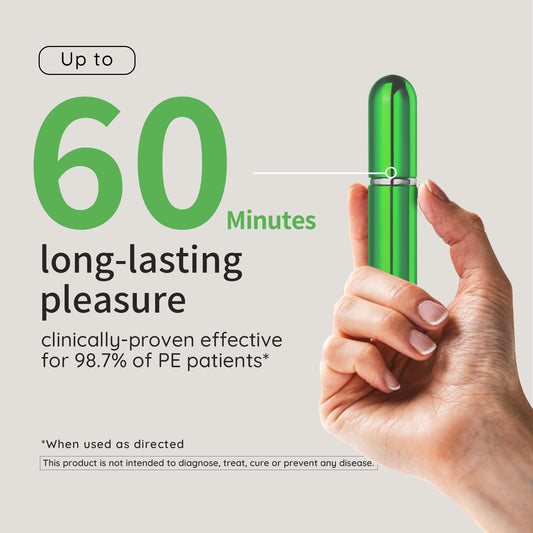
EjaGuard can help men last up to 60 minutes with long-lasting pleasure
Regístrese para recibir actualizaciones exclusivas, novedades y descuentos exclusivos para usuarios internos
Editar opción
this is just a warning
Acceso
Carro de la compra
0 elementos