

 Buy Now


Levels of AMH: Normal, Low, and High AMH Levels Explained

What Are Levels of AMH?

AMH stands for Anti-Müllerian Hormone.
It is a hormone produced by small follicles in the ovaries. These follicles contain immature eggs.
Your anti mullerian hormone levels show how many eggs you may have left. This is called ovarian reserve.
Higher AMH levels usually mean:
-
More remaining eggs
-
Stronger ovarian reserve
Lower AMH levels usually mean:
-
Fewer remaining eggs
-
Reduced ovarian reserve
AMH does not measure egg quality. It only reflects quantity.
Doctors use the AMH test as a tool to predict fertility potential and response to IVF treatment.
What Is a Normal AMH Level?

A normal AMH level depends on age and lab standards. However, general ranges are:
-
High AMH: Above 4.0 ng/mL
-
Normal AMH levels: 1.0 – 4.0 ng/mL
-
Low AMH levels: 0.5 – 1.0 ng/mL
-
Very low: Below 0.5 ng/mL
Keep in mind that numbers can vary slightly by lab.
A result within normal range suggests average ovarian reserve for your age.
But remember — fertility depends on more than just AMH.
If AMH changes affect your emotional or relationship confidence, gentle intimacy products such as EjaGuard Lubricants can support comfort during partnered intimacy.
AMH Levels by Age
AMH naturally declines as women age. This is normal and expected.
Here is a general guide for AMH levels by age:
-
20–24 years: 3.0 – 6.8 ng/mL
-
25–29 years: 2.5 – 6.3 ng/mL
-
30–34 years: 1.5 – 4.5 ng/mL
-
35–39 years: 1.0 – 3.5 ng/mL
-
40–44 years: 0.5 – 2.5 ng/mL
-
45+ years: Below 1.0 ng/mL
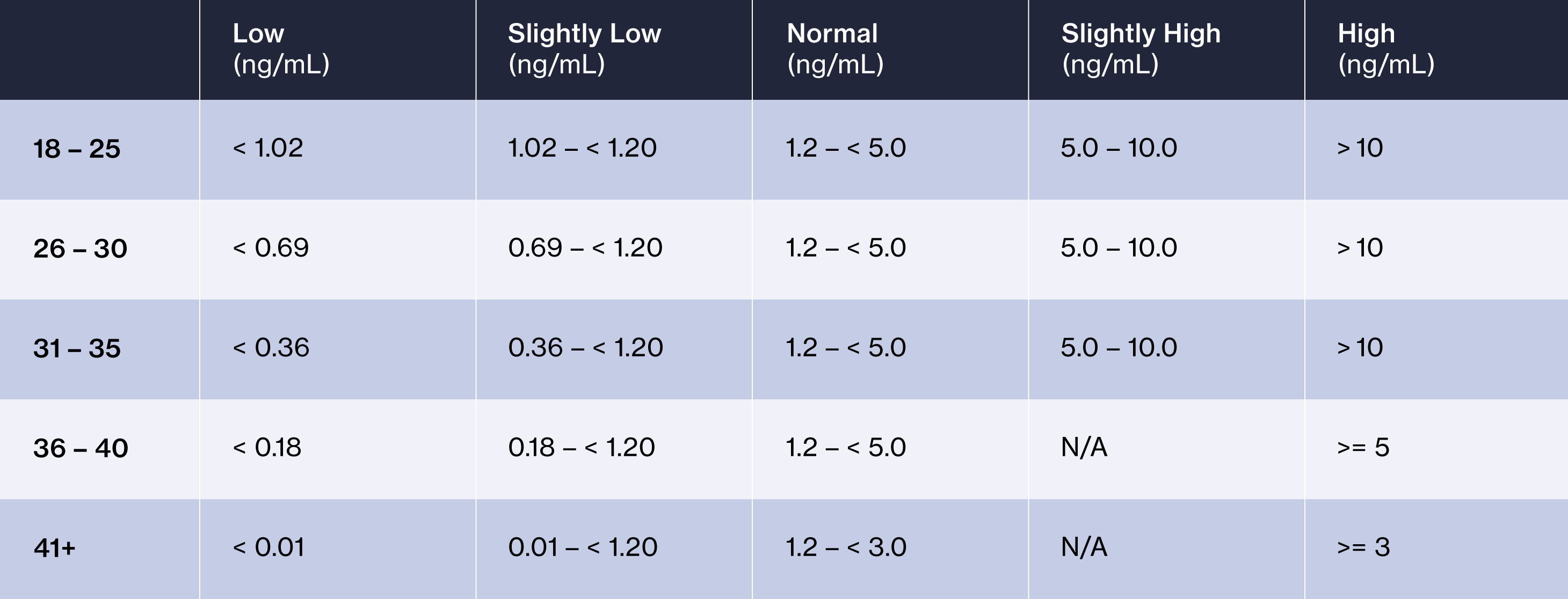
This decline happens because women are born with a fixed number of eggs. Over time, the supply decreases.
If your AMH is lower than average for your age, it may suggest reduced ovarian reserve.
What Do Low AMH Levels Mean?
Low AMH levels can signal:
-
Fewer eggs remaining
-
Early ovarian aging
-
Possible difficulty responding to IVF
However, low AMH does not mean pregnancy is impossible.
Many women with low AMH conceive naturally.
Possible causes of low AMH include:
-
Age
-
Genetics
-
Smoking
-
Ovarian surgery
-
Chemotherapy
If you receive low results, your doctor may suggest:
-
Fertility evaluation
-
IVF consultation
-
Egg freezing
The key is early action.
Emotional stress around fertility can affect intimacy—comfort-enhancing additions like EjaGuard Lubricants may support relaxation and closeness while navigating reproductive decisions.
What Do High AMH Levels Mean?

High AMH levels often mean a high egg count.
But very high AMH may be linked to Polycystic Ovary Syndrome.
Polycystic Ovary Syndrome
Women with PCOS often have many small follicles. This raises anti mullerian hormone levels.
High AMH may also mean:
-
Strong response to IVF medications
-
Higher risk of ovarian hyperstimulation
If your AMH is very high, your doctor may adjust fertility treatments carefully.
For wellness insights related to hormone imbalance, PCOS, and intimacy comfort, you can read hormone-focused articles on the EjaGuard Blog.
AMH and Fertility
How do levels of AMH impact your ability to get pregnant?
Here is what AMH tells us:
AMH helps predict:
-
Egg quantity
-
IVF response
-
Ovarian reserve
AMH does not predict:
-
Egg quality
-
Exact time to pregnancy
-
Natural conception success
A woman with low AMH can still ovulate monthly.
A woman with high AMH may still face ovulation issues.
That is why doctors evaluate:
-
FSH levels
-
Estradiol
-
Ultrasound follicle count
-
Menstrual cycle patterns
AMH is just one piece of the fertility puzzle.
When navigating fertility concerns, couples often benefit from focusing on emotional intimacy as well — products from the EjaGuard Product Collection can help support confidence and comfort.
Can You Improve AMH Levels?
This is a common question.
Unfortunately, there is no guaranteed way to permanently raise AMH levels.
AMH reflects egg supply. You cannot create new eggs.
However, you can support ovarian health by:
-
Avoiding smoking
-
Managing stress
-
Maintaining healthy weight
-
Eating antioxidant-rich foods
-
Limiting environmental toxins
Some supplements are marketed for ovarian support, but scientific evidence is limited.
Always consult your doctor before starting supplements.
Focus on overall reproductive wellness instead of chasing numbers.
When Should You Get an AMH Test?
You may consider an AMH test if:
-
You are over 30 and planning pregnancy
-
You have irregular periods
-
You have PCOS
-
You are considering egg freezing
-
You are preparing for IVF
The test is simple.
It requires a blood sample and can be done any day of your cycle.
Unlike other hormones, AMH does not fluctuate significantly throughout the month.
If fertility changes affect your relationship or intimacy comfort, using EjaGuard Lubricants can help ease stress during intimacy while you assess reproductive health.
FAQs About Levels of AMH
What is a good AMH level for pregnancy?
A good AMH level depends on age. Generally, 1.0–4.0 ng/mL is considered normal AMH levels.
Can you get pregnant with low AMH levels?
Yes. Low AMH levels indicate fewer eggs, not zero fertility. Many women conceive naturally.
Does high AMH mean better fertility?
Not always. High AMH may be linked to PCOS, which can affect ovulation.
Do AMH levels change over time?
Yes. AMH levels decline naturally with age.
Is AMH the most important fertility test?
No. AMH is helpful, but doctors combine it with other hormone tests and ultrasounds.
Final Thoughts
Your levels of AMH offer valuable insight into ovarian reserve.
But they do not define your fertility future.
Low AMH does not mean no hope.
High AMH does not guarantee pregnancy.
Think of AMH as a guide, not a verdict.
If you are concerned about your anti mullerian hormone levels, speak with a fertility specialist. Early testing gives you more options and more control.
Knowledge is power. And understanding your body is the first step toward informed reproductive decisions.
