

 Buy Now
Can Premature Ejaculation Affect Fertility? Understanding PE, Conception, and Male Reproductive Health

Table of Contents
-
Introduction: Does PE Make It Harder to Have a Baby?
-
What Is the Difference Between Premature Ejaculation and Infertility?
-
When Can PE Interfere With Natural Conception?
-
Does Premature Ejaculation Affect Sperm Quality?
-
How Trying to Conceive Can Change Sexual Experiences
-
The Pressure of Timed Intercourse
-
Can Anxiety Make PE More Difficult to Manage?
-
What If Ejaculation Happens Before Penetration?
-
Are Delay Sprays Appropriate When Trying to Conceive?
-
What Other Treatment Options Are Available?
-
When Should Couples Consider a Fertility Evaluation?
-
How Couples Can Approach PE During the Fertility Journey
-
The Bottom Line
1. Introduction: Does PE Make It Harder to Have a Baby?
Premature ejaculation (PE) is usually discussed as a sexual health concern involving ejaculation that occurs sooner than desired, limited perceived control, and associated distress. But for men and couples who are trying to conceive, another question often comes up: can PE make it harder to have a baby?
The answer depends on the circumstances. PE does not automatically mean that a man is infertile, and it does not necessarily indicate poor sperm quality. However, when ejaculation consistently occurs before vaginal penetration, it may prevent semen from being deposited inside the vagina and make natural conception more difficult. The distinction is important because it separates a problem with the timing or delivery of ejaculation from a problem with sperm production or reproductive health.
The European Association of Urology's guidance on ejaculation disorders recognizes that PE can interfere with conception when ejaculation repeatedly occurs before penetration. It also emphasizes the importance of considering the wider clinical circumstances rather than treating every case of PE as the same condition.
For couples trying to conceive, understanding this distinction can reduce unnecessary worry and help identify the right next step. Sometimes the main challenge is ensuring that ejaculation occurs during vaginal intercourse. In other cases, PE may coexist with anxiety, erectile difficulties, fertility concerns, or other factors that deserve separate attention.

2. What Is the Difference Between Premature Ejaculation and Infertility?
PE and infertility describe different things. PE concerns ejaculation timing, perceived control, and distress. Infertility concerns the ability to achieve a pregnancy after an appropriate period of regular, unprotected sexual intercourse. One condition does not automatically establish the presence of the other.
A man can experience PE while having normal sperm production, sperm movement, and other semen parameters. If ejaculation occurs after vaginal penetration and semen is deposited in the vagina, PE alone does not necessarily prevent sperm from reaching an egg. Conversely, a man who has no difficulty controlling ejaculation may still experience fertility problems related to sperm quality, reproductive anatomy, or other factors.
This is why it is useful to avoid treating ejaculation duration as a measurement of fertility. Lasting longer does not automatically mean that sperm are healthier, and ejaculating quickly does not automatically mean that sperm are unable to fertilize an egg.
The American Society for Reproductive Medicine's patient information on infertility offers broader background on reproductive health and fertility evaluation. Understanding fertility as a separate clinical question helps couples avoid assuming that one sexual symptom explains every difficulty with conception.
PE can still be relevant to a fertility assessment. If it makes intercourse difficult or repeatedly prevents semen from entering the vagina, addressing ejaculation may be an important part of the couple's overall plan. But the appropriate approach depends on whether the issue is ejaculation timing, sperm quality, another reproductive condition, or a combination of factors.

3. When Can PE Interfere With Natural Conception?
The most direct way PE can affect natural conception is when ejaculation occurs before vaginal penetration. For example, a man may ejaculate during foreplay or genital contact before intercourse begins. If this happens consistently, semen may not be deposited inside the vagina, reducing the opportunity for sperm to travel through the reproductive tract.
This is different from ejaculating shortly after penetration. Although a couple may be disappointed if intercourse ends sooner than intended, early ejaculation after semen has been deposited in the vagina does not automatically prevent conception. There is no universal minimum duration of penetration required for pregnancy.
The distinction matters because some men worry that they must achieve a particular number of minutes before they can conceive. In reality, conception depends on multiple factors, including whether sperm reaches the reproductive tract, the timing of intercourse relative to ovulation, and the reproductive health of both partners.
A clinical review published in Sexual Medicine Reviews explains that PE can affect natural conception when ejaculation occurs before penetration, while also noting that fertility-related treatment decisions need to consider possible effects on sperm quality. You can read the review's discussion of sexual dysfunction in men experiencing infertility.
If ejaculation consistently occurs before penetration and the couple is trying to conceive, this is a reasonable reason to seek advice rather than continuing to rely on trial and error. A clinician can help assess the ejaculation concern and discuss ways to improve the chance of depositing semen intravaginally without creating unnecessary pressure around sexual performance.

4. Does Premature Ejaculation Affect Sperm Quality?
This is one of the most important questions to separate from the issue of ejaculation timing.
PE itself is not established as a direct cause of poor sperm quality. Sperm concentration, movement, morphology, and other semen characteristics are assessed separately from how quickly ejaculation occurs. A man cannot determine whether his sperm are healthy simply by observing how long intercourse lasts.
Likewise, a man who experiences PE should not automatically assume that he needs a semen analysis solely because of ejaculation timing. Whether testing is appropriate depends on the couple's fertility history, other symptoms, and the advice of a healthcare professional.
Research does suggest that sexual dysfunction and fertility concerns can occur together. For example, a study of couples presenting for infertility evaluation found that PE was commonly reported among the men in that group, although men's perceptions of PE and their partners' perceptions did not always match. This demonstrates an association in a particular clinical population, not proof that PE causes infertility. The study is available on PubMed.
There are also reasons to be cautious about assuming that every treatment for PE is suitable during attempts to conceive. Some topical products contain local anesthetics, and laboratory findings have raised concerns about exposure of sperm to certain anesthetic ingredients. The clinical significance depends on the substance, concentration, exposure, and circumstances. These findings should not be generalized to every delay spray or interpreted as proof that all topical products impair fertility.
The practical lesson is straightforward: ejaculation timing and sperm quality are related to reproductive health in different ways. If conception is taking longer than expected, a fertility assessment can help determine whether there is a sperm-related issue instead of relying on assumptions based on sexual performance.

5. How Trying to Conceive Can Change Sexual Experiences
Trying to conceive can change the emotional context of sex. Activities that previously felt spontaneous may begin to revolve around ovulation estimates, fertility windows, schedules, and the expectation that intercourse should lead to pregnancy.
For some men, this change creates a new kind of pressure. Sex may begin to feel like a task with a specific outcome rather than an experience shared with a partner. A man who already worries about PE may become more conscious of how quickly he is ejaculating, whether penetration will happen in time, and how his partner might react.
This pressure does not mean that fertility planning is inherently harmful. Identifying the fertile window can help couples understand when pregnancy is more likely. The difficulty arises when every encounter becomes a performance test, particularly when the couple has been trying to conceive for several months.
Our article on why men delay seeking help for premature ejaculation explores how embarrassment and performance expectations can affect decisions about sexual health. These concerns can become especially relevant when a couple feels that every sexual encounter carries unusually high stakes.
It may help to discuss how fertility planning is affecting both partners. Some couples benefit from keeping intimacy separate from fertility scheduling when possible, while others find it useful to agree on a practical plan that reduces uncertainty. Neither approach needs to be perfect. The goal is to avoid letting the pressure of conception become the only thing that defines the couple's sexual relationship.
6. The Pressure of Timed Intercourse
Timed intercourse is commonly used by couples who want to improve their chances of conception. It generally involves having sex during the fertile window, when pregnancy is more likely. For some couples, this makes the process easier to understand and plan.
However, scheduling sex can create unintended pressure when a man is already concerned about ejaculation. He may feel that there is only one opportunity to perform correctly, especially if the couple has identified a particular day as important. This can make an existing concern feel more urgent.
The response is not necessarily to abandon fertility planning. Instead, couples can try to keep the process practical and flexible. It may help to remember that fertility timing is about increasing the likelihood of conception, not guaranteeing pregnancy from a single encounter. If intercourse is difficult because of PE, that is a problem worth discussing rather than a personal failure.
The American College of Obstetricians and Gynecologists' guidance on fertility awareness and the fertile window provides background on the relationship between ovulation and the timing of intercourse. The precise approach should reflect the couple's circumstances and any guidance they receive from a fertility professional.
When timed intercourse repeatedly becomes stressful or difficult to complete, a clinician may help the couple consider alternative ways to manage PE while pursuing pregnancy. This might involve behavioral support, a review of relevant medical factors, or referral to a fertility specialist if indicated.

7. Can Anxiety Make PE More Difficult to Manage?
Anxiety can influence the experience of sex, particularly when someone is closely monitoring performance. A man may worry about ejaculating too soon, notice every change in arousal, and interpret ordinary variations in sensation as warning signs. This constant monitoring can make sex feel less relaxed.
Trying to conceive may add another layer of worry. Concerns about fertility, disappointing a partner, or missing the fertile window can make the encounter feel unusually consequential. If ejaculation happens sooner than expected, the experience may reinforce the fear that the next attempt will go the same way.
This does not mean anxiety is the sole cause of PE. PE can involve biological, psychological, relational, and situational factors, and the pattern varies from person to person. Anxiety may contribute to the difficulty, result from repeated difficult experiences, or interact with other factors.
Behavioral approaches and psychosexual support may help some men address the anxiety surrounding ejaculation. Our guide to combining delay spray with behavioral techniques for PE discusses why different approaches may address different parts of the experience rather than relying on one method alone.
For couples trying to conceive, reducing pressure can be a useful goal in its own right. That might mean discussing expectations before sex, allowing space for intimacy that is not tied to ovulation, or seeking professional support when worry becomes difficult to manage. These steps do not guarantee a particular outcome, but they can make the process more manageable.
8. What If Ejaculation Happens Before Penetration?
If ejaculation regularly occurs before penetration, it is important to recognize the practical effect without treating the situation as a personal failure. When semen is not deposited in the vagina, natural conception may become more difficult because sperm may not reach the reproductive tract in the usual way.
The next step depends on the circumstances. Some men may benefit from treatment for PE, while others may need a broader evaluation of sexual function or fertility. If the problem is persistent, discussing it with a qualified healthcare professional is generally more useful than repeatedly trying to force a particular outcome.
A clinician may ask whether the problem has been present throughout the person's sexual life or developed more recently, how often it occurs, and whether there are other symptoms. These details can help distinguish a persistent ejaculation concern from occasional early ejaculation or a broader sexual health issue.
For couples who cannot reliably deposit semen intravaginally, fertility specialists may discuss alternatives depending on the cause and the couple's reproductive circumstances. These options should be assessed individually rather than assumed to be necessary after one or two difficult experiences.
A review of ejaculatory disorders in men experiencing infertility explains that different ejaculation disorders can affect fertility in different ways. PE is not equivalent to an inability to ejaculate, and treatment should reflect the actual problem rather than grouping all ejaculation difficulties together.
If the couple has been trying to conceive for a while, it may be appropriate to evaluate both partners rather than focusing exclusively on the man's ejaculation timing. Fertility is a shared clinical question, and a complete assessment can prevent other contributing factors from being overlooked.

9. Are Delay Sprays Appropriate When Trying to Conceive?
Some men consider topical delay sprays because they want help managing ejaculation without relying on a systemic medication. These products vary considerably in their active ingredients, formulations, instructions, and effects. They should not all be treated as equivalent simply because they are marketed for the same purpose.
When conception is the goal, ingredient selection becomes particularly important. Some delay products contain local anesthetics such as lidocaine or prilocaine. The European Association of Urology's guidance on ejaculation disorders warns about potential concerns regarding sperm exposure to certain topical anesthetics and advises against using lidocaine/prilocaine-containing substances when trying to conceive. See the EAU guidance on PE and fertility-related considerations.
This is not a reason to assume that every product has the same risk. It is a reason to check the actual ingredient list and seek advice from a healthcare professional before using a topical product during attempts to conceive. Marketing terms such as "mild," "herbal," or "natural" do not by themselves establish safety for sperm or fertility.

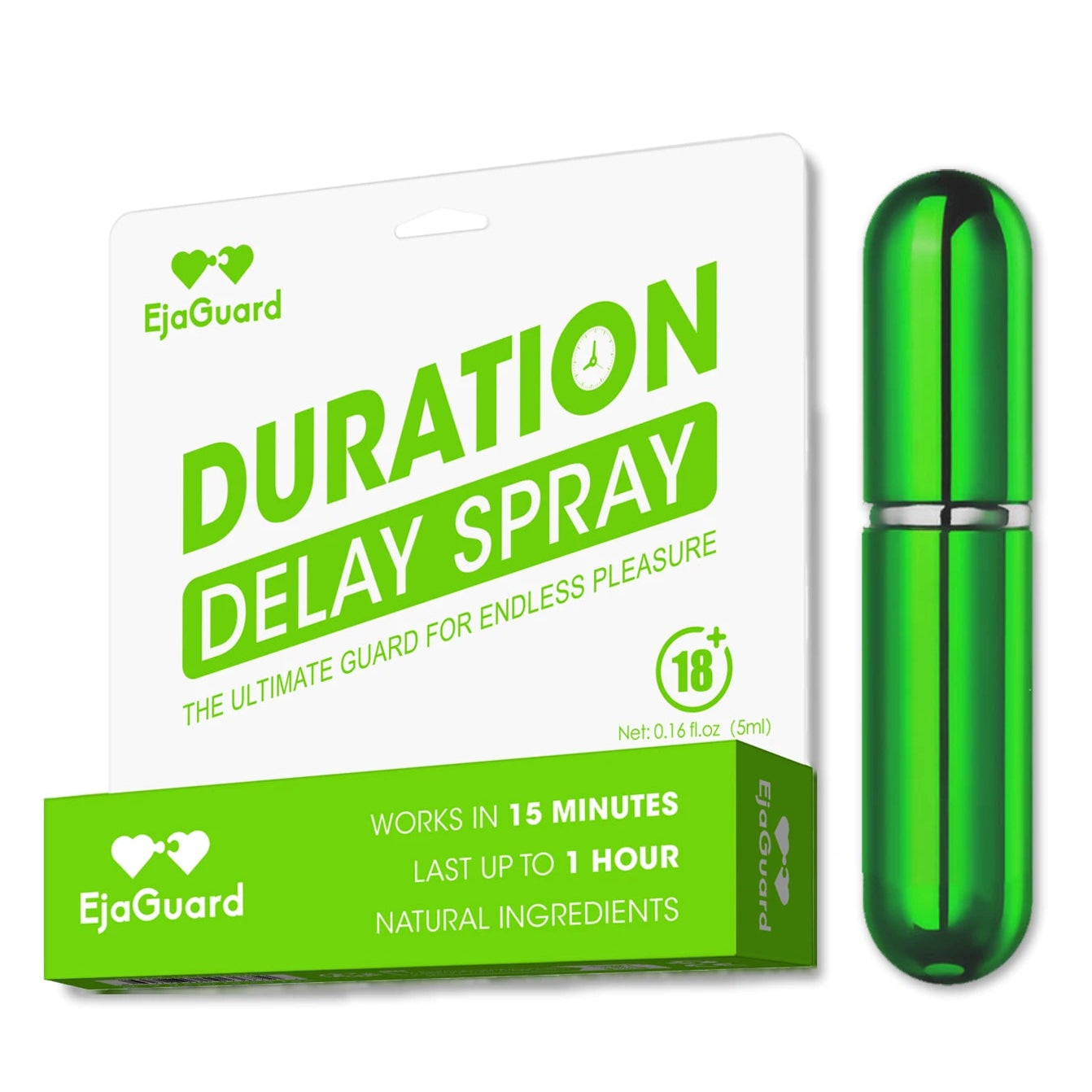
EjaGuard is one topical delay product that readers may encounter when exploring options for ejaculation control. Anyone considering EjaGuard delay spray while trying to conceive should review the current ingredient information and product warnings and discuss suitability with a clinician. It should not be assumed to be fertility-safe simply because it is marketed as a milder option, and it should not be presented as a treatment for infertility.
If a clinician advises against a particular topical ingredient during conception attempts, couples can discuss other ways to manage PE, including behavioral approaches or psychosexual support. The right priority is to address the ejaculation concern without introducing avoidable uncertainty into the fertility plan.

10. What Other Treatment Options Are Available?
The best approach to PE depends on the pattern of symptoms, the degree of distress, any contributing conditions, and the couple's plans for conception. A treatment that is reasonable for someone who is not trying to conceive may not be the first choice for someone who wants to minimize potential exposure of sperm to particular ingredients.
Behavioral techniques, including approaches designed to improve awareness of arousal, may help some men. Psychosexual counseling can also address performance anxiety, relationship concerns, or the pressure associated with trying to conceive. These approaches do not involve applying a substance to the penis, although results can vary and they may require time and practice.
Medication may be considered in some cases, but it should be discussed with a clinician when fertility is a current goal. Certain medicines used for PE may have side effects or reproductive implications that need to be weighed against their benefits. Men should not start, stop, or change prescribed medication without appropriate medical advice.
The International Society for Sexual Medicine's patient guidance on delaying ejaculation offers an overview of approaches that may be considered for PE. The appropriate choice depends on the person's symptoms, preferences, health history, and goals.
For couples trying to conceive, it is especially useful to explain this goal when discussing treatment. A clinician can help compare options with conception in mind, rather than focusing solely on increasing the time before ejaculation. This allows the couple to consider both sexual function and reproductive priorities in the same plan.

11. When Should Couples Consider a Fertility Evaluation?
PE alone does not mean that a couple needs immediate fertility testing. However, a fertility evaluation may be appropriate when conception has not occurred despite regular, unprotected intercourse over the recommended period, or earlier when there are known risk factors or relevant medical concerns.
For many couples, the general recommendation is to seek an infertility evaluation after 12 months of trying if the female partner is younger than 35, or after six months if she is 35 or older. Earlier assessment may be appropriate when there are known reproductive conditions, irregular or absent menstrual cycles, previous reproductive concerns, or persistent difficulty having intercourse or depositing semen intravaginally.
A fertility evaluation may include a medical and reproductive history, assessment of ovulation and reproductive health, and semen analysis when indicated. The exact process depends on the couple's circumstances. Importantly, the evaluation should not assume that PE is the only possible explanation for delayed conception.
The American Society for Reproductive Medicine's committee guidance on fertility evaluation explains when evaluation may be appropriate and why assessment should be guided by age, history, and individual risk factors.
Men should also seek medical advice if PE develops suddenly or occurs alongside erectile difficulties, painful ejaculation, pelvic pain, urinary symptoms, or other significant changes. These symptoms may require a different assessment from lifelong PE.
A fertility evaluation is not an accusation that either partner has a problem. It is a way to understand the factors that may affect conception and identify options that fit the couple's situation.

12. How Couples Can Approach PE During the Fertility Journey
One of the most useful steps is to talk about the problem without assigning blame. PE can be frustrating, especially when a couple is trying to conceive, but criticism or pressure to perform may make the experience more difficult for both partners.
A conversation outside the bedroom can help. Couples can explain what worries them, discuss how fertility timing affects their expectations, and agree on when to seek professional guidance. It can also help to distinguish between wanting to improve ejaculation control and feeling that every encounter must lead to pregnancy.
Practical planning can reduce uncertainty. If intercourse is repeatedly difficult because ejaculation happens before penetration, the couple can raise this specific concern with a healthcare professional. If anxiety is becoming a major part of the experience, psychological or psychosexual support may be worth discussing alongside any medical options.
It is also important to avoid making unverified assumptions about sperm quality, fertility, or the safety of a product. A man who experiences PE may still have normal fertility, and a couple experiencing difficulty conceiving may have contributing factors unrelated to ejaculation timing. Getting the right information can prevent unnecessary self-blame and help direct attention toward the actual issue.
The broader principle is that sexual health and reproductive health can overlap, but they are not identical. A thoughtful plan can address both without assuming that longer intercourse is the only measure of progress.
13. The Bottom Line
Premature ejaculation does not automatically cause infertility, and it does not necessarily mean that sperm quality is poor. The clearest way PE can interfere with natural conception is when ejaculation consistently occurs before vaginal penetration, preventing semen from being deposited in the vagina.
For couples trying to conceive, the best approach is to identify the actual difficulty. That may involve addressing ejaculation control, reducing performance pressure, reviewing other sexual symptoms, or arranging a fertility evaluation when appropriate.
Delay sprays and other PE treatments should be considered carefully during conception attempts. Some topical anesthetics may pose concerns for sperm exposure, so ingredient checks and professional advice matter. No product should be assumed to be appropriate for fertility simply because it is marketed as mild or natural.
Most importantly, PE should not be treated as a personal failure or as proof that a man cannot have children. With accurate information, open communication, and appropriate medical support, couples can make informed decisions about both sexual health and their fertility goals.

