

 Buy Now
Why Do Men Delay Seeking Help for Premature Ejaculation? Understanding Shame, Misconceptions, and the Path to Better Sexual Health

Table of Contents
-
Introduction: Why Is It So Difficult to Talk About PE?
-
The Difference Between a Sexual Problem and a Personal Failure
-
How Unrealistic Expectations Shape Men's Sexual Confidence
-
Why Embarrassment Can Prevent Men From Seeking Help
-
The Cycle of Worry, Avoidance, and Sexual Difficulties
-
How Relationship Dynamics Can Make the Problem Harder to Discuss
-
Common Misconceptions About Treating Premature Ejaculation
-
What Types of Help Are Available?
-
How to Prepare for a Conversation With a Healthcare Professional
-
How Partners Can Make the Conversation Easier
-
Where Delay Sprays Fit Into a Broader Approach
-
When Is It Time to Seek Professional Advice?
-
The Bottom Line
1. Introduction: Why Is It So Difficult to Talk About PE?
Premature ejaculation (PE) is a common sexual concern, yet many men find it difficult to discuss openly. Someone might spend months or even years searching for advice online, experimenting with different approaches, or worrying about their sexual performance without ever speaking to a healthcare professional.
The reasons are not always straightforward. Some men believe they should be able to control ejaculation through willpower alone. Others worry that discussing the issue will make them appear inexperienced, less masculine, or unable to satisfy their partner. For some, the concern is not simply how quickly ejaculation happens, but what they think it says about them as a partner.
These concerns can create a barrier between experiencing a problem and getting useful support. The European Association of Urology's guidance on ejaculation disorders recognizes that PE can affect sexual satisfaction, confidence, relationships, and overall quality of life.
Understanding why men hesitate to seek help is therefore an important part of sexual health education. The goal is not to convince every man that he needs treatment. It is to make it easier to distinguish between normal variation, a persistent concern that deserves attention, and a problem that may benefit from professional guidance.

2. The Difference Between a Sexual Problem and a Personal Failure
One reason PE can be difficult to discuss is that sexual performance is often treated as a measure of personal ability. Men may feel that they are supposed to know exactly how to control their bodies, regardless of their experience, stress levels, relationship circumstances, or physical health.
This way of thinking turns a sexual concern into a judgment about identity. Instead of thinking, "I'm having difficulty controlling ejaculation," someone may conclude, "I'm bad at sex." The second interpretation is much more emotionally loaded and can make it harder to approach the problem calmly.
However, ejaculation is a physiological process influenced by multiple factors. PE is not simply evidence that someone lacks discipline or does not care about their partner. Clinical definitions consider more than timing alone, including the ability to delay ejaculation and the degree of distress associated with the experience. Men also differ in what they consider satisfactory, so an isolated experience does not automatically indicate a disorder.
For readers who want to understand the clinical distinction in more detail, our guide to how premature ejaculation is diagnosed and why it is more than a stopwatch provides additional context.
A more useful starting point is to describe the difficulty without attaching a judgment to it. A man can experience PE and still be attentive, experienced, caring, and capable of having a satisfying sex life. Recognizing that distinction may not resolve the physical symptoms, but it can make the next step feel less intimidating.
3. How Unrealistic Expectations Shape Men's Sexual Confidence
Sexual expectations do not develop in a vacuum. Movies, pornography, online discussions, jokes, and casual conversations can all influence what men believe is normal during sex.
One common misconception is that satisfactory sex must involve a long period of uninterrupted penetration. Another is that a man should be able to control ejaculation perfectly without pausing, changing activities, communicating, or using any form of support.
These expectations can be misleading. Sexual experiences vary considerably, and scenes created for entertainment are not reliable measures of typical sexual function. Even when people share genuine experiences online, they may leave out details about pauses, different sexual activities, or difficulties they encounter.
Men who compare themselves with these standards may start interpreting every experience as a test. A shorter-than-expected encounter can feel like a failure even when both partners are satisfied. Conversely, a man may spend so much time worrying about duration that he overlooks other aspects of intimacy, including comfort, connection, pleasure, and communication.
This is one reason it helps to develop a broader understanding of sexual satisfaction. The International Society for Sexual Medicine's information on delaying ejaculation discusses several approaches to managing ejaculation and emphasizes that different techniques may work differently for different people.
The important point is not that duration never matters. It may matter a great deal to someone experiencing persistent PE. Rather, duration is only one part of sexual experience, and comparing oneself with an unrealistic standard can add distress without providing a practical solution.

4. Why Embarrassment Can Prevent Men From Seeking Help
Embarrassment often creates a practical problem: it encourages people to avoid the very conversations that could help them understand what is happening.
A man may avoid booking an appointment because he does not know how to describe his symptoms. He may worry that the clinician will dismiss his concern, ask uncomfortable questions, or assume the issue is purely psychological. Others may fear that mentioning PE will automatically lead to medication or an examination they do not want.
Some men also assume that they should try every possible self-help method before speaking to a professional. They may repeatedly purchase products, follow online advice, or switch between techniques while hoping to find a complete solution privately.
There is nothing inherently wrong with wanting privacy. Reading reliable information and exploring suitable self-care options can be reasonable starting points. The problem arises when embarrassment prevents someone from seeking help despite persistent distress, a sudden change in sexual function, or other symptoms that deserve evaluation.
A useful reminder is that sexual health is part of healthcare. A clinician who works with sexual concerns should be prepared to discuss ejaculation, erections, libido, relationships, and related symptoms in a professional manner. Men do not need to present a perfect explanation or use specialized medical language to start the conversation.
If discussing the issue face-to-face feels difficult, writing down a few concerns beforehand can help. Even a simple opening such as "I've been having trouble delaying ejaculation, and it's affecting my confidence" gives a healthcare professional a useful place to begin.

5. The Cycle of Worry, Avoidance, and Sexual Difficulties
For some men, concern about PE can become self-reinforcing. An unsatisfactory experience leads to worry about the next encounter. During the next encounter, attention shifts toward monitoring performance instead of noticing pleasure and communication. If ejaculation happens sooner than expected, the result may reinforce the original fear.
This does not mean anxiety is the sole cause of PE. The condition can have biological, psychological, relational, and other contributing factors, and the relative importance of these factors varies from person to person. The European Association of Urology's discussion of PE risk factors and psychological aspects describes performance anxiety and relationship difficulties among possible contributors, particularly in some cases of acquired PE.
Avoidance can maintain this cycle. Someone may stop initiating sex, avoid discussing intimacy, or become preoccupied with finding a product that guarantees a particular outcome. These responses may temporarily reduce the fear of an uncomfortable experience, but they do not necessarily address the underlying concern.
It can be helpful to separate two goals: improving ejaculation control and reducing the emotional pressure surrounding sex. These goals may overlap, but they are not identical. A man might benefit from a physical treatment while also learning to manage performance anxiety. Another person may need medical assessment, relationship support, or a different combination of approaches.
There is no universal sequence that works for everyone. The useful first step is to recognize the pattern and consider what type of support fits the problem, rather than treating every difficult encounter as proof that nothing will improve.

6. How Relationship Dynamics Can Make the Problem Harder to Discuss
PE can affect more than the individual experiencing it. Partners may have different expectations about sex, different ways of expressing dissatisfaction, or different levels of comfort discussing intimate topics.
When communication is limited, each person may interpret the situation incorrectly. One partner may assume that the other is disappointed or dissatisfied, while the other may not realize how much anxiety is involved. A man might also avoid discussing PE because he does not want to make his partner feel responsible for solving it.
Silence can create distance even when both partners want a satisfying intimate relationship. The longer the subject remains unspoken, the more difficult it may feel to bring up. Small misunderstandings can gradually become assumptions about attraction, compatibility, or sexual ability.
A helpful approach is to discuss the issue outside the moment of sexual activity, when neither person feels under immediate pressure to perform or respond. The conversation can focus on shared goals, such as feeling more relaxed, communicating more clearly, or exploring options together, rather than assigning blame.
For additional background on the possible relationship between sexual health symptoms and physical discomfort, readers can explore our article on prostatitis, chronic pelvic pain, and premature ejaculation. This is particularly relevant when ejaculation concerns occur alongside pain or urinary symptoms, which may warrant a separate medical assessment.
Partners do not have to solve the problem themselves. Their role can simply be to create an environment where the concern can be discussed honestly and where seeking appropriate help is not treated as a source of shame.

7. Common Misconceptions About Treating Premature Ejaculation
Another reason men delay seeking help is the belief that treatment will be complicated, embarrassing, or ineffective. Online information can make this worse when it presents one technique as a guaranteed cure or dismisses all other approaches as useless.
Misconception 1: PE can always be fixed through willpower.
Ejaculation is not entirely under conscious control. Behavioral techniques may help some men improve awareness and control, but persistent PE is not necessarily a problem that can be resolved by trying harder.
Misconception 2: Seeking help automatically means taking medication.
Treatment options vary. Depending on the circumstances, a clinician may discuss behavioral approaches, psychosexual support, topical products, medication, treatment of an underlying condition, or a combination of options. An evaluation can help clarify which approaches are appropriate.
Misconception 3: Psychological support means the problem is imaginary.
Psychological support can address anxiety, negative expectations, relationship stress, and distress associated with PE. That does not mean the physical experience is unreal. Psychological and physiological factors can interact, and support can be useful even when physical treatment is also needed.
Evidence for individual psychological and behavioral interventions varies. A Cochrane review of psychosocial interventions for premature ejaculation found that the available evidence was limited and inconsistent, highlighting the need for larger and better-designed studies. This is a reason to avoid exaggerated promises, not a reason to assume that support can never help.
Misconception 4: If one treatment does not work, nothing will.
An approach may not suit a particular person's symptoms, preferences, or circumstances. It may also be used incorrectly or fail to address an underlying contributor. A lack of improvement with one option is a reason to reassess the approach, not automatically to abandon the search for help.
Understanding these distinctions can make treatment decisions more realistic. The objective is not to find a magical solution but to identify a reasonable approach, evaluate whether it helps, and adjust when necessary.

8. What Types of Help Are Available?
There is no single treatment plan that is appropriate for every man with PE. The right approach depends on factors such as whether the problem has been present since the beginning of sexual activity or developed later, whether it occurs consistently, how much distress it causes, and whether other symptoms are present.
Behavioral approaches may help some men develop greater awareness of arousal and ejaculation. Psychosexual counseling can provide support for performance anxiety, negative beliefs, or relationship concerns. Medical treatments may also be appropriate, depending on the individual's circumstances and local clinical guidance.
A systematic review of behavioral therapies for premature ejaculation examined randomized controlled trials involving techniques such as stop-start exercises, squeeze techniques, and other interventions. The findings varied between studies, although some trials reported benefits, including when behavioral approaches were combined with medication.
The evidence suggests that treatment should be individualized rather than based on a universal promise. A man who primarily struggles with performance anxiety may need a different plan from someone who experiences a sudden change in ejaculation alongside erectile difficulties or pelvic pain.
For men who feel uncomfortable discussing the issue, it may be useful to start with a general practitioner or another qualified healthcare professional. They can assess the concern and, if appropriate, refer the person to a urologist or a clinician with experience in sexual medicine.
Seeking help does not mean committing to every treatment offered. It means getting enough information to make an informed decision about what to try next.

9. How to Prepare for a Conversation With a Healthcare Professional
The prospect of a medical appointment can feel less intimidating when the person knows what information may be useful. There is no need to prepare a detailed report or track every sexual encounter. A few simple observations can help the conversation become more focused.
Consider noting:
-
When the problem began: Has it been present for as long as you can remember, or is it a relatively new change?
-
How often it happens: Is it a persistent pattern, or does it occur only in certain situations?
-
How it affects you: Does it cause distress, avoidance, relationship tension, or reduced confidence?
-
Other symptoms: Have you noticed erection difficulties, pain, urinary changes, changes in libido, or other health concerns?
-
What you have tried: Have you used behavioral techniques, topical products, medication, or other approaches? What happened?
These details help a clinician understand the overall pattern rather than focusing only on a single estimate of duration. They may also help distinguish lifelong PE from acquired symptoms or occasional variation.
If a concern is accompanied by a noticeable change in sexual function, it is particularly useful to mention when the change started and whether anything else changed around the same time. A clinician may ask about medications, general health, stress, and other factors depending on the circumstances.
You can also prepare questions in advance. For example: "What could be contributing to this?", "Are there treatments that fit my situation?", or "Are there symptoms that would make further testing important?" Writing these questions down can help if embarrassment makes it difficult to remember them during the appointment.
The aim is not to diagnose yourself before seeking help. It is to give the clinician a clearer picture and make sure your main concerns are addressed.

10. How Partners Can Make the Conversation Easier
When a partner is involved, the way PE is discussed can influence whether the conversation feels supportive or threatening. Comments that frame ejaculation as a failure may increase shame, even if they are not intended to hurt. On the other hand, pretending the concern does not exist may leave both people uncertain about how to move forward.
A more constructive conversation begins with curiosity and respect. Rather than focusing exclusively on duration, partners can talk about what helps them feel comfortable, what they enjoy, and whether there are changes they would like to explore together.
It is also important to recognize that partners do not have to agree on every detail. One person may be more concerned about duration, while the other may place greater importance on relaxation or emotional connection. The purpose of communication is not to dismiss either person's experience, but to understand it.
If the topic repeatedly leads to conflict, professional support may be useful. A qualified sex therapist or couples therapist can help partners discuss sensitive subjects, identify unhelpful communication patterns, and explore practical strategies without assigning blame.
Not every couple needs therapy, and a partner is not responsible for curing PE. However, a supportive environment can make it easier for someone to seek medical advice, try an appropriate treatment, and talk honestly about what is or is not helping.

11. Where Delay Sprays Fit Into a Broader Approach
Topical delay products are one option some men consider when trying to manage ejaculation. Products differ in their ingredients, formulation, application instructions, and effects on sensation. Some use local anesthetic ingredients to reduce sensitivity; other products are marketed as milder alternatives. The actual ingredients and evidence should be assessed product by product rather than inferred from labels such as "natural" or "herbal."
A delay spray may be useful for someone who wants to explore a topical option, but it should not be treated as a universal solution to every cause of PE. It may not address relationship distress, persistent performance anxiety, erectile difficulties, or an underlying medical issue. Expectations also matter: a product that changes sensation does not necessarily resolve the emotional pressure associated with sexual performance.
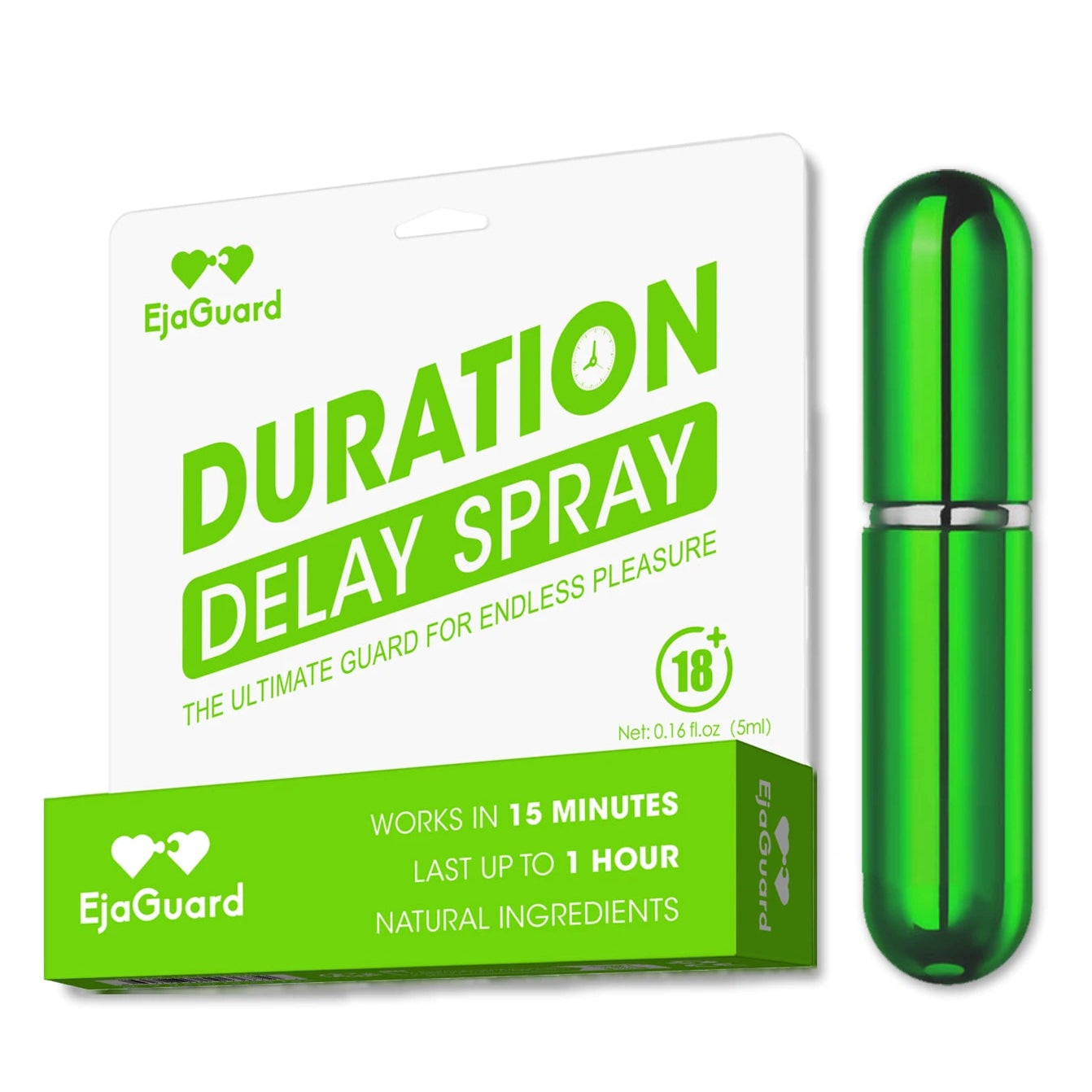
For readers exploring topical approaches, the EjaGuard delay spray product page provides product-specific information to review alongside the label instructions. EjaGuard can be considered as one option within the broader range of approaches men may explore, but individual responses can vary, and product claims should not replace independent medical advice.

It is also worth remembering that topical products are not interchangeable. Follow the specific product's directions, check its ingredients, and pay attention to warnings about irritation, transfer to a partner, and condom compatibility. Do not assume that a product is suitable for everyone simply because it is described as mild or plant-based.
If a topical product does not help, causes irritation or unwanted numbness, or becomes the only way you feel able to engage in sex, consider discussing the situation with a healthcare professional. The goal is to find a suitable and sustainable approach, not to become increasingly anxious about using a product perfectly.

12. When Is It Time to Seek Professional Advice?
Men do not need to wait until PE becomes severe before asking for help. If ejaculation difficulties repeatedly cause distress, affect a relationship, lead to avoidance of intimacy, or interfere with quality of life, discussing them with a qualified healthcare professional is reasonable.
A medical evaluation is especially worth considering when the problem begins suddenly after a period of satisfactory control, or when it occurs alongside other symptoms such as erectile difficulties, pelvic pain, painful ejaculation, or urinary changes. These symptoms do not automatically indicate a serious condition, but they may help identify issues that need attention.
A clinician can review the history, consider possible contributing factors, and explain which treatment options are appropriate. Depending on the situation, that may involve reassurance, behavioral support, treatment for another condition, or a discussion of medication and topical approaches.
It is important not to self-diagnose an underlying illness based on PE alone. Similarly, men should not assume that every instance of rapid ejaculation requires medical treatment. The decision depends on the overall pattern, its impact, and the individual's goals.
Most importantly, asking for help is not an admission of failure. It is a practical step toward understanding a concern that may have several possible explanations and several possible ways forward.
13. The Bottom Line
Premature ejaculation can be difficult to discuss because it touches on more than sexual function. Shame, unrealistic expectations, fear of judgment, relationship concerns, and misconceptions about treatment can all make it harder for men to seek support.
Yet PE is not a measure of masculinity, personal worth, or the ability to be a good partner. It is a sexual health concern that can be approached with the same openness and practicality as other health issues. For some men, education and self-guided strategies may be enough to make progress. Others may benefit from professional assessment, psychological support, medication, topical products, or a combination of approaches.
There is no need to wait until frustration becomes overwhelming. Start by describing the concern honestly, looking for reliable information, and considering which type of help fits your situation. If you choose to explore a product such as a delay spray, view it as one possible tool rather than a guaranteed fix, and follow its instructions carefully.
A more useful goal than achieving perfect control is to build a healthier relationship with sexual performance: one that leaves room for communication, realistic expectations, appropriate support, and the understanding that a sexual difficulty does not define you.

