

 Buy Now
How Pelvic Floor Tension May Affect Premature Ejaculation

Premature ejaculation (PE) is often described as a problem of sensitivity, arousal, or simply “not having enough control.”
But there is another part of the body that doesn't always get enough attention: the pelvic floor.
The pelvic floor is a group of muscles located at the base of the pelvis. These muscles are involved in urination, erection, ejaculation, and other aspects of sexual function. Research suggests that pelvic floor function can play a role in ejaculatory control, although the relationship is more complicated than simply having “strong” or “weak” muscles.
This raises an interesting question:
Could having a pelvic floor that is constantly tense actually make it harder to control ejaculation?
The answer isn't simply yes or no. For some men, pelvic floor weakness may be relevant. For others, excessive tension or poor coordination may matter more.
Understanding that difference can change the way you approach PE.
Table of Contents
- What Is the Pelvic Floor?
- Strong Doesn't Always Mean Better
- What Does a Tense Pelvic Floor Feel Like?
- Why Do Some Men Stay Tense During Sex?
- The Connection Between Breathing and Pelvic Floor Relaxation
- Try Not to Turn Relaxation Into Another Performance Test
- What About Kegel Exercises?
- Relaxation May Be More Important Than More Strength
- Pelvic Floor Training Is About Coordination
- What About Men Who Have Pelvic Pain?
- Can Pelvic Floor Tension Affect Erections Too?
- What If You Use a Delay Spray?
- More Numbing Isn't Necessarily More Control
- Don't Judge Your Pelvic Floor by One Sexual Experience
- A Simple Awareness Exercise
- What Should You Pay Attention to During Sex?
- The Role of Performance Anxiety
- Don't Try to Fix Everything at Once
- When Should You See a Professional?
- The Bottom Line
- Medical Disclaimer
What Is the Pelvic Floor?
The pelvic floor is essentially a network of muscles and connective tissues that supports the organs in the lower part of the abdomen.
For men, these muscles are involved in several functions, including bladder control, sexual function, erection, and ejaculation.
During sexual activity, the pelvic floor doesn't simply switch between “on” and “off.” It needs to coordinate contraction and relaxation at different points.
A recent review of pelvic physical therapy for male sexual disorders emphasized that optimal sexual function requires the ability to contract and relax the pelvic floor in a coordinated way.
Learn more about premature ejaculation from the ISSM
That distinction is important because many conversations about PE immediately jump to one solution:
“Do more Kegels.”
Kegel exercises can be useful for some people, but simply making the muscles stronger isn't necessarily the answer for everyone.
If your muscles are already tense, learning how to relax them may be just as important as learning how to contract them.

Strong Doesn't Always Mean Better
Muscle strength is only one part of muscle function.
Think about your biceps.
Being able to contract your biceps strongly is useful, but you also need to be able to relax your arm afterward.
The pelvic floor works in a similar way.
A person may have strong pelvic floor muscles but poor control over when those muscles contract and relax.
That can become particularly relevant during sexual activity because arousal naturally changes muscle tension throughout the body.
A 2025 review published in the International Journal of Impotence Research noted that pelvic floor dysfunction can involve problems with both excessive and insufficient muscle tension, and that treatment may focus on relaxation, strength, endurance, and coordination depending on the individual.
EjaGuard's guide to understanding and using a delay spray
So instead of asking:
“Are my pelvic floor muscles strong enough?”
A better question may sometimes be:
“Can I control them properly?”
What Does a Tense Pelvic Floor Feel Like?
Not everyone with PE has an overly tense pelvic floor.
And you shouldn't try to diagnose yourself based on one symptom.
However, increased pelvic floor muscle tone can occur alongside certain types of pelvic pain and sexual dysfunction. The medical literature also describes increased pelvic floor tone as common among men with chronic pelvic pain conditions.
Some people describe sensations such as:
- Constant tension around the pelvis
- Difficulty relaxing the muscles
- Pelvic or perineal discomfort
- Tightness around the lower abdomen or hips
- Pain during or after ejaculation
- Feeling like the muscles are always “switched on”
These symptoms don't automatically mean that pelvic floor tension is causing your PE.
But if several of them are present, it may be worth discussing them with a healthcare professional instead of assuming the problem is simply excessive penile sensitivity.
Mayo Clinic's information on premature ejaculation and treatment options
This is particularly important when symptoms are new.

Why Do Some Men Stay Tense During Sex?
One possible reason is simply arousal.
When sexual excitement increases, the entire body can become more physically activated.
Heart rate increases.
Breathing may change.
Muscles may tighten.
And some men unconsciously tense their abdomen, thighs, buttocks, and pelvic floor.
The problem is that once the body becomes tense, some men don't consciously release that tension.
They continue holding their muscles while simultaneously trying to “control” ejaculation.
That can create an interesting cycle.
More arousal leads to more tension.
More tension creates a stronger feeling of urgency.
The stronger urgency creates more anxiety.
And anxiety can make it even harder to stay relaxed.
Sexual health organizations recognize anxiety, stress, relationship issues, and other psychological factors as possible contributors to PE.
EjaGuard's FAQ for questions about application and usage
This doesn't mean PE is “all in your head.”
It means the physical and psychological sides can interact.

The Connection Between Breathing and Pelvic Floor Relaxation
One of the simplest things to pay attention to is breathing.
When people become anxious or highly aroused, they often start breathing faster or holding their breath without realizing it.
That can make the rest of the body more tense.
Deep, relaxed breathing can encourage the pelvic floor to move more naturally.
A 2025 review of pelvic physical therapy described the relationship between diaphragmatic breathing and pelvic floor relaxation. During inhalation, the diaphragm moves downward and the pelvic floor can lengthen and relax in coordination with that movement.
Read the Urology Care Foundation's PE patient guide
This doesn't mean that taking a few deep breaths will instantly solve PE.
It is much more useful to think of breathing as a way to improve awareness.
You are learning what a relaxed pelvic floor feels like.

Try Not to Turn Relaxation Into Another Performance Test
There is an ironic problem with advice about PE.
Sometimes the advice itself creates more pressure.
You read:
“Relax your pelvic floor.”
So during sex you start thinking:
“Am I relaxing enough?”
Then you check your muscles.
Then you check your erection.
Then you check your arousal.
Then you wonder how long you've lasted.
Suddenly you're monitoring five different things instead of actually enjoying sex.
That defeats the purpose.
The goal isn't to consciously control every muscle throughout the entire experience.
Instead, practice awareness outside of sexual activity so that relaxation becomes easier to recognize.
The International Society for Sexual Medicine also discusses mindfulness and staying aware of the present experience as one potential approach to improving ejaculatory control.
EjaGuard's product information and specifications
Sex isn't a mechanical test.
You don't need to monitor every physiological change in real time.
What About Kegel Exercises?
Kegel exercises are commonly recommended for men who want to improve pelvic floor control.
There is a reason for that.
Research has found that pelvic floor rehabilitation can improve ejaculatory control in some men with PE. A 2012 randomized study found that pelvic floor rehabilitation produced promising improvements in men with lifelong PE.
However, that doesn't mean:
More Kegels = better results for everyone.
A 2026 systematic review and meta-analysis of randomized controlled trials found that pelvic floor muscle training can help with PE, but the effects varied between studies and were smaller than those seen with some comparator treatments. The researchers also noted substantial heterogeneity among the pelvic floor training studies.
In other words, pelvic floor training is promising, but it isn't a universal solution.

Relaxation May Be More Important Than More Strength
This is one of the most interesting parts of the pelvic floor discussion.
If someone has poor pelvic floor control because the muscles are weak, strengthening may help.
But if someone already has excessive muscle tension, repeatedly contracting those muscles may not address the underlying problem.
The 2025 pelvic physical therapy review specifically notes that when pelvic floor muscle tone is increased, relaxation may need to be addressed first. It also describes deep abdominal breathing and local relaxation as approaches that can help improve pelvic floor movement.
Read Mayo Clinic's guidance on pelvic floor exercises and PE treatment
That's why a personalized approach makes more sense than copying someone else's exercise routine from the internet.
Pelvic Floor Training Is About Coordination
The most useful way to think about pelvic floor training may not be “make the muscles stronger.”
Instead, think:
Learn when to contract.
Learn when to relax.
Learn how to switch between the two.
That is coordination.
And coordination can matter during sexual activity.
A 2014 study of men with lifelong PE found that pelvic floor rehabilitation was associated with improved ability to control the ejaculation reflex.
Read more about pelvic physical therapy for male sexual dysfunction
The important point is that these programs weren't simply about doing random contractions.
They involved structured rehabilitation, awareness, and learning how to use the pelvic floor more effectively.

What About Men Who Have Pelvic Pain?
This is an area where professional guidance becomes particularly important.
If you experience persistent pelvic pain, pain during ejaculation, urinary symptoms, or discomfort around the perineum, don't assume that doing more exercises will fix it.
Some men with chronic pelvic pain have increased pelvic floor muscle tone, and treatment may focus on reducing tension rather than increasing it.
In these situations, pelvic floor physical therapy may be more appropriate than trying to design your own exercise routine.
See the NHS guidance on persistent ejaculation problems
A healthcare professional can help determine whether the issue is related to the pelvic floor, another physical condition, anxiety, medication, or a combination of factors.

Can Pelvic Floor Tension Affect Erections Too?
Interestingly, pelvic floor function isn't only related to ejaculation.
It can also be involved in erection quality.
The pelvic floor muscles contribute to sexual function, and relaxation is important for normal erectile function. The 2025 review notes that pelvic floor dysfunction can affect both erection maintenance and ejaculation control.
Read the AUA's patient resources on premature ejaculation
This is another reason why the idea of simply “numbing yourself more” isn't always the best way to think about sexual performance.
If someone has PE and also struggles with maintaining an erection, there may be more than one factor involved.
What If You Use a Delay Spray?
Delay sprays can still have a place in a broader approach to PE.
For example, someone may want temporary help reducing excessive sensitivity while they also work on relaxation, awareness, communication, or other strategies.
The two approaches don't necessarily have to compete.
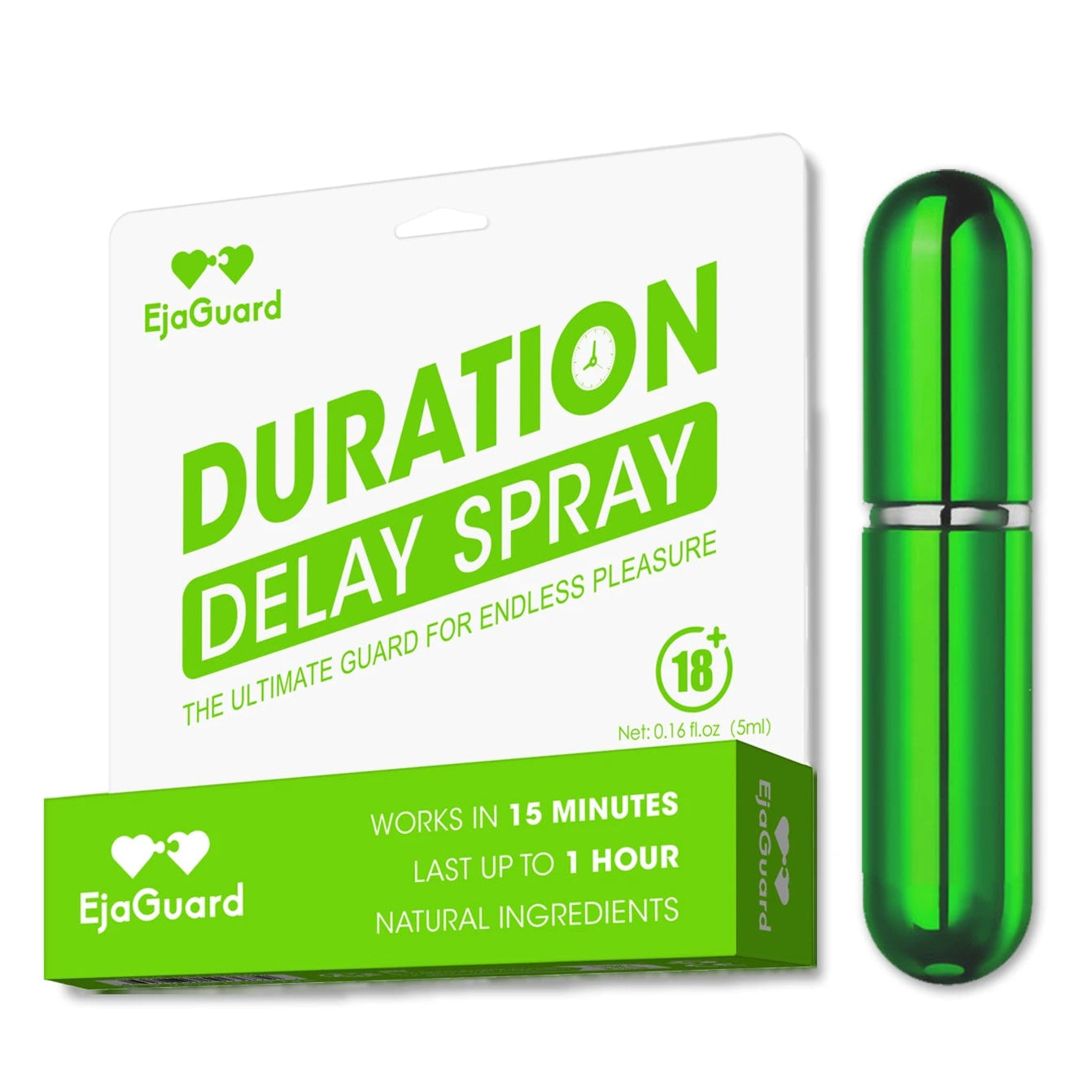
A topical product such as EjaGuard can be viewed as one tool within a larger routine rather than something that has to do all the work by itself. EjaGuard's own instructions recommend starting with a lower amount and allowing time for the product to take effect rather than continually increasing the amount.
See EjaGuard's detailed application guide
That distinction matters.
The goal isn't to eliminate all sensation.
The goal is to create enough room to stay comfortable and in control.

More Numbing Isn't Necessarily More Control
This is particularly important with topical anesthetic products.
Stronger desensitization can reduce sensation, but excessive reduction can also make sex less enjoyable and may affect your ability to maintain an erection.
The Urology Care Foundation notes that numbing creams and sprays can help delay ejaculation, but also warns about excessive desensitization and possible transfer to a partner with some topical anesthetic products.
Read the ISSM's clinical information on PE treatments
That's why the best approach isn't necessarily:
“What's the strongest spray I can find?”
It may be:
“What's enough to help without taking away too much?”
That is a very different goal.

Don't Judge Your Pelvic Floor by One Sexual Experience
Another mistake is trying to diagnose yourself based on one night.
Maybe you ejaculated quickly.
Maybe you stayed tense.
Maybe you couldn't maintain your erection.
Maybe everything went perfectly.
None of these experiences tells you everything about your pelvic floor.
Sexual response can change based on stress, sleep, relationship dynamics, anxiety, stimulation, and many other variables.
The NHS notes that occasional episodes of premature ejaculation are common and aren't necessarily a cause for concern. Persistent problems that cause distress are more worth discussing with a healthcare professional.
Explore EjaGuard's broader premature ejaculation guide
Look for patterns rather than isolated events.

A Simple Awareness Exercise
If you want to learn more about your pelvic floor, you don't necessarily need complicated equipment.
Start by paying attention to your breathing.
Lie down or sit somewhere comfortable.
Take a slow breath into your abdomen.
As you inhale, allow your stomach to expand naturally.
Instead of intentionally squeezing your pelvic floor, see whether you can allow the muscles around the pelvis to soften.
Then breathe out normally.
Repeat this for several minutes.
The goal isn't to force anything.
You're simply learning the difference between holding tension and letting tension go.
Read about pelvic floor rehabilitation research on PubMed
If you experience pain or unusual symptoms, stop rather than trying to push through them.
What Should You Pay Attention to During Sex?
You don't need to count seconds.
Instead, pay attention to a few physical signals.
Are you holding your breath?
Are your thighs extremely tense?
Are you clenching your abdomen?
Are you squeezing your pelvic floor without realizing it?
Do you feel relaxed between periods of stimulation?
Can you slow down without feeling like you're losing control?
These observations may tell you more than a stopwatch.
And importantly, they can help you understand whether your problem is primarily about sensitivity, arousal, tension, anxiety, or a combination.
The Role of Performance Anxiety
Pelvic floor tension doesn't exist in isolation.
For some men, anxiety can trigger physical tension.
Then physical tension can increase the feeling of urgency.
That urgency creates more anxiety.
And the cycle repeats.
This is one reason PE is often better understood through a biopsychosocial perspective rather than as a single physical problem.
The ISSM lists anxiety, stress, relationship problems, low self-esteem, erectile dysfunction, and weakened pelvic floor muscles among factors that may contribute to PE.
Read the Urology Care Foundation's PE treatment overview
Breaking the cycle doesn't necessarily mean eliminating every source of anxiety.
Sometimes simply feeling more informed and more in control can make a difference.

Don't Try to Fix Everything at Once
If you're trying to improve your ejaculatory control, it's tempting to change everything simultaneously.
You might start Kegels.
Buy a delay spray.
Change your masturbation habits.
Try breathing exercises.
Change positions.
Start timing yourself.
And then wonder which one actually helped.
That makes it almost impossible to learn what works for you.
A better approach is to make gradual changes.
Try one strategy consistently for a period of time.
Pay attention to how you feel.
Then decide whether another adjustment makes sense.
This is especially useful when experimenting with a topical product. EjaGuard's own FAQ recommends starting at a lower spray amount and adjusting within its stated instructions rather than immediately using the maximum.
Review EjaGuard's usage FAQ before trying it
The goal is understanding your response, not simply doing more.
When Should You See a Professional?
If PE is persistent and causing significant stress, it's reasonable to speak with a doctor or sexual health professional.
You should also seek professional advice if ejaculation problems are accompanied by:
- Persistent pelvic pain
- Pain during ejaculation
- Urinary problems
- New erectile difficulties
- Sudden changes in sexual function
- Symptoms that began after starting a medication
- Significant anxiety or relationship distress
These situations may point to something that deserves a proper evaluation rather than self-experimentation.
Read NHS guidance on when persistent ejaculation problems should be evaluated
A pelvic floor physical therapist may also be worth discussing if you have symptoms suggesting pelvic floor dysfunction.
The Bottom Line
Premature ejaculation isn't always just about sensitivity.
For some men, pelvic floor function may be part of the picture.
The important thing is that pelvic floor function isn't simply about being strong.
It's about being able to contract, relax, and coordinate the muscles appropriately.
Research suggests pelvic floor rehabilitation can improve ejaculatory control for some men, while newer evidence also shows that results vary and pelvic floor training isn't a universal solution.
Explore the latest EjaGuard information and product guidance
If you're struggling with PE, it may be worth looking beyond the stopwatch.
Pay attention to your breathing.
Notice whether you're constantly tense.
Think about your anxiety level.
Consider whether you can relax as easily as you can contract.
And if you use a delay spray, think of it as one possible tool rather than the entire solution.
The goal isn't maximum numbness.
It isn't maximum muscle strength.
And it isn't necessarily a specific number of minutes.
The real goal is better control, less pressure, and a sexual experience that feels comfortable and enjoyable.
Medical Disclaimer
This article is intended for general educational purposes and is not a substitute for professional medical advice, diagnosis, or treatment. Pelvic floor exercises and relaxation techniques may not be appropriate for everyone. If you have persistent pain, urinary symptoms, erectile problems, or ongoing concerns about premature ejaculation, speak with a qualified healthcare professional.
