

 Buy Now
How Sleep Affects Premature Ejaculation: Can Poor Sleep Make PE Worse?

Most men think about premature ejaculation in terms of what happens during sex.
Maybe ejaculation happens sooner than expected. Maybe arousal seems to build too quickly. Maybe it feels difficult to slow things down once things become intense.
But what happens before sex may matter too.
One factor that doesn't get nearly enough attention is sleep.
Sleep affects almost every part of physical and mental health, including mood, stress, energy levels, concentration and sexual function. Researchers have also started looking more closely at the relationship between sleep and premature ejaculation (PE).
That doesn't mean getting eight hours of sleep will automatically solve PE.
It also doesn't mean that every man with poor sleep will experience premature ejaculation.
The relationship appears to be much more complicated than that.
Recent research has found associations between sleep quality and certain forms of PE, particularly acquired PE. However, researchers still need more evidence to determine exactly how sleep and ejaculation are connected.
So could your sleep habits be influencing your sexual experience?
Possibly.
And understanding why may give you another useful piece of the puzzle.

Table of Contents
- Why Would Sleep Have Anything to Do With PE?
- What Research Says About Sleep and PE
- Sleep Deprivation Can Change More Than Your Energy
- The Connection Between Sleep, Stress, and PE
- Could Poor Sleep Affect Sexual Arousal?
- Sleep and Erectile Function
- Why One Bad Night Doesn't Mean You Have PE
- Can Better Sleep Improve Ejaculation Control?
- What About Delay Sprays?
- When Sleep Problems May Need More Attention
- A Practical Sleep Routine for Men With PE
- The Bottom Line
Why Would Sleep Have Anything to Do With PE?
At first, sleep and ejaculation may seem like completely unrelated subjects.
Sleep happens hours before sexual activity. Ejaculation happens during sexual stimulation. Why would one have anything to do with the other?
The answer is that sexual function isn't controlled by one isolated system.
Your brain, nervous system, hormones, mood, cardiovascular system and sexual organs all interact. Sleep can influence several of those systems at the same time.
For men trying to understand the broader factors that may affect PE, the EjaGuard premature ejaculation guide provides an overview of how biological and psychological factors can interact.
Poor sleep can leave you tired and less focused. It can also make stress harder to manage and may affect mood and overall sexual well-being.
None of this proves that poor sleep directly causes PE.
But it does provide a reasonable explanation for why your sexual response might not be identical every day.
The Mayo Clinic explains that PE involves a complex interaction between psychological and biological factors, rather than one single cause.
That broader view is important.
If you only think about PE as "too much sensitivity," you may overlook other variables that change from one day to another.
Sleep is one of them.

What Research Says About Sleep and PE
Research into sleep and PE is still relatively limited, but the findings so far are interesting.
A 2022 study published in Nature and Science of Sleep examined 349 men and found that poor sleep quality was independently associated with acquired premature ejaculation after accounting for factors such as anxiety, depression, erectile function and urinary symptoms.
That doesn't mean poor sleep was proven to cause PE.
The study was observational, meaning researchers looked at relationships between different factors rather than deliberately changing participants' sleep and observing whether PE developed.
Still, the association is worth paying attention to.
The International Society for Sexual Medicine's discussion of sleep and PE also highlights research showing that sleep patterns may differ between PE subtypes.
In that study, men with acquired PE appeared to have poorer sleep quality and shorter REM sleep compared with several other groups.
Interestingly, the researchers also found differences in anxiety, depression, erectile function and other sexual-health measures.
That makes the picture much more complicated than simply saying:
Bad sleep = premature ejaculation.
Sleep may be one part of a much larger network of physical and psychological factors.

Sleep Deprivation Can Change More Than Your Energy
Most people have experienced what happens after a terrible night of sleep.
You're tired.
You're less patient.
It's harder to concentrate.
Small problems feel more frustrating than usual.
You may also feel less motivated and more mentally distracted.
Those changes matter because sex isn't purely a physical activity.
A man who is exhausted may experience sexual stimulation differently from someone who is well rested. He may have less patience, lower energy, reduced concentration or more difficulty staying mentally present.
That doesn't mean tiredness automatically makes you ejaculate faster.
But it does mean that sleep deprivation can change the conditions under which sexual activity takes place.
For example, imagine having sex after sleeping eight hours versus having sex after sleeping four hours.
Everything else might be identical.
Same partner.
Same environment.
Same stimulation.
But your mental and physical state isn't identical.
That's one reason it can be useful to look beyond what happens during penetration when trying to understand inconsistent sexual experiences.

The Connection Between Sleep, Stress, and PE
One of the strongest reasons sleep may matter is its relationship with stress.
Poor sleep and stress can reinforce each other.
You sleep badly.
You feel more stressed.
You become more worried about the day.
You sleep badly again.
That cycle can also affect sexual confidence.
If you're already concerned about ejaculating quickly, going into sex feeling exhausted or mentally overwhelmed may make it harder to stay relaxed.
This doesn't mean anxiety is "all in your head."
Sleep can therefore become part of a bigger picture.
Poor sleep may contribute to stress.
Stress may affect sexual response.
Worry about PE may increase performance pressure.
That pressure may make the next sexual experience more difficult.
This is one reason a sleep-focused approach shouldn't be presented as a standalone "cure" for PE.
Instead, it can be viewed as one possible way to improve the overall conditions in which sexual function takes place.
The EjaGuard article on sexual routines and PE discusses a similar idea from another angle: sexual response can be influenced by repeated patterns, arousal, tension and psychological factors.
Sleep doesn't replace those factors.
It adds another variable to consider.

Could Poor Sleep Affect Sexual Arousal?
Arousal is another reason sleep may be relevant.
Sexual arousal isn't simply an on/off switch.
It involves attention, anticipation, physical stimulation, emotional state and the brain's response to sexual cues.
When you're extremely tired, your overall level of alertness may be different.
For some men, that may reduce sexual desire.
For others, sexual desire may remain high even when they're tired.
And for someone dealing with PE, the important question may not simply be how much desire they have.
It may be how quickly arousal builds and how aware they are of changes in arousal.
The ISSM's information on PE emphasizes that PE involves difficulty delaying ejaculation together with personal distress, rather than simply having an occasional short sexual experience.
That distinction matters.
If you sleep badly one night and ejaculate sooner than usual the next day, that doesn't automatically mean your PE has become worse.
It may simply mean your overall sexual response was different that day.
This is especially important for men who judge themselves based on individual sexual experiences.
One unusually short encounter doesn't tell you everything about your sexual function.
Patterns over time are much more informative.

Sleep and Erectile Function
Sleep may also matter indirectly through erectile function.
Erection quality and ejaculation are different sexual functions, but they can influence each other.
For example, a man who worries that he may lose his erection may feel pressure to rush sexual activity.
That can create a cycle where erection anxiety contributes to faster ejaculation.
Sleep disorders can also be associated with erectile problems.
This doesn't mean every night of poor sleep will affect erection quality.
Long-term sleep problems are more relevant than one occasional late night.
The ISSM has also reported on the relationship between sleep disorders and erectile dysfunction, noting that conditions such as insomnia and obstructive sleep apnea can negatively affect overall and sexual health.
This creates another possible connection between sleep and PE.
Poor sleep may affect general sexual health.
Poor sexual health may increase performance pressure.
Performance pressure may influence ejaculation.
Again, this is a relationship between multiple factors rather than a simple cause-and-effect chain.

Why One Bad Night Doesn't Mean You Have PE
This is one of the most important points.
Almost everyone has occasional sexual experiences that don't go as expected.
Maybe you were extremely tired.
Maybe you were nervous.
Maybe you hadn't had sex in a while.
Maybe you were unusually excited.
Maybe you were stressed about something completely unrelated to sex.
Maybe everything simply happened faster than expected.
None of these experiences automatically means you have a sexual disorder.
That's particularly relevant when talking about sleep.
If you normally have reasonable control but occasionally have a short experience after a terrible night's sleep, there's no reason to immediately label the situation as a worsening of PE.
Instead, look at the bigger pattern.
How often is it happening?
Does it happen regardless of how well you sleep?
Did the change appear recently?
Are there other symptoms?
Does it cause significant distress?
Those questions are much more useful than obsessively timing every sexual encounter.
The EjaGuard article about ejaculation control versus ejaculation time also explores why a single duration number doesn't necessarily tell you everything about perceived control or sexual experience.

Can Better Sleep Improve Ejaculation Control?
This is where it's important to be realistic.
There isn't enough evidence to say:
"Sleep more and your PE will go away."
That would be an oversimplification.
What we can say is that sleep appears to be relevant to several systems involved in sexual health, and research has found associations between poor sleep and certain PE patterns.
Improving sleep is therefore a reasonable general health goal.
But it shouldn't replace appropriate treatment when someone has persistent PE.
The ISSM's research summary on sleep patterns and PE specifically notes that the relationship between sleep and PE is not yet fully understood.
For someone trying to improve sleep, the first steps don't have to be complicated.
A more consistent bedtime can help.
Reducing late-night screen exposure may help some people.
Regular physical activity can support sleep quality.
Managing caffeine and alcohol intake may also be useful.
And if someone regularly snores heavily, wakes up gasping, or feels exhausted despite spending enough time in bed, it may be worth discussing possible sleep disorders with a healthcare professional.
What About Delay Sprays?
A delay spray works through a very different pathway from sleep.
Sleep is a general physiological state.
A topical delay spray is applied locally and is intended to affect penile sensitivity.
That means improving sleep and using a delay spray aren't competing strategies.
They address completely different parts of the sexual experience.
For someone who experiences PE, a topical delay spray may provide additional physical support, while sleep, stress management and general health address broader factors that can influence sexual function.
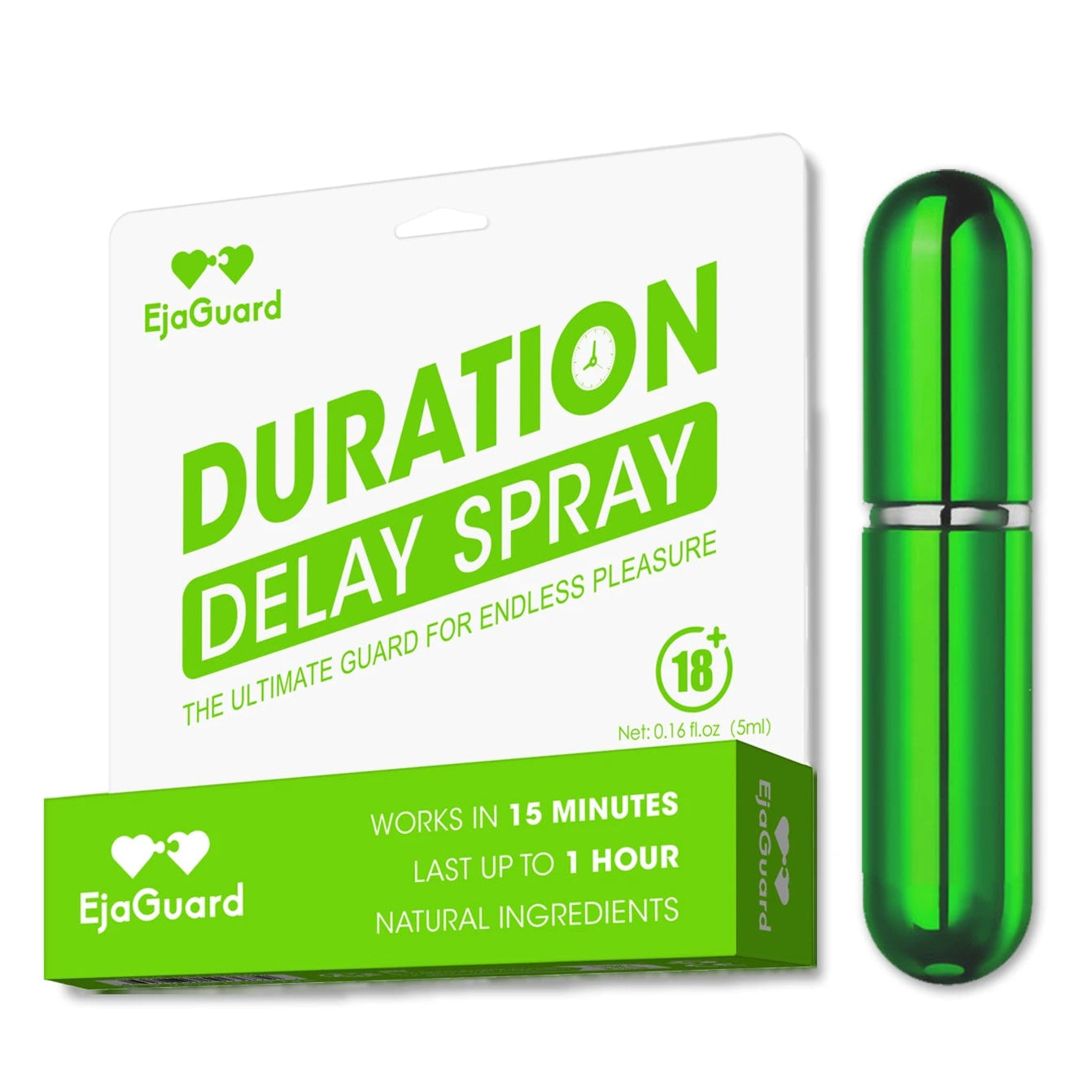
The EjaGuard FAQ provides the current product-specific directions for using EjaGuard, including the recommended application range and waiting period.
The important point is not to think of EjaGuard—or any delay spray—as a substitute for healthy sleep.

A spray cannot compensate for chronic sleep deprivation.
Likewise, getting better sleep doesn't necessarily provide the immediate local sensitivity reduction that a topical product is designed to provide.
They're simply different tools.
The Cleveland Clinic's overview of PE treatment describes topical anesthetic products as one possible treatment approach for PE, alongside other behavioral, psychological and medical options.
That broader perspective is useful.
PE is rarely about one variable.
If sleep is poor, improving sleep may be worthwhile.
If anxiety is significant, addressing anxiety may help.
If erectile dysfunction is involved, that may need attention.
If penile sensitivity is an important factor, a topical delay product may be one option.
The goal is to understand which factors actually matter for the individual rather than assuming there is one universal solution.

When Sleep Problems May Need More Attention
Sometimes poor sleep isn't simply a lifestyle issue.
It can be a symptom of an underlying sleep disorder.
If you regularly get enough time in bed but still wake up exhausted, that's worth paying attention to.
Other warning signs can include:
- Loud or persistent snoring
- Waking up repeatedly during the night
- Waking up gasping or choking
- Severe daytime sleepiness
- Difficulty concentrating
- Persistent insomnia
- Very irregular sleep patterns
- Regularly needing alcohol or medication to fall asleep
These problems don't automatically mean you have a sleep disorder.
But they can be worth discussing with a healthcare professional.
The Mayo Clinic's information on sleep apnea explains that untreated sleep apnea can affect daytime alertness, cardiovascular health and other aspects of overall health.
And because sexual function is connected to overall health, persistent sleep problems shouldn't simply be ignored because the main symptom isn't sexual.
The EjaGuard blog's broader male sexual health resources can provide additional background on related sexual-health topics, but persistent medical symptoms should always be evaluated appropriately.
A Practical Sleep Routine for Men With PE
If you're wondering what you can actually do, start with the basics.
You don't need a complicated "PE sleep protocol."
Instead, try to make your sleep more predictable.
1. Keep Your Sleep Schedule Relatively Consistent
Going to bed and waking up around similar times can make sleep more predictable.
It doesn't have to be perfect.
The goal is consistency rather than obsessively following an exact schedule.
2. Give Yourself Enough Time to Sleep
One of the simplest problems is also one of the most common: not allowing enough time for sleep.
Staying up late repeatedly and trying to catch up later can make your sleep schedule less predictable.
3. Don't Judge Your Sexual Performance After One Bad Night
If you slept four hours and had a poor sexual experience, don't immediately conclude that your PE has become worse.
Give yourself some perspective.
The ISSM research on sleep and PE suggests that sleep deserves attention, but the evidence does not establish a simple one-night cause-and-effect relationship.
4. Look at Patterns Instead of Isolated Events
If you repeatedly notice that your sexual function changes when your sleep deteriorates, that's more interesting than one unusual experience.
You may begin to notice patterns involving sleep, stress, exercise, alcohol, mood and sexual activity.
The goal isn't to turn sex into a spreadsheet.
It's simply to understand your body better.
5. Address Persistent Sleep Problems Separately
If you're consistently sleeping poorly, don't treat the problem only as a sexual-performance issue.
Your sleep deserves attention on its own.
Improving sleep may not "cure" PE, but better overall health can create better conditions for sexual function.
The Bottom Line
Sleep probably isn't the missing magic solution for premature ejaculation.
But it's also not something that should be completely ignored.
Research has found associations between poor sleep quality and acquired PE, and newer studies suggest that different PE subtypes may have different sleep patterns. At the same time, researchers still don't know exactly how sleep contributes to PE, and current evidence doesn't prove that poor sleep directly causes premature ejaculation.
That distinction is important.
If you occasionally sleep badly and then have a shorter sexual experience, there's no reason to panic.
But if poor sleep is a regular part of your life—and you're also experiencing changes in ejaculation, erections, libido, mood or sexual satisfaction—it may be worth looking at the bigger picture.
PE is influenced by multiple factors.
Sleep may be one of them.
For some men, improving sleep, reducing stress and taking better care of overall health may help create a better foundation for sexual function. For others, additional treatment may still be necessary.
And if penile sensitivity is one of the factors contributing to rapid ejaculation, a topical delay spray such as EjaGuard may be considered as one part of a broader approach, rather than as a replacement for addressing sleep or other underlying factors.
Ultimately, the useful question isn't:
"Did I sleep badly, so that's why I ejaculated quickly?"
It's:
"What factors consistently seem to affect my sexual response?"
That question is much more useful—and much more likely to lead to a solution that actually fits you.

