

 Buy Now

Why Some People Quit Delay Sprays Too Early

A lot of people try a delay spray exactly once, have a mediocre or awkward experience, and immediately decide the entire category is useless.
You’ll see the same reactions over and over again:
“Too numb.”
“Did nothing.”
“Killed the mood.”
“Not worth the hassle.”
And to be fair, those reactions aren’t completely unreasonable.
If your very first experience feels off, uncomfortable, or disappointing, it’s natural to assume the product simply doesn’t work for you. Most people aren’t interested in experimenting repeatedly with something that already felt like a bad idea once.
But after reading enough user experiences, discussions, and long-term feedback, a different pattern starts to emerge.
A surprising number of people who initially dismissed delay sprays eventually came back to them later — and had a completely different experience the second or third time.
That raises an important possibility:
Many users aren’t necessarily rejecting delay sprays because they don’t work.
They’re rejecting them because their first setup didn’t match how these products actually need to be used.
A bad first experience doesn’t always mean delay sprays are ineffective.
Sometimes, it just means the approach was off.

Using Too Much: The Most Common Beginner Mistake
Probably the single most common mistake first-time users make is using too much product.
It’s an understandable assumption:
More product = stronger effect = better control.
That logic works in many other areas, so it feels intuitive.
But with delay sprays, that assumption often backfires.
Instead of improving control, over-application can create a completely different set of problems:
- excessive numbness
- unnatural or “muted” sensation
- reduced awareness of stimulation
- difficulty staying mentally engaged
- concern about whether too much was applied
Ironically, in trying to gain more control, users often end up feeling less in control.

This happens because delay sprays don’t just reduce intensity—they also affect feedback.
When too much product is used, the body receives less precise information about what’s happening. That makes it harder to regulate pacing naturally.
Instead of a smooth experience, it can feel disconnected or unpredictable.
This is why many experienced users eventually shift their mindset.
Instead of asking:
“How much can I use to maximize the effect?”
They start asking:
“What is the minimum amount that gives me usable control?”
That shift makes a big difference.
In many cases, the difference between:
“this feels terrible”
and
“this actually works”
is surprisingly small.
Sometimes it’s literally just one spray less.

Bad Timing Gets Mistaken for Bad Performance
Another major issue that doesn’t get discussed enough is timing.
A lot of people approach delay sprays as if they function like a simple switch:
Apply → wait a bit → result happens
But real-world usage is much less predictable.
Different products behave differently. Some absorb quickly, while others take longer to reach full effect. Some feel subtle at first and build over time. Others peak earlier and then stabilize.
On top of that, external factors can influence timing:
- skin condition
- temperature
- recent showering
- hydration
- application technique
Because of this, timing isn’t universal—it’s something that needs to be learned.
When timing is off, the experience can feel completely wrong.
For example:
Apply too early → the effect may fade before it’s needed
Apply too late → the effect may feel too strong or poorly timed
In both cases, the user may conclude that the product itself is inconsistent or ineffective.
But often, the issue isn’t the product—it’s the timing window.
This is why many “this didn’t work at all” experiences are actually:
timing problems disguised as product problems

Once users adjust timing based on how their body absorbs the product, the same spray can feel very different.
Wrong Product for the Wrong Expectation
Another major reason people quit early is a mismatch between what they want and what the product is designed to do.
Not all delay sprays aim for the same outcome.
Broadly speaking, they fall into different categories.
Some are designed for:
- stronger desensitization
- more noticeable effect
- more aggressive control
Others are designed for:
- lighter modulation
- more natural sensation
- gradual control
These are fundamentally different approaches.
The problem is that many users don’t realize this before trying a product.
So you end up with situations like:
Someone wants a subtle, natural feeling → buys a strong lidocaine spray → feels overly numb → assumes all sprays are bad
Or:
Someone expects a dramatic, obvious effect → tries a mild formula → barely notices anything → assumes it doesn’t work
In both cases, the product did what it was designed to do.
It just didn’t match the expectation.
This mismatch is one of the biggest sources of early disappointment.
And it’s also one of the easiest to fix—once users understand that different products serve different purposes.

Starting Mild Can Actually Be Easier
There’s a common assumption that beginners should start with the strongest option available.
The idea is that a stronger product will guarantee results and remove uncertainty.
But in practice, this often creates more problems than it solves.
Stronger products introduce additional complexity:
- risk of over-numbing
- need for precise dosing
- concern about transfer
- strict timing requirements
- increased mental pressure to “get it right”
For a first-time user, that’s a lot to manage at once.
Instead of feeling more confident, many people feel more anxious and uncertain.

Every step starts to feel like it matters too much.
That pressure alone can negatively affect the experience.
In contrast, starting with a milder product can simplify the process.
There’s more room for adjustment, less risk of overdoing it, and generally less stress around precision.
That’s one reason why some users gravitate toward milder formulas when they’re still figuring things out.
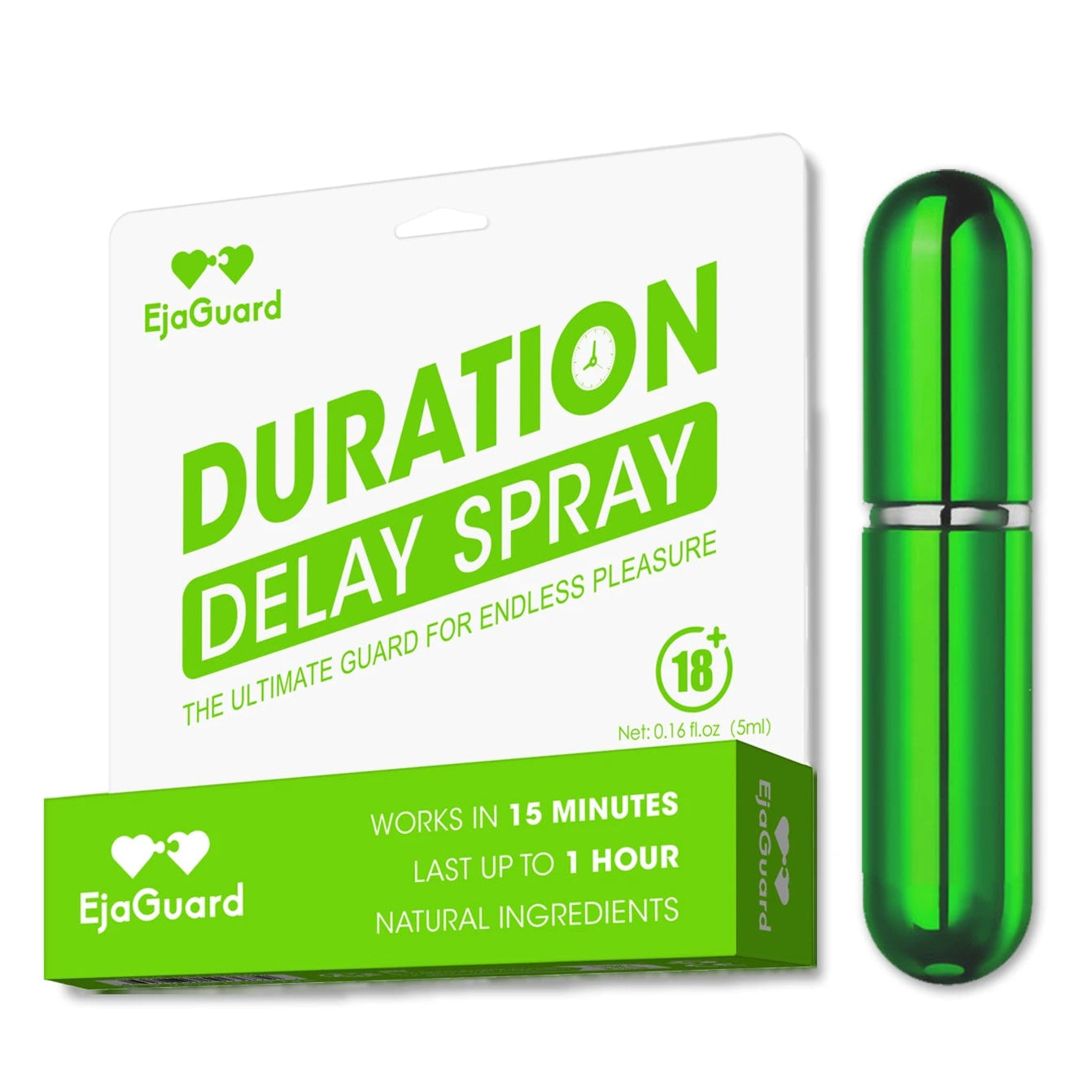
Products like EjaGuard often come up in this context—not necessarily because they provide the strongest delay, but because they allow users to experiment without immediately dealing with heavy desensitization.
For beginners, that can make the learning curve feel much more manageable.

Expectations Are Often Unrealistic
This might be the most uncomfortable point, but it’s also one of the most important.
A lot of people approach delay sprays with very high expectations.
They expect:
- immediate results
- perfect control
- zero adjustment
- no learning curve
In reality, that’s rarely how it works.
Most users who eventually find a setup that works didn’t get there on their first try.
They had to adjust:
- how much they used
- when they applied it
- how they applied it
- what type of product they used
In many cases, the first experience wasn’t a success—it was information.
It showed what didn’t work.
From there, they made small adjustments.
Over time, those adjustments led to better and more consistent results.
But if someone expects perfection on the first attempt, they may interpret any imperfection as failure.
And that leads to quitting too early.

The Role of Learning and Familiarity
Another important factor that often gets overlooked is familiarity.
Using delay sprays effectively is not just about the product—it’s about understanding how your body responds.
That includes:
- how quickly you absorb the product
- how strong the effect feels at different dosages
- how timing affects performance
- how sensation changes over time
These are not things most people can figure out in a single attempt.
They require at least a small amount of experimentation.
Without that familiarity, even a good product can feel inconsistent.
With familiarity, the same product can feel predictable and reliable.
This is similar to learning any new tool.
The first attempt is rarely the best one.

Emotional Reactions After a Bad First Experience
It’s also worth acknowledging the emotional side.
A bad first experience doesn’t just feel physically off—it can also affect confidence.
People may feel:
- disappointed
- frustrated
- self-conscious
- skeptical
Those reactions can make them less willing to try again.
Instead of seeing the experience as something to adjust, they see it as something to avoid.
That’s completely understandable.
But it also contributes to why many people quit before they’ve actually explored how to use these products effectively.
So… Should Everyone Give Delay Sprays a Second Chance?
Not necessarily.
If a product causes irritation, discomfort, or clearly feels wrong for your body, there’s no reason to force it.
Some people simply don’t like how delay sprays feel, and that’s a valid conclusion.
However, if the only issue was something like:
- using too much
- poor timing
- mismatched expectations
- choosing the wrong type of product
then the first experience may not be a reliable indicator of how the product category actually works for you.
In those cases, a second attempt—using a different approach—can produce a very different result.

Final Thoughts
A lot of people quit delay sprays after one attempt because that first experience didn’t match their expectations.
But delay sprays are not plug-and-play solutions.
They are tools that require some degree of adjustment.
Success often comes down to:
- using the right amount
- finding the right timing
- choosing the right type of product
- setting realistic expectations
It’s not about finding a perfect product immediately.
It’s about finding the right combination of product and routine.
And for many users, that process takes more than one try.
That doesn’t mean delay sprays work for everyone.
But it does mean that quitting after a single attempt might not tell the whole story.

