

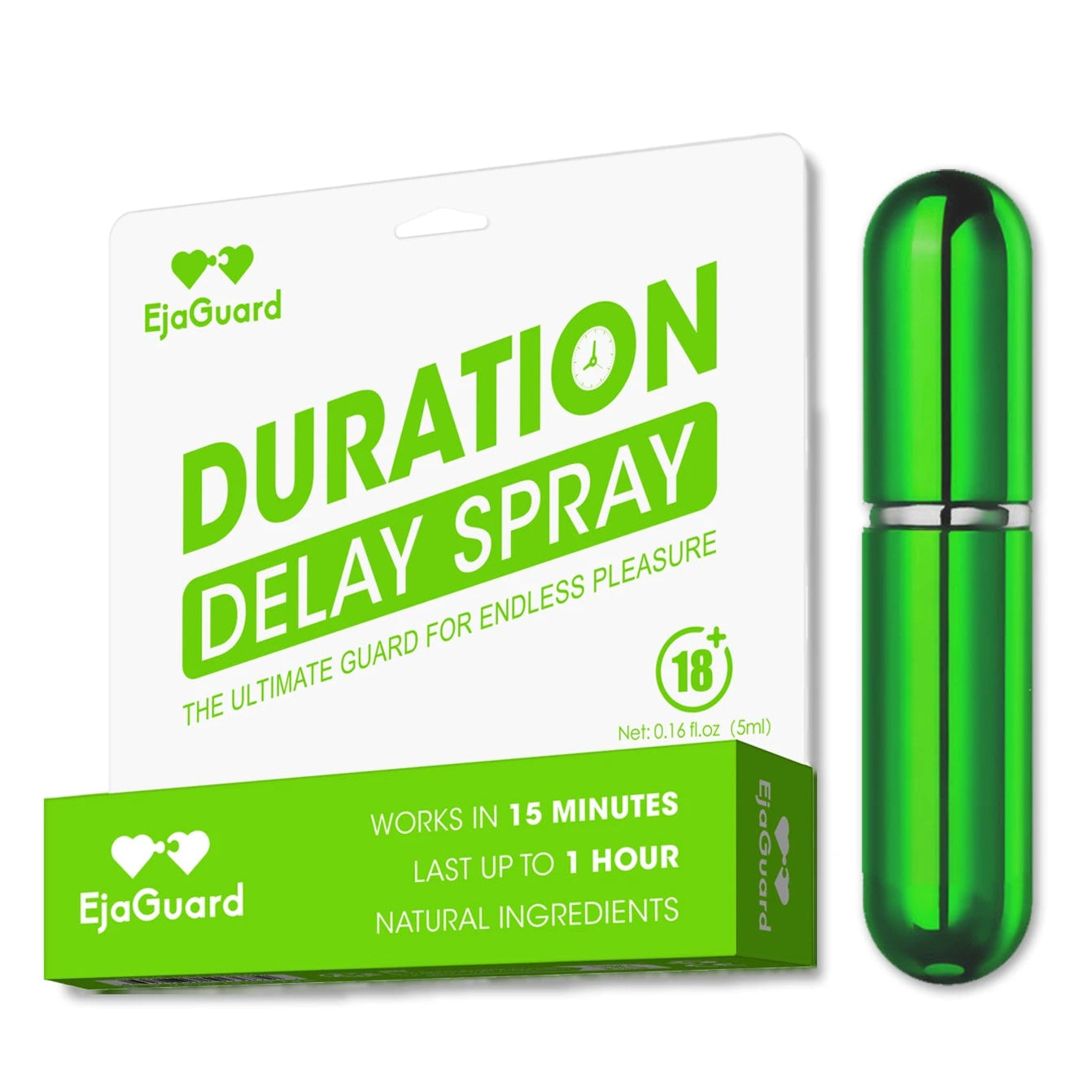
 Buy Now
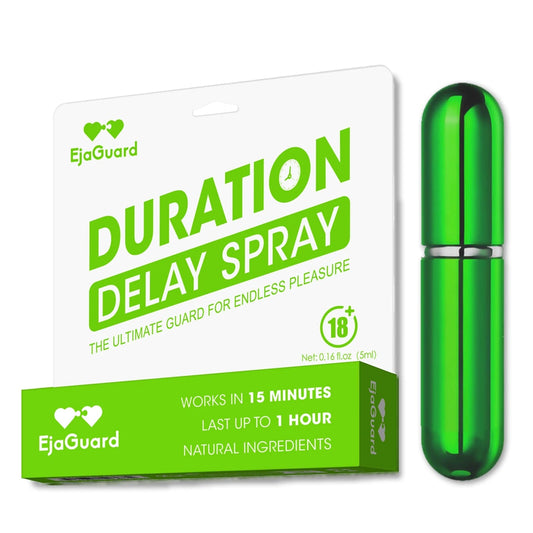

Why Timing Matters More Than Most People Realize

When discussing delay sprays, most conversations tend to focus heavily on one thing: product selection.
People ask:
Which formula is strongest?
Which one feels the most natural?
Which product lasts the longest?
These are valid questions, and product choice certainly matters. Different formulations can produce very different experiences, and finding the right type of spray is an important part of the process.
However, there is one variable that is often underestimated — and sometimes almost completely ignored:
timing.
In real-world use, timing is not just a minor detail. It can dramatically influence how a delay spray performs, how it feels, and how consistent the results are.
In some cases, adjusting the timing alone can make the same product feel like a completely different formula.
A spray that once felt too weak can suddenly feel balanced.
A spray that felt too strong can become smoother and more natural.
A product that seemed inconsistent can become predictable.
Understanding why this happens requires looking beyond the product itself and focusing on how these formulas actually behave over time.

The Common Mistake: Product Obsession Without Timing Awareness
Many users approach delay sprays with a very straightforward mindset:
“If this product doesn’t work, I need a different one.”
So when the first experience feels off — too numb, too weak, too noticeable, or too inconsistent — the immediate assumption is that the product itself is the problem.
This leads to a cycle:
Try product → unsatisfying result → switch product → repeat
What often gets overlooked is that most delay sprays do not function like an instant switch.
They are not designed to deliver a fixed, immediate effect the moment they are applied.
Instead, they follow a time-dependent absorption curve.
This means that:
- the effect develops gradually
- the intensity changes over time
- the sensation profile evolves
As a result, the same spray used at different time intervals can produce noticeably different outcomes.
For example:
Using a spray 5 minutes before activity may produce one experience.
Using it at 15 minutes may produce another.
Using it at 30 minutes may produce something else entirely.
If a user only tests one timing window, they are only experiencing one version of the product.
This is why many people end up judging a product too quickly — they are not seeing the full range of how it behaves.

Understanding the Timing Curve
To better understand why timing matters, it helps to think of delay sprays as following a curve rather than a fixed state.
After application, the product goes through several phases:
- Initial application phase
- Early absorption phase
- stabilization phase
- extended absorption or decline phase
Each phase can feel different.
The transition between these phases is not always obvious, but it strongly affects the user experience.
Around 5 Minutes: Early Stage / Surface-Level Effects
Applying a delay spray only a few minutes before activity is very common.
This often happens in situations where spontaneity is involved, or when users expect the product to work quickly.
At around 5 minutes, many sprays are still in the early stages of absorption.
At this point, users may experience:
- uneven or partial sensitivity reduction
- noticeable surface-level sensations
- alcohol-related cooling or warming effects
- increased awareness of the product on the skin
- inconsistent or unpredictable feedback
In this phase, the product may feel active, but not fully developed.
This can create a confusing experience.
Users might think:
“It’s working… but not in a helpful way.”
The sensation may feel present but incomplete — noticeable enough to be distracting, but not yet balanced enough to provide smooth control.
This is one of the most common sources of early dissatisfaction.
Many negative first impressions come from testing the product too early in its absorption cycle.

Why Early Timing Often Feels Inconsistent
At the early stage, the product has not fully distributed or settled into the skin.
This can lead to uneven effects across different areas.
Some parts may feel more affected than others.
Additionally, the nervous system is still adjusting to the change.
Because of this, control may feel unstable or unpredictable.
Users might notice:
- fluctuating sensitivity
- difficulty gauging pacing
- unclear feedback from the body
This inconsistency is often mistaken for poor product quality.
In reality, it is simply a reflection of incomplete absorption.
Around 10–20 Minutes: The Standard Working Window
For many delay sprays, the 10–20 minute range represents the most stable and predictable phase.
This is why many manufacturers recommend waiting within this window.
By this point, several things have usually happened:
- the product has absorbed more evenly
- surface sensations have diminished
- the intensity has stabilized
- the body has adapted to the change
Users often report a more balanced experience during this phase.
Common observations include:
- smoother and more even sensitivity reduction
- improved control without excessive numbness
- reduced awareness of the product itself
- more natural integration into the experience
This is often where the product behaves closest to its intended design.
However, even within this range, small timing differences can matter.
For some users, 10 minutes feels optimal.
For others, waiting closer to 20 minutes produces a more comfortable or natural experience.
This variation depends on individual factors and the specific formulation.

Why This Window Feels More “Natural”
The key reason this timing window feels better is that the transition has already occurred.
The body is no longer reacting to a change — it has already adjusted.
This reduces the sense of interruption.
Instead of noticing the product “kicking in,” the user experiences a steady, consistent state.
This creates a smoother overall experience.
30 Minutes and Beyond: A Different Experience Entirely
Longer timing windows are discussed less frequently, but they can significantly change how a delay spray feels.
At 30 minutes or more, the product has had extended time to absorb.
Depending on the formula, several outcomes are possible.
Some users report that the experience becomes:
- smoother
- more subtle
- more integrated into natural sensation
- less abrupt or noticeable
Others report the opposite:
- flatter or duller sensation
- excessive numbness
- reduced responsiveness
- less engagement overall
This variability is important.
It helps explain why the same product can receive completely different reviews.
One user may describe it as perfectly balanced.
Another may describe it as overwhelming or dull.
Timing differences alone can account for much of this discrepancy.

The Role of Formula Type in Timing Behavior
Not all delay sprays respond to timing in the same way.
Different formulations have different absorption characteristics.
Some are designed for:
- fast onset
- shorter duration
- more immediate feedback
Others are designed for:
- slower absorption
- longer-lasting effects
- smoother transitions
Because of this, the “optimal timing” is not universal.
A product that works best at 10 minutes may feel very different at 30 minutes.
Another product may require a longer wait to reach its ideal state.
Understanding this can help users make more informed adjustments.
Why Timing Responses Differ Between Individuals
Timing is not only about the product — it is also about the user.
Individual physiology plays a significant role.
Factors that can influence timing include:
- skin thickness
- hydration levels
- body temperature
- blood circulation
- recent showering or sweating
- baseline sensitivity
- application amount
For example:
A person with faster absorption may reach peak effect sooner.
A person with slower absorption may need more time.
This is why two people using the same product at the same timing can have different experiences.
There is no single timing rule that works for everyone.

Environmental and Situational Influences
Timing can also be affected by external conditions.
For example:
- applying after a hot shower may increase absorption speed
- dry skin may slow down absorption
- temperature can influence how the product spreads and absorbs
Even small differences in routine can shift the timing window.
This adds another layer of variability.

Practical Takeaway: Experiment Before Switching
A disappointing first experience does not always mean the product is wrong.
Before switching to a different spray, it can be useful to experiment with timing.
Simple adjustments can make a significant difference.
For example:
- moving from 5 minutes to 15 minutes
- extending from 15 minutes to 25 or 30 minutes
- testing multiple timing windows across different days
These changes can improve:
- consistency
- comfort
- perceived naturalness
- overall control
In many cases, the product itself does not need to change.
Only the timing does.

Timing as a Hidden Lever
One way to think about timing is as a hidden lever.
Most users focus on:
- product type
- dosage amount
But timing is another variable that can be adjusted.
And it is often one of the most powerful.
Unlike switching products, adjusting timing requires no additional cost.
Yet it can produce significant improvements.
Why Timing Gets Overlooked
Despite its importance, timing is often ignored.
There are a few reasons for this.
First, it is less visible.
Product differences are easy to notice.
Timing effects are more subtle.
Second, many users expect immediate results.
Waiting feels inconvenient or unnecessary.
Third, instructions are often simplified.
Users may not realize how much variation is possible within the recommended range.

Final Thought
Product choice matters.
Ingredient profile matters.
Formula design matters.
But timing deserves far more attention than it typically receives.
Many users spend months trying different products while rarely experimenting with one of the most influential variables already within their control.
In real-world use, how a product is timed can be nearly as important as which product is used.
Sometimes the difference between:
“this doesn’t work for me”
and
“this finally feels right”
is not a different spray.
It is simply a different clock.

