

 Buy Now
Why Round Two Feels Different: Understanding the Male Refractory Period and Ejaculation

Sexual performance is often discussed as if every sexual encounter follows the same pattern.
You get aroused, you have sex, you ejaculate, and that's the end of the story.
But for many men, what happens after ejaculation can be just as interesting as what happens before it.
Some men can become interested in sex again relatively quickly. Others need significantly more time before they can get another erection or reach orgasm. Sometimes the second round feels easier. Sometimes it feels completely different.
This recovery period is commonly called the male refractory period.
It is a normal part of male sexual physiology, but it is also something that doesn't get explained very well. The length and intensity of the refractory period can vary considerably, and there isn't one universal "normal" number that applies to everyone. Research has also shown that some commonly repeated claims about the refractory period are based on surprisingly limited human evidence.
This raises an interesting question for men who are also thinking about ejaculation control:
Does the refractory period have anything to do with how long you last, how quickly you ejaculate, or whether a second round feels different?
The answer is more complicated than simply saying "yes" or "no."

Table of Contents
- What Is the Male Refractory Period?
- What Happens Immediately After Ejaculation?
- Why Can't Some Men Get Another Erection Immediately?
- How Long Does the Refractory Period Last?
- Does Age Really Make the Refractory Period Longer?
- Why Round Two Can Feel Completely Different
- Can the Second Round Be Easier for Men With PE?
- Why You Shouldn't Use Round Two as a Treatment for PE
- What Happens to Sensitivity After Ejaculation?
- Can a Delay Spray Change the Refractory Period?
- Where EjaGuard Fits Into the Picture
- What If Your Refractory Period Suddenly Changes?
- Refractory Period vs. Delayed Ejaculation
- Why Comparing Yourself With Other Men Can Be Misleading
- A Better Way to Think About Sexual Recovery
- The Bottom Line
What Is the Male Refractory Period?
The refractory period is the period following orgasm and ejaculation during which a man generally needs some time before he can experience another orgasm.
During this period, getting another erection may be difficult or impossible, and sexual stimulation may feel less effective than it did before ejaculation.
This doesn't necessarily mean that sexual desire disappears completely. A man can still feel attracted to his partner or mentally interested in sex while his body isn't ready to respond in the same way.
The distinction between sexual desire, erection, arousal, and orgasm is important because these processes don't always recover at exactly the same speed. The sexual response cycle includes several physiological changes, and the recovery phase after orgasm is part of that cycle.
For a broader explanation of how ejaculation and orgasm are classified medically, the International Society for Sexual Medicine also maintains a dedicated ejaculation and orgasm disorders resource.

What Happens Immediately After Ejaculation?
After ejaculation, the body begins moving away from the highly aroused state associated with orgasm.
Muscle tension changes, the erection usually subsides, and the nervous system shifts toward a recovery state. The body isn't simply "turning off," however. Different physiological systems are changing at the same time.
One particularly interesting feature is that penile sensory thresholds can change during the post-ejaculatory period. Recent sexual-medicine literature describes increased sensory thresholds during the refractory period, which helps explain why stimulation immediately after ejaculation may not feel the same as it did beforehand.
This is one reason the second round shouldn't necessarily be expected to feel like a continuation of the first.
Your body has already gone through orgasm once, and the sensory and physiological conditions are different.
For more background on how sexual response progresses from arousal through orgasm and recovery, the Cleveland Clinic's overview of the sexual response cycle provides a useful medical explanation.

Why Can't Some Men Get Another Erection Immediately?
The simplest answer is that the male sexual response includes a recovery period.
After ejaculation, the mechanisms involved in erection and orgasm don't immediately return to their pre-arousal state. This is why a man may want another round mentally but find that his body isn't cooperating yet.
Importantly, this isn't necessarily a sign of erectile dysfunction.
A man who normally has healthy erections but temporarily cannot achieve another erection immediately after ejaculation may simply be experiencing a normal refractory period.
The exact mechanisms are complex and involve the nervous system, neurotransmitters, blood flow, and changes in sexual responsiveness. Researchers have proposed several biological pathways involved in the refractory period, but the precise human mechanisms aren't fully understood.
The Journal of Sexual Medicine review on post-ejaculation refractory time is particularly interesting because it points out just how limited the evidence base is for many commonly repeated claims about the human refractory period.

How Long Does the Refractory Period Last?
This is where things get interesting.
There is no single number that defines the normal male refractory period.
For one man, recovery might happen relatively quickly. For another, it may take considerably longer. Even for the same person, recovery time can vary from one encounter to another.
That means statements such as "men need exactly X minutes before they can go again" are misleading.
The refractory period isn't a stopwatch.
Factors such as age, general health, arousal, fatigue, psychological state, relationship context, and individual physiology may all influence the experience. But researchers have also emphasized that the scientific evidence behind some popular assumptions about refractory-period duration is surprisingly limited.
This is one of those situations where comparing yourself with a friend, a partner, or something you saw online doesn't tell you much.
If you're interested in the broader science of ejaculation, the ISSM's sexual-health information on ejaculation disorders is a better starting point than trying to find a universal number.

Does Age Really Make the Refractory Period Longer?
You've probably heard the idea that younger men can have multiple rounds quickly while older men need much more recovery time.
There may be some truth to age-related differences in sexual response, but the popular version of this idea is much more definitive than the evidence allows.
One review specifically noted that the commonly repeated statement that refractory-period duration increases with age does not have strong published human evidence behind it.
In other words, age can be relevant to sexual function, but it isn't useful to think of the refractory period as a simple formula where adding years automatically adds a specific number of minutes.
Two men of the same age can have very different experiences.
And one man can have different recovery times under different circumstances.
That is why research on the male refractory period is better interpreted as a description of a complex physiological process rather than a fixed timeline.
Why Round Two Can Feel Completely Different
One of the most noticeable things about a second sexual encounter is that it may not feel like the first one at all.
Some men report that they feel less sensitive after ejaculation. Others feel that it takes more stimulation to reach the same level of arousal. Some may have a much slower build-up, while others feel mentally interested but physically less responsive.
This makes physiological sense.
After ejaculation, the body isn't starting from zero. It has just gone through a period of intense sexual stimulation and orgasm, followed by a recovery phase.
The Journal of Sexual Medicine literature on refractory time explains that post-ejaculatory sexual responsiveness involves measurable physiological changes, although many details of the human process remain incompletely understood.
This also means that "round two" isn't automatically supposed to be better or worse.
It is simply different.
For some men, that difference can actually be useful because the second round may naturally involve a slower build-up.
For others, the additional recovery time may be frustrating.

Can the Second Round Be Easier for Men With PE?
This is one of the most interesting questions for men dealing with premature ejaculation.
If someone ejaculates quickly during the first encounter and then finds that it takes much longer during a second attempt, it can be tempting to conclude that the second round has somehow "fixed" the problem.
But that's not necessarily what's happening.
The second encounter occurs under different physiological conditions. Sensitivity, arousal, erection response, psychological pressure, and the refractory period can all be different.
PE itself is defined using more than ejaculation time alone. Clinical definitions also consider the ability to delay ejaculation and the degree of personal distress or negative consequences associated with the problem.
The ISSM's explanation of premature ejaculation is useful here because it shows why simply comparing the duration of two different sexual encounters doesn't provide the whole picture.
A longer second round may tell you something about your sexual response, but it doesn't automatically mean your first-round ejaculation problem has disappeared.

Why You Shouldn't Use Round Two as a Treatment for PE
Some men may naturally discover that they last longer after ejaculating once.
That can be interesting information, but deliberately relying on a first ejaculation as a "warm-up" isn't necessarily a practical solution.
For one thing, not everyone experiences the same effect.
For another, the second encounter may involve lower sensitivity, a weaker erection, reduced desire, or a longer recovery period.
PE management should focus on the overall sexual experience rather than trying to manipulate one particular physiological phase.
Modern approaches to PE can involve behavioral strategies, psychological approaches, topical anesthetics, oral medications, or combinations depending on the individual situation.
The EAU Guidelines on Sexual and Reproductive Health also emphasize that assessment of ejaculation problems involves more than simply recording how many minutes intercourse lasts.
That distinction matters.
The goal isn't to find a trick that makes one particular encounter longer.
The goal is to understand your sexual response well enough to find an approach that works consistently and comfortably for you.
What Happens to Sensitivity After Ejaculation?
Sensitivity after ejaculation can be quite different from sensitivity before ejaculation.
For some men, touching the penis immediately after orgasm may feel overly intense or uncomfortable. For others, the area may feel less responsive than before.
This is another reason why the refractory period shouldn't be thought of purely as "the time until your next erection."
It's a broader change in sexual responsiveness.
The recent International Consultation on Sexual Medicine review describes changes in penile sensory thresholds during the post-ejaculatory refractory period, reinforcing the idea that the sensory experience itself changes during recovery.
This can also explain why a man might be mentally ready for another round before he is physically ready for the same type of stimulation.
The ISSM information on delayed ejaculation is useful for understanding the opposite situation as well: when difficulty reaching ejaculation becomes persistent rather than simply representing a normal short-term recovery period.
Can a Delay Spray Change the Refractory Period?
This is where it's important to separate two different things.
A topical delay spray is designed to affect sensation before or during sexual activity.
The refractory period happens after ejaculation.
Those are not the same physiological process.
A topical desensitizer can reduce penile sensitivity, which may influence how stimulation feels and how quickly ejaculation occurs. But that doesn't mean the product is directly "controlling" the refractory period itself.
The distinction is important because it prevents a common misunderstanding: lasting longer before ejaculation and recovering faster after ejaculation are two completely different outcomes.
For anyone considering a topical product, the ISSM guidance on delaying ejaculation is a useful medical reference for understanding where topical anesthetics fit into PE management.
Where EjaGuard Fits Into the Picture
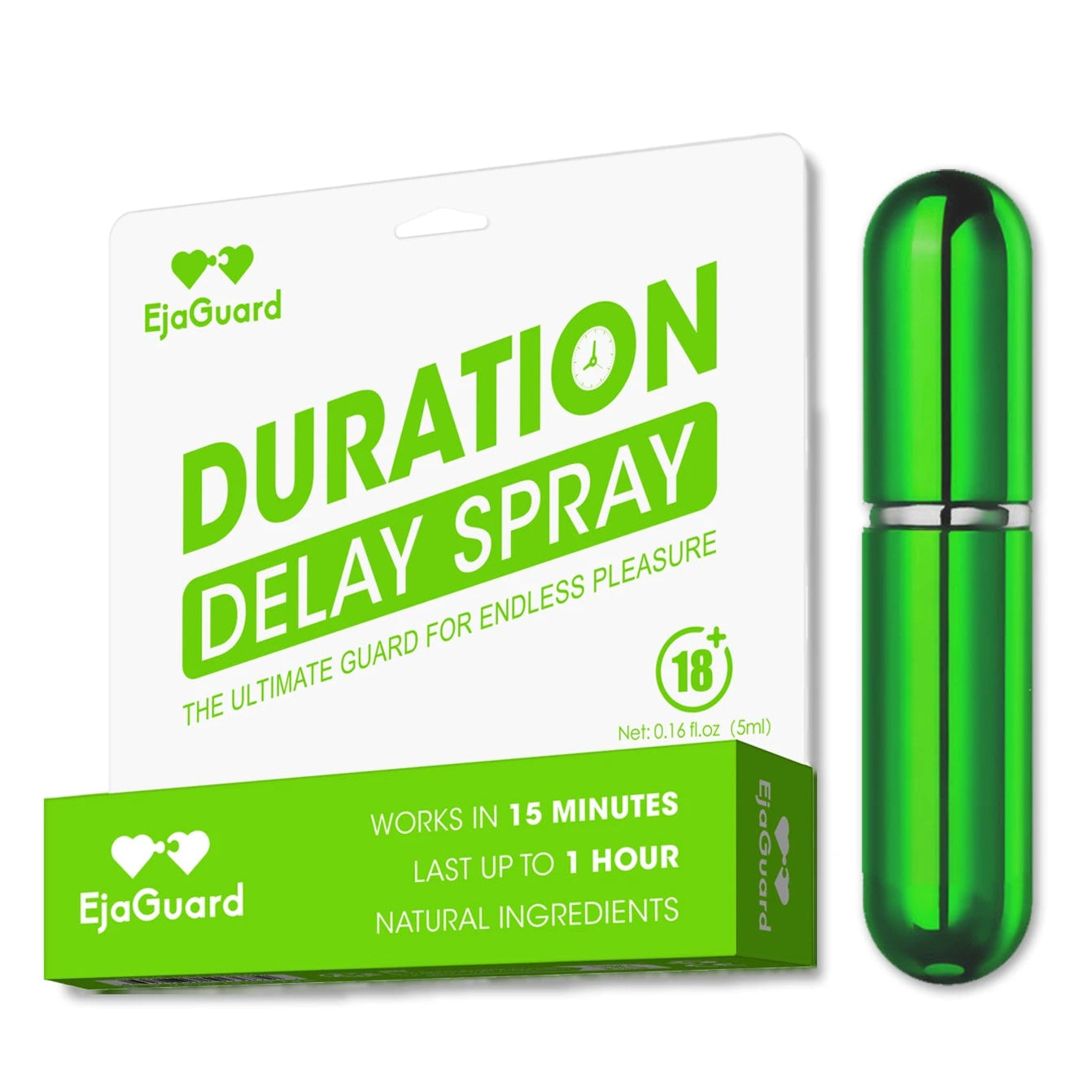
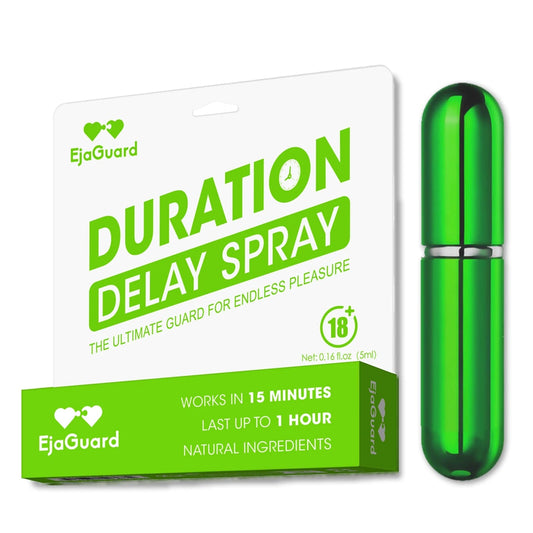
EjaGuard is one example of a delay spray that is marketed for temporary reduction of penile sensitivity.
According to the current EjaGuard FAQ, the product directions are to apply 3–10 sprays, wait 15–30 minutes, and avoid exceeding the stated maximum. The company also recommends starting with the lower amount rather than immediately using the maximum.
The important point for this article is that a delay spray should be evaluated based on what it is intended to do.
It is not a way to eliminate the refractory period, and it shouldn't be viewed as a way to guarantee a second round.

If someone uses EjaGuard or another topical delay product, the appropriate approach is to follow that specific product's instructions and pay attention to how the individual responds rather than assuming that more desensitization will automatically lead to better sexual performance.
The EjaGuard FAQ provides the current product-specific directions, while general medical guidance should be used when someone has persistent or unexplained changes in sexual function.

What If Your Refractory Period Suddenly Changes?
Variation is normal.
A single encounter where you recover much faster or much slower than usual isn't necessarily meaningful.
But a persistent and unexplained change in sexual function is worth paying attention to.
For example, if a man who previously had no difficulty suddenly develops persistent problems getting or maintaining erections, experiences a major change in ejaculation, or repeatedly cannot reach orgasm despite wanting to, it may be worth discussing the change with a healthcare professional.
Sexual function can be influenced by medications, health conditions, psychological factors, alcohol or substance use, and relationship or situational factors.
The Mayo Clinic's information on delayed ejaculation provides an overview of possible causes when ejaculation becomes persistently difficult.
Treatment depends on the cause, which is why trying to solve a persistent problem with a delay spray alone may miss the underlying issue.
The Mayo Clinic guide to diagnosing and treating delayed ejaculation explains why persistent ejaculation problems may require a broader assessment.
Refractory Period vs. Delayed Ejaculation
These two concepts are easy to confuse.
The refractory period happens after ejaculation.
Delayed ejaculation refers to difficulty reaching ejaculation during sexual activity, despite adequate stimulation and a desire to ejaculate.
They are fundamentally different situations.
A man who needs 30 minutes before he can have another erection after ejaculating isn't necessarily experiencing delayed ejaculation.
Likewise, a man who can maintain an erection and continue sexual activity for a long time but repeatedly struggles to reach orgasm may have a different issue altogether.
The distinction matters because the solution depends on what is actually happening.
The ISSM delayed ejaculation resource explains that delayed ejaculation can involve significant difficulty or inability to ejaculate despite sufficient arousal and stimulation.
So if you're trying to understand your own sexual response, start by identifying when the difficulty occurs.
Before ejaculation?
During sexual stimulation?
Or after ejaculation?
Those are very different physiological situations.

Why Comparing Yourself With Other Men Can Be Misleading
Sexual performance is one of those areas where people tend to compare themselves constantly.
"How long can you last?"
"How quickly can you go again?"
"How many rounds can you have?"
But these questions create the impression that sexual performance is a competition.
It isn't.
One man may have a short refractory period but experience significant anxiety during sex.
Another may take a long time to recover but have no problems with sexual satisfaction.
Someone else may have a naturally long refractory period and still have excellent sexual function.
The scientific literature itself cautions against overly simplistic assumptions about the refractory period because human evidence remains limited in several areas.
The EAU's sexual and reproductive health guidelines similarly take a broader approach to ejaculation disorders rather than reducing sexual function to a single stopwatch measurement.
Your sexual response is your own baseline.
The useful question isn't whether you're faster or slower than another man.
It's whether your sexual function is comfortable, satisfying, and consistent with what you want.
A Better Way to Think About Sexual Recovery
Instead of thinking about sexual performance as a series of numbers, it may be more useful to think about it as a cycle.
There is arousal.
There is sexual stimulation.
There is ejaculation and orgasm.
And then there is recovery.
Each stage has its own physiology.
That means being able to last longer doesn't necessarily mean you'll recover faster afterward.
Likewise, having a short refractory period doesn't automatically mean you'll have better ejaculation control.
These are separate characteristics.
Understanding that distinction can actually take some pressure away from sexual performance.
You don't have to make every stage of the cycle "better."
Sometimes the healthiest approach is simply understanding what your body normally does and recognizing when something genuinely changes.
For men who want to learn more about PE itself, the Mayo Clinic's overview of premature ejaculation provides a useful explanation of symptoms and possible contributing factors.
The Bottom Line
The male refractory period is a normal part of sexual physiology, but it isn't governed by a universal timer.
Some men recover quickly.
Others need considerably more time.
And the same man can experience different recovery times under different circumstances.
The most important thing is not to confuse the refractory period with premature ejaculation, delayed ejaculation, erectile dysfunction, or ejaculation control.
They are different parts of the sexual response.
A second round may feel different because your body has already gone through orgasm, your sensitivity has changed, and your sexual response is temporarily in a recovery phase.
That doesn't necessarily mean anything is wrong.
It also doesn't mean that having a second round is a treatment for PE.
Likewise, a delay spray such as EjaGuard is designed to temporarily affect penile sensitivity before or during sexual activity; it shouldn't be thought of as a tool for controlling the refractory period itself. Product-specific instructions should always take priority over generalized advice.
Perhaps the biggest takeaway is this:
Sexual performance isn't one number.
How quickly you ejaculate, how much control you feel, how you experience stimulation, how long you need to recover, and how satisfying sex feels are all different pieces of the picture.
Understanding those differences can make it easier to recognize what's normal for you—and when something actually deserves attention.
And sometimes, simply knowing that your body is supposed to behave differently after ejaculation can remove one more unnecessary performance expectation.

