

 Buy Now
Can a Long Break From Sex Make Premature Ejaculation More Likely? Understanding Abstinence, Arousal, and Expectations

Introduction: Why Can Sex Feel Different After a Long Break?
Have you ever gone several weeks or months without sex and then found yourself reaching orgasm much sooner than expected when intimacy finally happened again?
For some men, this can be a surprising experience. They may have felt relatively comfortable with their ejaculation control before taking a break, only to find that their first sexual encounter afterward feels much more intense or difficult to manage. Others may notice little difference at all.
This raises a common question: Can abstinence or a long gap between sexual encounters make premature ejaculation (PE) more likely?
The answer is not as straightforward as many online discussions suggest. A period without sex may change how someone experiences arousal, anticipation, or sexual stimulation, but there is limited direct evidence that abstinence itself causes premature ejaculation. A single experience of ejaculating sooner than expected after a break also does not automatically mean that someone has developed a sexual dysfunction.
To understand what might be happening, it helps to look beyond the number of days since the last sexual encounter. Expectations, the novelty of the situation, anxiety, individual arousal patterns, and existing ejaculation-control difficulties can all influence the experience.
This article explores the possible relationship between sexual abstinence and ejaculation timing, explains why the first encounter after a break may feel different, and discusses practical ways to approach intimacy without turning every encounter into a test of sexual performance.

Table of Contents
-
What Counts as Sexual Abstinence?
-
Does a Long Break From Sex Cause Premature Ejaculation?
-
Why Might the First Encounter After Abstinence Feel Different?
-
The Role of Sexual Excitement and Anticipation
-
Can Performance Anxiety Make the Situation Worse?
-
Does Ejaculation Frequency Affect Sexual Control?
-
Abstinence, Masturbation, and Partnered Sex
-
Why One Experience Is Not Enough to Diagnose PE
-
Practical Ways to Approach Sex After a Long Break
-
Where Can Delay Sprays Fit Into the Picture?
-
When Should You Consider Professional Advice?
-
The Bottom Line
1. What Counts as Sexual Abstinence?
Sexual abstinence can mean different things to different people.
For one person, it may mean going a few days without partnered sex. For another, it may mean several months without sexual activity because of a long-distance relationship, a breakup, work commitments, health concerns, personal preferences, or simply not having an opportunity for intimacy.
It is also important to distinguish between abstaining from partnered sex and abstaining from all sexual activity. Someone who has not had sex with a partner for several months may still masturbate regularly. Someone else may avoid both partnered sex and masturbation during the same period.
These situations are not necessarily equivalent. They involve different levels of sexual stimulation, different expectations, and different opportunities to become familiar with one's own arousal patterns.
There is no universally established number of days without sex after which a man should expect to ejaculate more quickly. Nor is there a recognized abstinence threshold that reliably predicts premature ejaculation.
For general context, the NHS guide to ejaculation problems describes premature ejaculation as a concern that can involve psychological, behavioral, and physical factors. It does not establish a particular period of abstinence as a direct cause.
This distinction matters because people often interpret a change in sexual performance as evidence that something has gone wrong. In reality, sexual experiences can vary, and a temporary change does not necessarily indicate a persistent problem.

2. Does a Long Break From Sex Cause Premature Ejaculation?
At present, there is not enough direct evidence to conclude that a long period without sex independently causes premature ejaculation.
Some men report ejaculating more quickly after abstinence, while others notice no meaningful change. Still others find that their first encounter after a break lasts longer than expected.
These differences suggest that abstinence should not be treated as a universal explanation for changes in ejaculation timing.
Premature ejaculation is generally understood through several dimensions: how quickly ejaculation occurs, how much control a person feels they have, whether the pattern occurs consistently, and whether it causes significant distress. Clinical definitions distinguish between lifelong PE, which is present from the beginning of sexual experiences, and acquired PE, which involves a meaningful change from a previously satisfactory pattern.
The International Society for Sexual Medicine's evidence-based discussion of PE explains why ejaculation time alone is insufficient to capture the condition.
A person who ejaculates sooner than expected once after a long break may simply have had an unusually intense or unfamiliar experience. That is different from repeatedly experiencing unwanted early ejaculation with little ability to delay it.
There is also an important distinction between correlation and causation. If someone notices faster ejaculation after a period without sex, the break may be part of the circumstances surrounding the experience without necessarily being the underlying cause.
For example, the person may be more excited than usual, may feel pressure to make the encounter go well, or may be with a new partner. Those factors can overlap with abstinence, making it difficult to identify a single explanation.
The most reasonable conclusion is that abstinence may coincide with changes in ejaculation timing for some people, but it should not automatically be considered the cause of PE.

3. Why Might the First Encounter After Abstinence Feel Different?
Although abstinence is not an established independent cause of PE, several factors could help explain why sex feels different after a long gap.
One possibility is that the encounter carries more anticipation than usual. When someone has been looking forward to intimacy for weeks or months, the experience may feel unusually exciting. That excitement can influence attention, arousal, and how quickly sensations build.
Another possibility is that the situation itself has changed. The first encounter after a breakup, the beginning of a new relationship, a reunion with a long-distance partner, or intimacy after a stressful period may feel emotionally different from familiar sexual experiences.
In these situations, it is not necessarily the absence of sex that matters most. The surrounding circumstances may be just as relevant.
The experience may also feel unfamiliar simply because the person has not recently engaged in partnered sex. Differences in pace, stimulation, emotional connection, and expectations can make it difficult to predict how the encounter will unfold.
For a broader look at how sexual habits and learned patterns may interact with ejaculation control, see EjaGuard's article on whether sexual routines can make PE feel worse.
It is important not to interpret these possibilities as proof that abstinence changes the body in a specific way. They are potential explanations for individual experiences, not established mechanisms that apply to every man.
The practical lesson is that a change in circumstances may affect sexual performance without indicating a permanent loss of control.

4. The Role of Sexual Excitement and Anticipation
Sexual excitement is a normal part of intimacy, but the way excitement develops can vary considerably between encounters.
After a long break, a person may feel particularly eager to reconnect with a partner. They may have spent time imagining the encounter, anticipating physical closeness, or wondering how the experience will feel after so much time apart.
When the encounter finally happens, the difference between anticipation and reality can make the experience feel more intense.
This does not mean that excitement is inherently a problem. High arousal is not a disease, and feeling very excited about a partner is not something that needs to be eliminated. The challenge arises when someone interprets intense arousal as a sign that ejaculation is inevitable or that they have already lost control.
That interpretation can change how the person experiences the encounter. Instead of noticing sensations as they develop, they may become focused on predicting the moment of ejaculation.
A useful distinction is the difference between experiencing strong arousal and feeling unable to respond to it. These are related experiences, but they are not identical.
Some men can experience intense excitement while still feeling able to adjust their pace or pause when necessary. Others may feel that arousal rises too quickly for them to respond comfortably. Understanding which experience is occurring is more useful than simply labeling the encounter as a consequence of abstinence.
If ejaculation happens sooner than expected, it can help to consider the entire situation rather than focusing exclusively on the time since the last sexual encounter.
Was the experience unusually exciting? Did the person feel rushed? Was there pressure to perform well? Did the encounter feel different from their usual experiences?
These questions may reveal more useful information than counting the days since the previous sexual experience.
5. Can Performance Anxiety Make the Situation Worse?
For some men, the most significant part of the experience may be what happens mentally before sex even begins.
Imagine someone who has not had sex for several months. They are excited to see their partner, but they are also worried that they might finish too quickly. Perhaps they have read online discussions suggesting that abstinence inevitably leads to early ejaculation.
That expectation can become a source of pressure.
During intimacy, they may repeatedly ask themselves whether they are lasting long enough. Every increase in sensation becomes something to monitor, and every moment of uncertainty feels like a warning sign.
This can make the encounter feel less relaxed and more like a performance test.
The International Society for Sexual Medicine's explanation of anxiety and premature ejaculation describes the relationship between anxiety and PE. Anxiety can contribute to ejaculation difficulties, while frustrating sexual experiences can also increase anxiety about future encounters.
This creates a possible cycle:
-
A person worries that they will ejaculate too quickly.
-
The worry makes them more focused on their performance.
-
They interpret ordinary changes in arousal as signs of impending ejaculation.
-
The encounter becomes more stressful.
-
The experience reinforces their fear about the next time.
This pattern does not mean that PE is simply psychological or that someone can solve it by deciding to relax. Sexual function involves physical, psychological, and situational factors that can interact in complicated ways.
However, it does suggest that fear about abstinence-related PE can sometimes become more disruptive than the original experience.
A more balanced approach is to treat the first encounter after a break as an opportunity to reconnect rather than as a test of whether sexual performance has deteriorated.
If the encounter is shorter than expected, that does not automatically predict what will happen next time.

6. Does Ejaculation Frequency Affect Sexual Control?
Ejaculation frequency is a common topic in discussions about PE. Some people believe that frequent ejaculation improves control, while others believe that abstaining for a period helps restore sexual stamina.
Neither claim should be treated as a universal rule.
Sexual behavior varies considerably. Some men report changes in their experience depending on how recently they ejaculated. Others find that their ejaculation timing remains relatively stable regardless of frequency.
It is also important to distinguish between ejaculation timing and other aspects of sexual experience. A person might notice differences in desire, excitement, perceived sensitivity, or willingness to continue sexual activity without those changes necessarily indicating an improvement or deterioration in ejaculation control.
There is no established ejaculation frequency that every man needs to follow to prevent PE. Nor is there good evidence that a particular abstinence schedule reliably treats the condition.
The NHS overview of ejaculation problems discusses several possible contributors to ejaculation difficulties, including psychological factors and learned behavioral patterns. This broader view is more useful than assuming that ejaculation frequency alone determines sexual performance.
For some individuals, experimenting with their routine may help them understand their own responses. However, this should be viewed as personal observation rather than a proven treatment plan.
For example, someone might notice that they feel less anxious when they are not treating sex as a rare or high-pressure event. Another person might find that their sexual experiences vary regardless of frequency.
Neither observation establishes a universal biological rule.
If ejaculation difficulties are persistent and distressing, the more useful question is not simply how often someone should ejaculate. It is whether they can delay ejaculation to a degree that feels satisfactory, whether the pattern occurs consistently, and whether any physical or psychological factors deserve attention.
7. Abstinence, Masturbation, and Partnered Sex
A long break from partnered sex does not necessarily mean that someone has lost familiarity with sexual stimulation.
Some men continue masturbating during periods without partnered sex. Others stop all sexual activity. Even among people who masturbate regularly, the experience may differ from sex with a partner.
Masturbation and partnered sex can involve different stimulation, pacing, emotional responses, and expectations. A person may have a relatively predictable response during masturbation but find that partnered sex feels more intense or less predictable.
The reverse can also happen. Some men find that they have more difficulty controlling ejaculation during masturbation than during partnered sex.
This variation is one reason why a single experience cannot fully explain someone's overall ejaculation pattern.
It is also worth avoiding the assumption that masturbation is inherently harmful or that a period without masturbation automatically improves sexual performance. The effect of individual habits can vary, and the available evidence does not support a simple rule that one frequency is best for everyone.
For more context, EjaGuard's article on ejaculation control versus ejaculation time explains why the duration of an encounter is not the only meaningful measure of sexual function.
A useful way to approach this difference is to consider what changes between situations.
Is the stimulation different? Is there more excitement? Does the person feel pressure to satisfy a partner? Are they worried about maintaining an erection or about ejaculating too quickly?
These factors can help explain why the same person may have different experiences in different circumstances.
The goal is not to make masturbation and partnered sex identical. It is to understand the situations in which ejaculation feels manageable and the situations in which it feels difficult to control.
8. Why One Experience Is Not Enough to Diagnose PE
After an unexpectedly short encounter, it is easy to start searching online for an explanation. Many people quickly encounter discussions of premature ejaculation, sensitivity, hormones, abstinence, and sexual conditioning.
Although seeking information can be useful, self-diagnosis based on one encounter can create unnecessary worry.
Clinical definitions of PE consider more than whether ejaculation happened sooner than desired on a particular occasion. They also consider the consistency of the pattern, the person's perceived control, and the distress associated with it.
The International Society for Sexual Medicine's discussion of PE definitions provides further context on these dimensions.
A single experience after a long break may be influenced by excitement, unfamiliar circumstances, stress, or other temporary factors. If subsequent encounters feel different, that variation is also important information.
It may help to ask three questions:
First, is this a recurring pattern? An isolated experience is different from repeatedly ejaculating sooner than desired across most sexual encounters.
Second, how much control do you feel you have? Duration matters to many people, but the ability to recognize and respond to rising arousal is also relevant.
Third, how much distress is the situation causing? Worry about sexual performance can affect confidence and intimacy, even when the timing itself does not meet clinical criteria for PE.
These questions are not a substitute for a professional assessment. They are simply a way to avoid drawing an overly broad conclusion from one experience.
If early ejaculation has been persistent since the beginning of sexual activity, or if it represents a substantial and ongoing change from a previously satisfactory pattern, a healthcare professional can help assess whether PE or another issue may be involved.
The important point is that a temporary change after abstinence does not automatically mean that a lasting problem has developed.
9. Practical Ways to Approach Sex After a Long Break
There is no special preparation routine that guarantees a particular ejaculation time after abstinence. However, a few practical approaches may help make the experience less pressured.
Let the Encounter Develop Naturally
After a long break, some people feel that they need to make the most of the opportunity. That can lead to rushing or treating the encounter as something that must go perfectly.
Instead, allow intimacy to develop at a comfortable pace. There is no requirement to prove that your sexual performance is unchanged.
Avoid Turning the Clock Into a Scoreboard
Timing can be useful in some clinical contexts, but repeatedly checking how long an encounter has lasted may increase self-consciousness.
A more useful focus may be whether you feel comfortable, whether you can respond to changes in arousal, and whether the encounter is satisfying for both partners.
Communicate Without Making Promises
If you feel nervous after a long period without sex, a brief and honest conversation can help. You do not need to make a major announcement or promise a particular performance.
Simply acknowledging that you may feel a little out of practice can reduce the pressure to pretend that everything must go perfectly.
For more ideas, see EjaGuard's guide on how to talk to your partner about premature ejaculation.
Pay Attention to Your Own Patterns
If the same difficulty keeps happening, it may be useful to notice the circumstances surrounding it. Consider whether the issue appears mainly with a new partner, after long gaps, during periods of stress, or across most sexual situations.
This is not about tracking every encounter or judging yourself afterward. It is about identifying whether there is a consistent pattern that deserves attention.
Consider More Than One Approach
For people who experience persistent PE, options may include behavioral strategies, psychological support, medical treatments, or topical products. The most appropriate approach depends on the individual's circumstances and preferences.
No single strategy works for everyone, and the goal should be a more satisfactory sexual experience rather than achieving a specific number of minutes at any cost.

10. Where Can Delay Sprays Fit Into the Picture?
Some people consider topical delay sprays when they want additional help managing ejaculation timing. These products are not specifically treatments for abstinence, and there is no reason to assume that everyone returning to sex after a break needs one.
Topical products also differ in their active ingredients and intended effects. Some use local anesthetics, such as lidocaine, to reduce sensitivity temporarily. Other products are marketed as milder alternatives. Their effects, evidence base, and instructions may differ, so they should not all be treated as interchangeable.
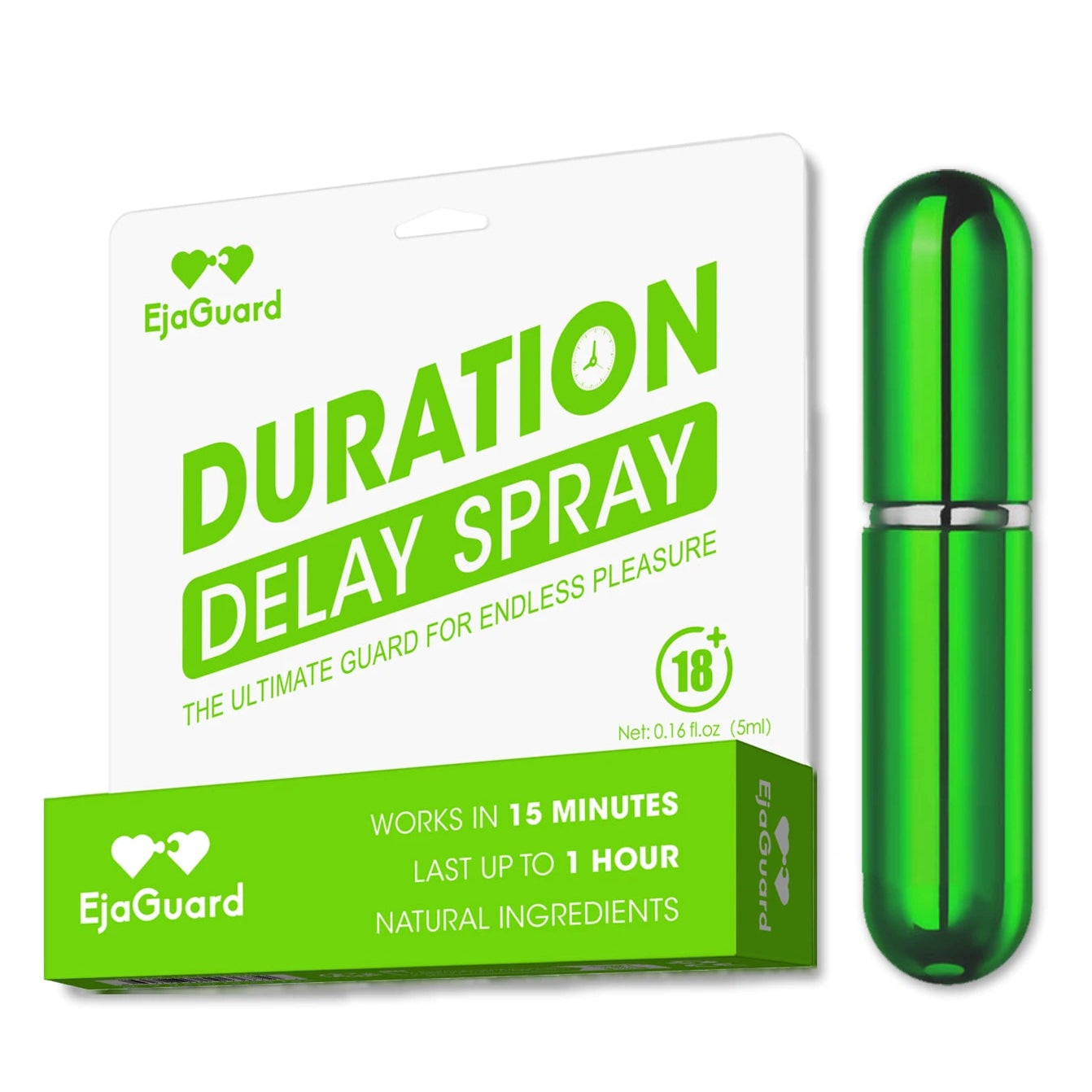
EjaGuard is one example of a delay spray marketed for men who want support with ejaculation timing. It may be considered as one option within a broader approach to sexual health, rather than as a product specifically designed to address the effects of abstinence.
Anyone considering a topical product should read its instructions carefully, use it only as directed, and pay attention to possible irritation or excessive loss of sensation. It is also important to follow instructions about preventing transfer to a partner, including any recommendations about washing the product off or using a condom.
A delay spray may help some people manage sensitivity, but it does not establish why ejaculation is happening sooner than expected. If the underlying concern involves persistent anxiety, a significant change in sexual function, or another health issue, those factors may need separate attention.
For someone who has experienced only one unexpectedly short encounter after a break, it may be reasonable to observe whether the pattern continues before assuming that a product is necessary.
For someone who already experiences persistent PE, a healthcare professional can help explain the available treatment options and whether a topical approach is appropriate.
The central point is that a delay spray is an optional tool, not a requirement for returning to sexual activity after abstinence.

11. When Should You Consider Professional Advice?
A temporary change in ejaculation timing after a period without sex is not usually enough, by itself, to establish a medical problem. However, persistent or distressing symptoms deserve attention, especially when they represent a clear change from a person's usual experience.
Consider speaking with a healthcare professional if:
-
You repeatedly ejaculate sooner than desired and feel unable to delay it.
-
The change is persistent and is affecting your confidence, relationship, or willingness to have sex.
-
You previously had satisfactory control but have experienced a substantial, ongoing change.
-
You also have erection difficulties, pain, urinary symptoms, or other new health concerns.
-
Anxiety about ejaculation has become difficult to manage or is causing you to avoid intimacy.
The appropriate evaluation depends on the pattern of symptoms and the individual's medical history. A clinician may ask about when the problem began, how consistently it occurs, medications, other symptoms, and any relevant physical or psychological factors.
The NHS guide to ejaculation problems provides an overview of possible causes and treatment approaches. Professional support can help distinguish a temporary variation from a persistent condition and identify appropriate next steps.
There is no need to wait until the issue becomes severe before seeking advice. Equally, there is no need to assume that a single short encounter after abstinence means that something is medically wrong.
A balanced approach recognizes both possibilities: sexual experiences can vary naturally, and persistent problems can be assessed and treated.
12. The Bottom Line
Can a long break from sex make premature ejaculation more likely?
Some men report ejaculating sooner than expected after abstinence, but current evidence does not establish that abstinence itself directly causes PE or that a particular period without sex reliably predicts ejaculation timing.
A first encounter after a long break may feel different because of excitement, anticipation, unfamiliar circumstances, performance anxiety, or individual differences in arousal. These factors may overlap, and their relative importance can vary from person to person.
It is also important to distinguish an isolated experience from a persistent pattern. Premature ejaculation is not defined simply by one short encounter. Consistency, perceived control, and distress all matter when deciding whether further evaluation may be useful.
If you have not had sex for a while, there is no need to treat your next encounter as a test of your sexual ability. Give yourself room to enjoy the experience, communicate with your partner, and recognize that one encounter does not determine what will happen in the future.
If ejaculation difficulties continue and cause distress, consider discussing them with a healthcare professional. Behavioral strategies, psychological support, medical treatments, and topical products may each have a role depending on the situation.
Ultimately, the aim is not to follow a perfect abstinence schedule or guarantee a specific duration. It is to understand your own sexual experience, respond to persistent difficulties thoughtfully, and build a more comfortable and satisfying approach to intimacy.

