

 Buy Now
Can Sexual Inexperience Contribute to Premature Ejaculation? Understanding First-Time Experiences, Confidence, and Ejaculation Control

Introduction: Why Can Early Sexual Experiences Feel Difficult?
For men who are relatively new to partnered sex, one of the most common concerns is ejaculating sooner than expected. This can happen during a first sexual experience, with a new partner, or during the early stages of a relationship. Sometimes, the experience is over much sooner than a man anticipated, leaving him wondering whether something is wrong with his sexual health.
It is easy to interpret an early ejaculation as a sign of premature ejaculation (PE). However, the situation is not always that straightforward. Sexual inexperience, nervousness, excitement, unfamiliar sensations, and pressure to perform can all influence how someone experiences sex. A man who has not had many partnered sexual experiences may also have limited opportunities to understand his own arousal patterns.
Does being sexually inexperienced actually cause premature ejaculation? The answer is more nuanced. Limited experience is not a recognized medical cause of PE on its own, and there is not enough evidence to conclude that inexperienced men are automatically more likely to develop the condition. However, anxiety, expectations, and unfamiliarity with sexual stimulation can contribute to an experience of reduced control.
Understanding this difference can help men avoid unnecessary self-judgment and take a more constructive approach to improving their sexual confidence.
This article explores how sexual experience, nervousness, arousal, expectations, and communication may influence ejaculation control, along with practical strategies for building confidence and knowing when professional support may be appropriate.

Table of Contents
-
What Is Premature Ejaculation?
-
Does Sexual Inexperience Increase the Risk of PE?
-
Why Early Sexual Experiences Can Feel Different
-
The Role of Nervousness and Performance Anxiety
-
How Unfamiliarity With Arousal Can Affect Control
-
Can Masturbation Habits Influence Sexual Expectations?
-
Why a New Partner May Change Your Ejaculation Timing
-
How to Build Better Awareness of Your Arousal
-
Practical Ways to Feel More Comfortable During Sex
-
Can Behavioral Techniques Help Improve Ejaculation Control?
-
Where Do Delay Sprays Fit Into the Picture?
-
When Should You Consider Professional Help?
-
A More Realistic Approach to Sexual Confidence
What Is Premature Ejaculation?
Premature ejaculation is a common male sexual concern, but it is more complicated than simply ejaculating within a short period.
Medical definitions generally consider several factors together: how quickly ejaculation occurs, whether a person feels able to delay it, and whether the experience causes significant personal distress or relationship difficulties.
According to the International Society for Sexual Medicine (ISSM), lifelong PE generally involves ejaculation before or within approximately one minute of vaginal penetration from the first sexual experience, an inability to delay ejaculation on nearly all occasions, and negative personal consequences. Acquired PE refers to a significant and bothersome reduction in ejaculation time after a period of previously satisfactory sexual function.
These definitions are important because an occasional early ejaculation does not automatically indicate a sexual disorder. A man may ejaculate quickly after a long period without sexual activity, during an especially exciting encounter, or when he feels nervous. Such experiences can occur without meeting the criteria for PE.
The ISSM's explanation of premature ejaculation provides a useful overview of how ejaculation time, perceived control, and distress are considered together. Men who are unsure about their symptoms can also read our guide on how premature ejaculation is diagnosed and why it involves more than a stopwatch.
Another important distinction is the difference between lifelong and acquired PE. Some men experience persistent difficulty controlling ejaculation from their earliest partnered sexual experiences, while others notice a change after years of having satisfactory control.
This distinction can help guide further evaluation. It also prevents men from assuming that every early sexual experience represents the beginning of a lifelong problem.

Does Sexual Inexperience Increase the Risk of PE?
There is no simple scientific answer showing that having fewer sexual experiences directly causes premature ejaculation.
Sexual experience is not a medical measurement, and there is no established number of sexual encounters that a man must reach before he can be expected to control ejaculation. Some inexperienced men have no difficulty delaying ejaculation, while some men with years of sexual experience continue to experience PE.
However, experience can influence familiarity. Someone who has had limited opportunities for partnered sexual activity may not yet understand how his body responds to different types of stimulation, emotional situations, or levels of excitement.
For example, a man may be familiar with masturbation but find partnered sex significantly different. The physical sensations, emotional involvement, pace, and expectations can all change. Without much experience, it may be difficult to recognize when arousal is increasing rapidly or when a pause might be helpful.
The NHS guide to ejaculation problems identifies performance anxiety, particularly at the beginning of a new relationship, as one possible psychological contributor to ejaculation difficulties. It also discusses how early experiences and learned habits may influence later sexual behavior.
This does not mean inexperienced men should expect to ejaculate quickly or that they must simply wait until they have more experience. Rather, it suggests that familiarity, confidence, and understanding one's own responses can be useful parts of a broader approach to sexual well-being.

Why Early Sexual Experiences Can Feel Different
A first or early partnered sexual experience often involves several unfamiliar elements at the same time.
A person may be experiencing a new physical sensation, trying to understand a partner's preferences, and thinking about whether everything is going well. These factors can make the encounter feel more intense than expected.
There may also be a difference between imagined expectations and real experiences. Someone who has spent a long time thinking about sex may have developed a particular idea of how long intercourse should last or how confidently he should behave. Real experiences rarely follow a perfectly predictable script.
For some men, excitement can rise quickly because the experience feels especially meaningful. For others, nervousness makes it difficult to relax and pay attention to their physical responses.
The Cleveland Clinic's overview of premature ejaculation describes performance anxiety, including nervousness with a new partner, as one psychological factor that may contribute to PE. For more information about the broader relationship between ejaculation and sexual function, readers can also explore our article on the relationship between premature ejaculation and erectile dysfunction.
It is also worth remembering that early experiences vary considerably. Some people feel comfortable immediately, while others need time to become familiar with partnered intimacy. Neither experience is inherently abnormal.

The Role of Nervousness and Performance Anxiety
Performance anxiety can create a cycle that makes sexual experiences more stressful.
A man who is worried about ejaculating too quickly may begin thinking about his performance before sexual activity even starts. During intimacy, he may continuously monitor his erection, ejaculation timing, or partner's reactions.
This constant self-monitoring can make it harder to stay present. Instead of focusing on comfort and shared pleasure, attention shifts toward whether he is meeting an imagined standard.
If an early ejaculation occurs, the next encounter may feel even more stressful. He may enter the experience expecting the same outcome, which can increase anxiety before anything has happened.
This pattern does not mean that anxiety is the only cause of PE. Physical, neurological, psychological, and relationship-related factors can all be relevant. However, anxiety can influence how someone experiences sexual stimulation and control.
The European Association of Urology's guidelines on ejaculation disorders discuss the role of psychosexual factors, including anxiety, confidence, communication, and behavioral approaches.
A useful first step is to reduce the feeling that every sexual encounter must produce a particular result. Intimacy is not an examination, and there is no requirement to demonstrate a specific level of endurance.

How Unfamiliarity With Arousal Can Affect Control
Ejaculation is a physiological response involving the nervous system, reproductive structures, and muscular activity. Although the process is automatic, people may develop a better understanding of the sensations that occur as arousal increases.
Some men recognize different stages of excitement easily. Others notice very little difference between moderate arousal and the point at which ejaculation feels difficult to postpone.
Limited experience may make this awareness harder to develop, particularly when a person has not spent much time observing his own responses without pressure.
For example, someone may only recognize that he is close to ejaculation when the sensation is already intense. At that point, attempting to slow down may feel difficult.
Developing awareness does not mean trying to control every physical response. It means becoming more familiar with personal patterns, such as which situations lead to faster arousal, whether certain types of stimulation feel especially intense, and when taking a short pause might help.
The Urology Care Foundation's premature ejaculation fact sheet explains that behavioral approaches such as stop-start exercises are sometimes used to help men recognize and respond to changes in arousal.
For readers who want to understand the physical process in more detail, our guide to how the male ejaculatory reflex works provides additional background.

Can Masturbation Habits Influence Sexual Expectations?
Masturbation is a normal part of sexual development, and there is no single correct frequency or technique.
However, individual habits can influence what someone becomes accustomed to during sexual stimulation. For example, a person who usually masturbates quickly because of limited privacy or time may become familiar with reaching orgasm rapidly.
That does not mean masturbation automatically causes PE. It also does not mean that someone needs to stop masturbating to improve ejaculation control.
The important question is whether a particular habit has become so routine that it limits awareness of changing arousal levels. If someone always rushes toward orgasm, he may have fewer opportunities to notice how different levels of stimulation feel.
A more mindful approach may involve slowing down, noticing changes in excitement, and occasionally pausing before reaching the point of ejaculation. The purpose is not to create a strict training schedule or force a particular result, but to become more familiar with personal responses.
The National Health Service's information on ejaculation problems discusses how learned patterns may influence ejaculation behavior and describes stop-go and squeeze techniques as possible approaches.
It is also important not to compare masturbation and partnered sex too literally. They involve different physical and emotional circumstances, so the time taken to ejaculate in one situation does not reliably predict the time taken in another.
Why a New Partner May Change Your Ejaculation Timing
Sexual experience is not only about how many times someone has had sex. The partner and situation can also make a difference.
A man who feels comfortable with one partner may become more nervous with someone new. Different levels of attraction, emotional closeness, communication, stimulation, and expectations can all influence the experience.
A new relationship may also create additional pressure. Someone might worry about making a good impression, satisfying a partner, or avoiding an experience that happened in a previous relationship.
This can lead to a situation in which ejaculation timing varies considerably between encounters. A man may feel more in control when relaxed but experience faster ejaculation when nervous or especially excited.
Medical guidance recognizes that PE symptoms may be generalized or situational. In other words, difficulties may occur across most sexual situations or mainly under particular circumstances.
The EAU guideline on ejaculation disorders emphasizes the importance of understanding whether symptoms occur consistently or only in specific situations. If a person notices that his experience changes substantially between partners or circumstances, that information can be useful when discussing the issue with a healthcare professional.
For men who are still developing confidence in partnered sex, it may be helpful to focus on communication and comfort rather than treating every encounter as a test of sexual ability.
How to Build Better Awareness of Your Arousal
Improving awareness is a gradual process. It does not require complicated exercises or constant attention to ejaculation timing.
One practical starting point is to notice how arousal changes throughout sexual activity. Some people find it helpful to think of excitement as a gradual scale rather than an immediate transition from relaxed to ready to ejaculate.
For example, a person might notice:
-
Early arousal, when stimulation feels comfortable and manageable.
-
Increasing excitement, when physical sensations become stronger.
-
High arousal, when ejaculation begins to feel more difficult to postpone.
-
The point of inevitability, when ejaculation is likely to occur even if stimulation stops.
The exact sensations vary between individuals. The purpose of this framework is simply to encourage earlier recognition of changes rather than waiting until ejaculation feels unavoidable.
Another useful approach is to notice external factors. Does excitement increase more quickly when someone is nervous? Does a slower pace feel more comfortable? Does taking a short break help reduce the intensity of stimulation?
The EAU's discussion of psychosexual approaches describes behavioral and educational approaches that may help some men improve confidence and understand their sexual responses.
Men should avoid turning this awareness into another source of pressure. If monitoring arousal makes sex feel mechanical or stressful, it may be more helpful to focus on comfort, communication, and enjoyment.
Practical Ways to Feel More Comfortable During Sex
For men who are relatively inexperienced or feel nervous about ejaculation timing, a few practical changes may make partnered sex feel less pressured.
1. Avoid treating intercourse duration as a performance score.
There is no universal duration that determines whether an encounter is successful. Sexual satisfaction depends on many factors, including comfort, communication, intimacy, and individual preferences.
2. Talk about comfort and preferences.
A simple conversation can help reduce uncertainty. Partners do not need to discuss every physical detail, but being able to communicate about pace, comfort, and expectations can make intimacy feel more collaborative.
3. Slow down when necessary.
There is no requirement to maintain one pace throughout an encounter. Changing the rhythm or taking a brief pause may help some men feel more comfortable.
4. Explore intimacy without making penetration the only goal.
Sexual activity can involve many forms of intimacy. Taking attention away from a single performance outcome may reduce pressure and create a more relaxed experience for both partners.
5. Avoid making assumptions based on one encounter.
A single early ejaculation does not establish a diagnosis. It may be more useful to observe whether the pattern continues and whether it causes persistent distress.
The American Urological Association's information on ejaculation disorders provides clinical guidance on evaluating and managing ejaculation concerns. Men who want to explore the broader relationship between lifestyle and sexual health can also read our article on how regular exercise may support sexual function.

Can Behavioral Techniques Help Improve Ejaculation Control?
Behavioral techniques are sometimes used to help men become more familiar with arousal and develop a greater sense of control.
One commonly discussed method is the stop-start technique. The basic idea is to pause stimulation when ejaculation begins to feel close, allow the intensity of arousal to decrease, and then resume when comfortable.
The technique may be practiced individually or with a partner. Over time, some men may become better at recognizing the sensations that occur before ejaculation.
Another approach is the squeeze technique. It involves briefly applying gentle pressure to the area where the head of the penis meets the shaft when ejaculation feels close. The aim is to reduce the immediate urge to ejaculate before resuming stimulation.
These techniques are not guaranteed solutions, and their effectiveness varies. They may also feel unnatural at first. Some couples prefer to adapt them rather than follow a rigid sequence.
The National Center for Biotechnology Information's overview of premature ejaculation describes behavioral techniques, including stop-start and squeeze methods. Current clinical guidance also notes that behavioral and psychosexual approaches may be useful as part of a broader treatment plan, although evidence for these approaches alone is not equally strong across all studies.
For someone with limited sexual experience, the most important benefit may be learning to recognize arousal patterns without feeling that every attempt must be successful.

Where Do Delay Sprays Fit Into the Picture?
For some men, topical delay sprays are another option to consider when they want additional help managing sensitivity.
Delay sprays generally work by reducing sensitivity in the treated area. Many conventional products use local anesthetic ingredients such as lidocaine or benzocaine. Other products are marketed as milder or plant-based alternatives.
These products do not address every possible reason for early ejaculation. They do not automatically resolve nervousness, relationship pressure, unrealistic expectations, or underlying medical conditions. They should therefore be viewed as one possible tool rather than a complete solution.
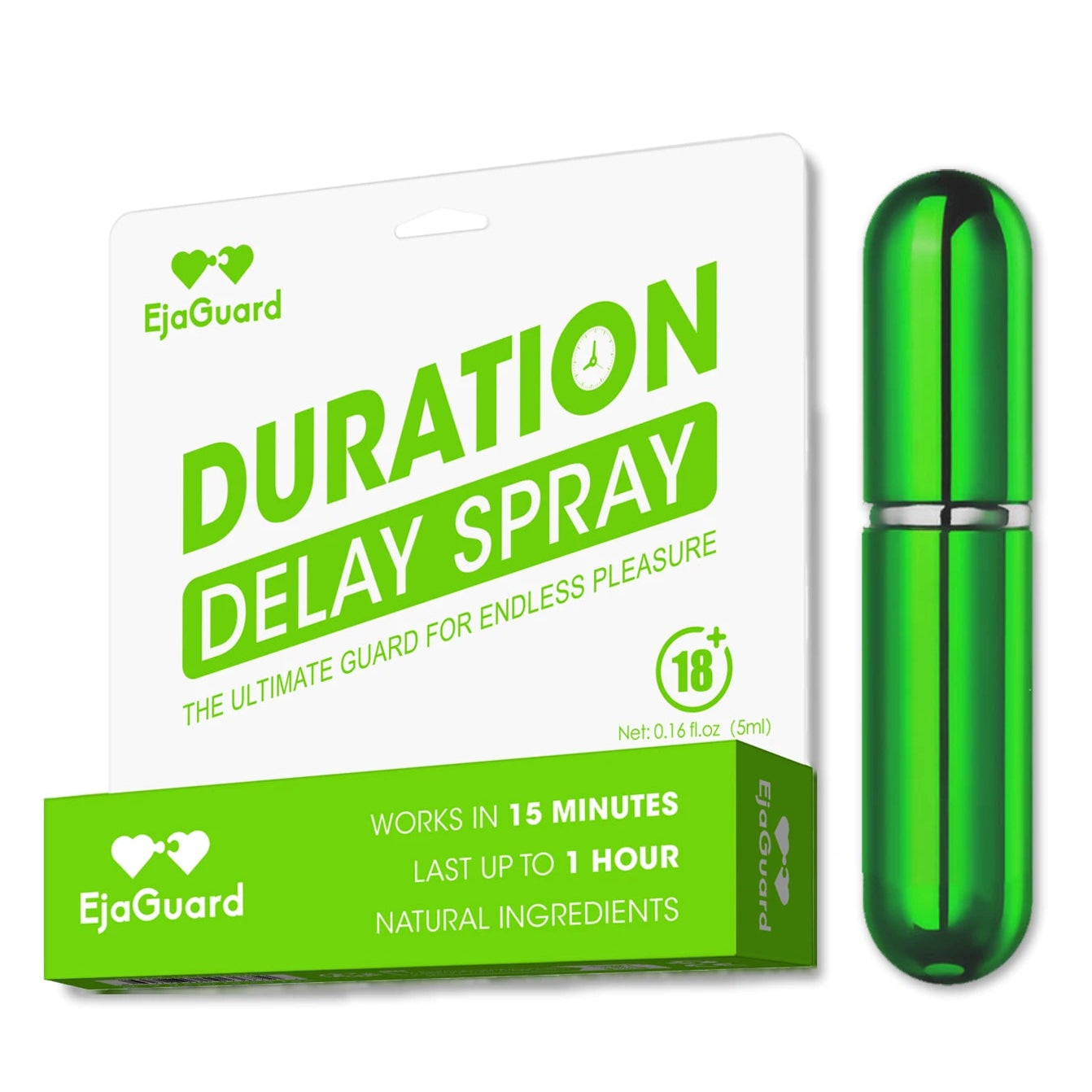
For men who prefer a sensation-conscious option, EjaGuard is positioned as a herbal delay spray designed for a milder experience. It may be worth exploring for adults who want to manage sensitivity while avoiding an excessively numb feeling. Individual responses can vary, and users should follow the product's directions rather than assuming that more product will produce better results.
Anyone considering a topical product should review its ingredients and instructions, check for possible skin sensitivity, and avoid use if irritation occurs. It is also important to follow the product's guidance about transfer to a partner and whether the product should be removed before sexual contact.
You can find more information about EjaGuard Delay Spray and review the product's instructions for using delay spray.
A delay spray may help manage one part of the experience, but it should not become another source of pressure. Men who are still becoming familiar with partnered sex may benefit from combining practical tools, communication, and a more relaxed understanding of sexual performance.

When Should You Consider Professional Help?
Occasional early ejaculation is common and does not necessarily indicate a medical condition. However, professional advice may be helpful when the problem becomes persistent or begins affecting confidence, relationships, or quality of life.
Consider speaking with a healthcare professional if:
-
Ejaculation occurs sooner than desired on nearly every occasion.
-
You consistently feel unable to delay ejaculation.
-
The problem has caused ongoing frustration, distress, or avoidance of intimacy.
-
Ejaculation timing has changed significantly after a period of previously satisfactory control.
-
You also experience erection difficulties, pain, urinary symptoms, or other new physical concerns.
A clinician may ask about sexual history, the timing and frequency of symptoms, relationship circumstances, medications, and general health. The goal is to understand whether the problem is lifelong, acquired, situational, or related to another condition.
Not every man needs extensive testing. Medical investigations are generally guided by symptoms and findings from the clinical assessment.
The Mayo Clinic's overview of premature ejaculation provides further information about diagnosis and treatment options. The AUA/SMSNA guideline on disorders of ejaculation also outlines how clinicians approach persistent ejaculation difficulties.
Seeking help does not mean that someone has failed to improve on his own. It is simply a way to understand the problem and identify suitable options.

A More Realistic Approach to Sexual Confidence
Sexual confidence is not something that appears automatically after a certain number of experiences. It develops through familiarity, communication, self-understanding, and the ability to approach intimacy without excessive pressure.
For men with limited partnered sexual experience, an early ejaculation may feel disappointing, especially if they expected themselves to perform differently. But one experience should not define their sexual ability or future relationships.
It is also important to avoid assuming that every inexperienced man has PE. Some men simply need time to become familiar with partnered stimulation, while others may have persistent symptoms that deserve proper evaluation.
A balanced approach involves understanding the difference between temporary nervousness and ongoing difficulty, becoming more aware of personal arousal patterns, communicating openly with a partner, and exploring appropriate support when necessary.
For men who experience persistent PE, behavioral strategies, psychological support, medical treatments, and topical products may all have a role depending on individual circumstances. No single approach is right for everyone.
EjaGuard and other delay sprays may be considered as part of a broader approach to sensitivity management, but they are not substitutes for medical assessment when symptoms are persistent or accompanied by other concerns.
Ultimately, the goal should not be to meet an arbitrary performance standard. It should be to develop a more comfortable, confident, and satisfying sexual experience over time.

