

 Buy Now
How to Track Your PE Progress Without Obsessing Over Time

Premature ejaculation can be frustrating for one simple reason: it is very easy to turn sex into a measurement.
How long did I last? Was it longer than last time? Did I improve? Did the treatment work? Why was it five minutes yesterday but only one minute today?
For someone trying to improve ejaculatory control, keeping track of progress can seem like a good idea. After all, if you don't measure something, how do you know whether you're actually getting better?
The problem is that sexual performance isn't as predictable as something like body weight, running speed, or the number of repetitions you can do at the gym.
Your ejaculation time can change from one encounter to another for many reasons. Stress, arousal, sexual stimulation, sleep, anxiety, relationship dynamics, and the circumstances of the encounter can all influence the experience.
That means one particularly short encounter doesn't necessarily mean you've gone backward.
And one unusually long encounter doesn't necessarily mean you've completely solved the problem.
A better approach is to look for patterns rather than individual numbers.
This article explains how to track PE-related progress in a more useful way without turning every sexual experience into a performance test.
Table of Contents
- Why Time Alone Isn't a Good Measure of Progress
- What Does Progress Actually Mean?
- Look for Patterns Instead of Single Encounters
- Track Control, Not Just Duration
- Pay Attention to Your Point of No Return
- Consider Anxiety and Performance Pressure
- Your Partner's Experience Matters Too
- If You're Using a Delay Spray, Track More Than the Clock
- Don't Change Everything at Once
- What a Useful Progress Log Can Look Like
- When Inconsistent Results Are Completely Normal
- Don't Turn Improvement Into Another Performance Test
- When Should You Consider Professional Help?
- The Bottom Line
Why Time Alone Isn't a Good Measure of Progress
One of the first things many men focus on is ejaculation time.
It's understandable. If you usually finish after about one minute and eventually reach three or four minutes, it feels like obvious evidence of improvement.
But ejaculation latency is only one part of the picture.
Medical guidance looks at more than ejaculation time when evaluating premature ejaculation. Perceived control, distress, sexual history, and interpersonal difficulties can also be important parts of the assessment. EAU Guidelines on Disorders of Ejaculation
This matters because sexual performance naturally varies.
Imagine that you have the following experiences:
Monday: 1 minute
Wednesday: 3 minutes
Friday: 1.5 minutes
Sunday: 5 minutes
Looking at the shortest number alone might make you think nothing has changed.
Looking at the average might tell a different story.
But even the average doesn't tell the whole story.
Maybe the one-minute encounter happened after a stressful day.
Maybe the five-minute encounter happened when you were relaxed and less focused on performance.
Maybe your partner's stimulation was different.
Maybe you were simply more aroused on one occasion than another.
The number doesn't explain the reason.
For a broader introduction to PE symptoms and when ejaculation may be considered problematic, the Mayo Clinic's PE overview is a useful reference.
That's why tracking PE should be about identifying what changes your experience, rather than trying to produce one perfect number every time.

What Does Progress Actually Mean?
Before tracking anything, it helps to define what you're trying to improve.
For some men, the goal is simply to increase ejaculation latency.
For others, the bigger problem is feeling unable to control ejaculation once arousal becomes intense.
For someone else, the biggest improvement may be reducing anxiety.
And for another person, it may be feeling more comfortable talking about sex with their partner.
These are all meaningful forms of progress.
Current sexual-medicine guidance emphasizes looking at the wider sexual experience rather than reducing PE to a single stopwatch measurement. EAU Sexual and Reproductive Health Guidelines
So instead of asking only:
“How long did I last?”
Try asking:
“Did I feel more in control?”
That's a much more useful question.
You might discover that your duration hasn't changed dramatically, but you're able to recognize rising arousal earlier.
That's progress.
You might still finish relatively quickly sometimes, but you're no longer panicking when you notice you're getting close.
That's progress too.
You might still have occasional short encounters, but you're more confident about what to do when they happen.
Again, that's progress.
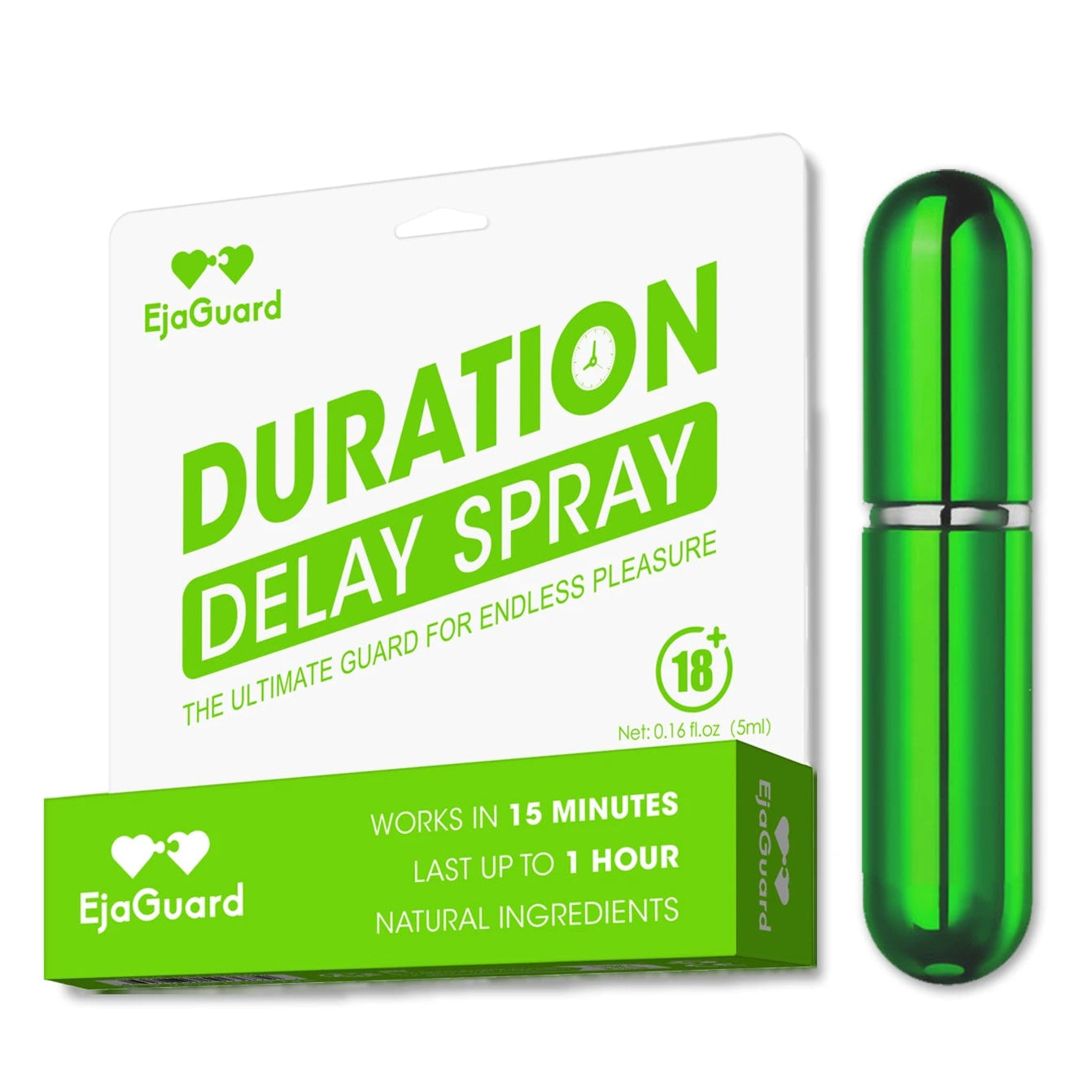
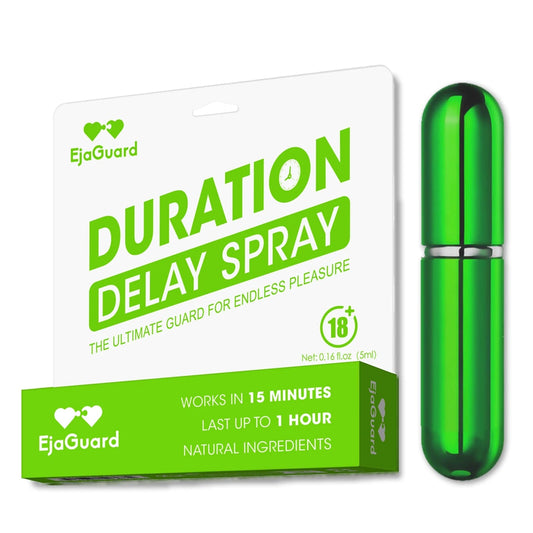
If you're also exploring different ways to manage PE, your site's EjaGuard Delay Spray guide can serve as a related resource for understanding where a topical product may fit into an overall approach.
Look for Patterns Instead of Single Encounters
One of the biggest mistakes when tracking sexual performance is treating every encounter as an independent test.
That's rarely useful.
Instead, look at several experiences together.
For example, imagine that you try a particular approach four times.
Your results are:
Experience 1: 2 minutes
Experience 2: 3 minutes
Experience 3: 1.5 minutes
Experience 4: 4 minutes
The temptation is to focus on Experience 3 because it was the shortest.
But what happens if you look at the bigger picture?
Maybe you notice that your control was better on three of the four occasions.
Maybe you also noticed that you were less anxious.
Maybe you were able to slow down before reaching the point of no return.
Those details are arguably more useful than whether the third experience was 90 seconds or 2 minutes.
The EAU notes that self-reported ejaculation latency can be useful in routine clinical contexts, but also emphasizes that relying on latency alone is inadequate for fully characterizing PE. EAU guidance on PE assessment
What patterns should you look for?
You could pay attention to:
- How quickly arousal becomes intense
- Whether you can recognize rising arousal earlier
- Whether you can slow down before the point of no return
- How much anxiety you experience
- Whether you feel pressured to perform
- Whether you feel more confident
- Whether you feel satisfied afterward
- Whether your partner seems satisfied
- Whether a particular strategy consistently helps
Over several weeks, patterns become much easier to see.

Track Control, Not Just Duration
If there's one thing worth adding to a PE progress log, it's perceived control.
Imagine two sexual experiences.
In the first, you last five minutes but spend the entire time feeling like you're one movement away from ejaculation.
In the second, you last three minutes but feel relaxed, recognize your arousal level, and know that you can slow things down when necessary.
Which experience represents better control?
For many people, the second one does.
This is why ejaculation control deserves to be considered separately from duration.
You can think of control as your ability to recognize changes in arousal and respond before ejaculation becomes inevitable.
This doesn't mean you should constantly monitor yourself during sex.
In fact, excessive monitoring can create its own problems.
The goal is to develop awareness that eventually becomes more automatic.
Behavioral approaches such as stop-start and pause-squeeze techniques are among the approaches discussed for delaying ejaculation. Mayo Clinic: Premature Ejaculation Treatment
The important point is that these approaches aren't simply about “lasting longer.”
They're also about becoming more familiar with your arousal response.

Pay Attention to Your Point of No Return
Another useful thing to track is when you realize ejaculation is becoming difficult to stop.
Some men only recognize how close they are when it's already too late.
Others gradually become better at recognizing earlier warning signs.
That difference can be significant.
Think of arousal as a curve rather than an on/off switch.
At low levels, you may have plenty of control.
As stimulation increases, control becomes more difficult.
Eventually, you reach a point where ejaculation feels almost inevitable.
The goal isn't necessarily to avoid reaching high arousal.
It's to become better at recognizing where you are on that curve.
You might eventually notice:
“I used to realize I was too close when it was already happening. Now I can recognize it much earlier.”
That's a meaningful change even if your stopwatch doesn't show a dramatic difference.
For men trying to understand their own patterns, keeping a simple record of sexual experiences and circumstances can also help identify recurring factors. Mayo Clinic specifically recommends considering sexual and medical history when evaluating PE. Mayo Clinic: PE Diagnosis and Treatment

Consider Anxiety and Performance Pressure
PE isn't purely mechanical.
Psychological factors can influence sexual experiences, particularly when performance anxiety becomes part of the cycle.
You might start thinking:
“I need to last longer this time.”
Then:
“Am I getting close?”
Then:
“She probably noticed.”
And suddenly you're no longer enjoying the experience.
You're monitoring yourself.
That kind of pressure can become self-reinforcing.
The EAU guidelines recognize that PE can negatively affect self-confidence, relationships, and emotional well-being, and recommend considering psychological and interpersonal factors during assessment. EAU guidance on PE and psychological factors
So anxiety can be another useful variable to track.
After an encounter, instead of only recording duration, ask:
- How anxious was I before sex?
- How anxious was I during sex?
- Did I feel like I had to prove something?
- Was I able to stay present?
- Did I feel comfortable with my partner?
You may eventually discover an interesting pattern:
Your best experiences aren't necessarily the ones where you tried hardest to last.
They may be the ones where you were least focused on lasting.

Your Partner's Experience Matters Too
PE doesn't happen in isolation.
It happens within a sexual relationship.
That's why your partner's experience can provide information that a stopwatch cannot.
This doesn't mean constantly asking:
“Was that long enough?”
That can actually create more pressure.
Instead, communication can focus on the overall experience.
For example:
- Did you both enjoy the experience?
- Did your partner feel connected?
- Was there enough time for other forms of sexual activity?
- Did either person feel pressured?
- Did the experience feel satisfying overall?
Clinical guidance recognizes that PE can affect both partners and that interpersonal difficulties can be relevant when assessing the condition. EAU Sexual and Reproductive Health Guidelines
This broader perspective can completely change how you define success.
Sex doesn't begin when penetration starts, and it doesn't necessarily end when ejaculation happens.
Duration is only one part of the overall experience.
For readers who want to explore this aspect further, an article such as How to Talk to Your Partner About Premature Ejaculation can naturally sit here as an internal resource.

If You're Using a Delay Spray, Track More Than the Clock
Delay sprays can be useful for some men with PE, particularly topical products designed to reduce penile sensitivity.
Topical anesthetics such as lidocaine, prilocaine, and benzocaine are among the topical options discussed in clinical treatment information.
But if you're using a delay spray, it's worth tracking more than simply:
“Did it make me last longer?”
You could also consider:
Sensation:
Did the product reduce overstimulation without making sensation unpleasant?
Control:
Did you feel more able to slow down or manage rising arousal?
Comfort:
Did the experience still feel natural?
Consistency:
Did you notice a similar effect across different occasions?
Partner experience:
Did your partner notice any unwanted effects?
Overall satisfaction:
Did the experience actually feel better?
These questions can be especially useful because different delay products use different formulations and may produce different sensations.
If you're considering EjaGuard as part of your routine, its official product page provides the manufacturer's information about the formulation and intended use.
The important point is that a product shouldn't necessarily be judged by how strongly you can feel it.
A dramatic numb sensation isn't automatically better than a subtler effect.
The goal is to find an approach that fits your own sensitivity, comfort, and preferences.

Don't Change Everything at Once
This is particularly important if you're experimenting with different approaches.
Suppose you're trying to improve PE and simultaneously change:
- Your masturbation habits
- Your sexual routine
- Your delay spray
- Your condom
- Your timing
- Your breathing
- Your exercise routine
Then something improves.
What caused the improvement?
You don't know.
That's why changing one major variable at a time can make self-evaluation much easier.
This doesn't mean you need to turn your sex life into a scientific experiment.
It simply means that if you're trying to understand what works for you, consistency helps.
For example, if you're evaluating a delay spray, following the manufacturer's directions consistently gives you a more meaningful comparison than constantly changing the amount or timing.
EjaGuard's FAQ and usage information explains its recommended application process, including starting amount and suggested waiting time.

What a Useful Progress Log Can Look Like
You don't need a complicated spreadsheet.
In fact, keeping an overly detailed record may make you think about PE more than you need to.
A simple weekly note can be enough.
Example
Week 1
Average experience: around 1–2 minutes
Control: Low
Anxiety: High
Main observation: I often noticed I was close too late.
Week 2
Average experience: around 2 minutes
Control: Moderate
Anxiety: Moderate
Main observation: I started recognizing rising arousal earlier.
Week 3
Average experience: around 2–3 minutes
Control: Better
Anxiety: Lower
Main observation: I wasn't thinking about ejaculation as much.
Week 4
Average experience: variable
Control: Better
Anxiety: Lower
Main observation: Shorter encounters still happen, but they don't bother me as much.
Notice something important here.
The final week doesn't necessarily have the highest duration.
But it might represent the biggest improvement.
That's because progress isn't always linear.
The EAU guidelines also describe questionnaires such as the Premature Ejaculation Diagnostic Tool and other validated measures that can be used when assessing PE and treatment outcomes. EAU PE Assessment Guidelines
A Simple Five-Point Check-In
If you don't want to record times at all, you can use a five-question check-in after sex.
Rate each from 1 to 5:
1. Ejaculatory control
1 = very little control
5 = strong sense of control
2. Anxiety
1 = very anxious
5 = relaxed
3. Awareness
1 = noticed ejaculation only at the last moment
5 = could recognize rising arousal early
4. Satisfaction
1 = very unsatisfied
5 = very satisfied
5. Confidence
1 = very low
5 = very confident
This approach gives you a much broader picture.
And because you're not focused entirely on time, you're less likely to interpret every short encounter as failure.

When Inconsistent Results Are Completely Normal
It's worth repeating:
Variation doesn't automatically mean something is wrong.
The EAU distinguishes variable PE from other presentations and emphasizes the importance of a detailed sexual history when evaluating ejaculation problems. EAU Disorders of Ejaculation Guidelines
That means your results can change for reasons that have little to do with whether a particular strategy is “working.”
You might have one night where everything feels effortless.
Then another night where you're finished much sooner.
That doesn't erase your progress.
Think about fitness.
If you run five miles one week, you don't assume you've lost all your fitness because you have a bad run the following week.
Sexual function can be similarly variable.
The better question is:
“What does my overall pattern look like?”
rather than:
“What happened last night?”
Don't Turn Improvement Into Another Performance Test
This may be the most important point in the entire article.
Trying to improve PE can accidentally create another form of performance anxiety.
You start with:
“I want better control.”
Then it becomes:
“I need to last longer.”
Then:
“I need to beat my previous time.”
Then sex becomes a competition against your own stopwatch.
That's probably not what you wanted.
The purpose of tracking progress should be to reduce uncertainty, not increase pressure.
If tracking makes you more anxious, track less.
If recording exact times makes you obsess over every encounter, stop recording exact times.
You can simply ask:
“Did I feel more in control than I used to?”
Sometimes that's enough.
Counseling and psychological support can also be part of PE management, particularly when anxiety, stress, or relationship difficulties are contributing to the problem. Mayo Clinic: Counseling and PE Treatment
Progress Can Be Non-Linear
Another misconception is that improvement should look like this:
1 minute → 2 minutes → 3 minutes → 4 minutes → 5 minutes
Real life rarely works that way.
It might look more like:
1 minute → 3 minutes → 1 minute → 4 minutes → 2 minutes → 5 minutes → 3 minutes
That doesn't necessarily mean you're going backward and forward.
It may mean your sexual response is naturally variable while you learn what works.
Over a longer period, you may see the general pattern shifting.
Perhaps your shortest experiences become less frequent.
Perhaps you recognize your arousal earlier.
Perhaps anxiety becomes less intense.
Perhaps you recover emotionally more quickly after an unexpectedly short encounter.
All of these can represent improvement.
If you're using a topical product, it's also worth remembering that different formulations can have different intended use instructions. EjaGuard's product specifications page provides additional information about its formulation, packaging, storage, and intended use.
When Should You Consider Professional Help?
Self-monitoring can be useful, but it isn't a replacement for medical evaluation.
If ejaculation problems are persistent, distressing, or affecting your relationship, it may be worth discussing them with a healthcare professional.
A clinician can look at your sexual and medical history and determine whether the issue might be related to PE, erectile dysfunction, anxiety, medication, another medical condition, or a combination of factors.
Mayo Clinic: Diagnosis and Treatment of Premature Ejaculation
This is particularly important if your ejaculation pattern changed suddenly after previously being normal.
It's also worth seeking professional advice if you're experiencing:
- Persistent difficulty controlling ejaculation
- Significant distress about sexual performance
- Erectile difficulties
- Pain or discomfort
- Major changes in sexual function
- Relationship problems related to sexual performance
PE is treatable, and healthcare professionals may consider behavioral strategies, counseling, topical treatments, and medications depending on the individual situation.
The European Association of Urology's current Sexual and Reproductive Health guidelines are another useful evidence-based reference for understanding how PE is evaluated and managed. EAU Sexual and Reproductive Health Guidelines
The Bottom Line
Tracking PE progress can be useful.
But the goal shouldn't be to turn every sexual encounter into a stopwatch test.
Duration matters, but it isn't everything.
A better way to evaluate progress is to look at several factors together:
- How much control you feel
- How early you recognize rising arousal
- How anxious you feel
- How confident you are
- How satisfied you and your partner are
- Whether a particular strategy consistently helps
- Whether your overall experience is improving
If you're using a delay spray, evaluate the complete experience rather than simply asking how many extra minutes it gave you.
And if you're experimenting with something like EjaGuard, consistency can help you understand whether its particular level of sensation and control fits your needs rather than judging it based on one unusually good or bad experience.
Most importantly, remember that sexual performance naturally varies.
One short encounter doesn't erase weeks of progress.
One long encounter doesn't necessarily mean everything is solved.
Look for the trend.
Pay attention to control.
Pay attention to confidence.
And pay attention to whether sex is becoming less stressful and more enjoyable.
That's ultimately a much more meaningful definition of progress than whatever number happens to appear on the clock.

