

 Buy Now
Can ADHD Be Related to Premature Ejaculation? Understanding Attention, Impulsivity, and Sexual Control

Premature ejaculation (PE) is often discussed in terms of physical sensitivity, sexual experience, anxiety, or relationship pressure. However, sexual response is influenced by more than one factor. Attention, emotional regulation, and the way a person responds to stimulation may also be relevant to understanding why ejaculation feels difficult to control.
This raises an interesting question: Could attention-deficit/hyperactivity disorder (ADHD) be related to premature ejaculation?
ADHD is a neurodevelopmental condition associated with patterns of inattention, hyperactivity, and impulsivity. Some research has reported an association between ADHD and sexual difficulties, including PE. However, the evidence is still developing, and researchers have not established that ADHD directly causes premature ejaculation.
Understanding this possible connection can help people look at their sexual experiences more thoughtfully, avoid unnecessary self-blame, and recognize when professional support may be useful. It can also help distinguish between a difficulty with attention or emotional regulation and a persistent ejaculation problem that may need its own assessment.
This article reviews what current research suggests, how attention and arousal might interact, what other factors deserve consideration, and which approaches may help men who experience both ADHD-related difficulties and concerns about ejaculation control.

Table of Contents
-
What Is ADHD?
-
What Is Premature Ejaculation?
-
What Does Research Say About ADHD and PE?
-
How Attention and Sexual Arousal May Interact
-
Impulsivity, Emotional Regulation, and Ejaculation Control
-
Can Anxiety Make the Situation More Complicated?
-
ADHD, Medication, and Sexual Function
-
How to Tell Whether ADHD May Be Relevant to Your Experience
-
Practical Strategies for Managing PE
-
Where Delay Sprays Fit Into the Picture
-
When to Seek Professional Advice
-
A More Balanced Approach to ADHD and PE
1. What Is ADHD?
ADHD is a neurodevelopmental condition that can affect attention, activity levels, and impulse control. Although it is often associated with childhood, ADHD can continue into adulthood and may affect work, relationships, daily routines, and other areas of life.
Some adults mainly struggle with maintaining attention, organizing tasks, or following through on plans. Others experience more noticeable restlessness or impulsive behavior. Many experience a combination of these difficulties, and symptoms can vary considerably from person to person.
The National Institute of Mental Health's overview of ADHD explains the condition, its symptoms, and common approaches to assessment and treatment.
ADHD is not simply a matter of having a short attention span or occasionally acting without thinking. Diagnosis involves a broader pattern of symptoms, their duration, their presence across relevant settings, and their impact on daily functioning. Other conditions or circumstances can produce similar difficulties, which is why a proper assessment matters.
It is also important not to assume that every person with ADHD has difficulty controlling sexual behavior. Some may notice changes in attention or impulse regulation during intimate situations, while others may not experience any related sexual concerns at all.
Sexual function is influenced by many interacting factors. Someone with ADHD may experience PE for reasons unrelated to the condition, just as someone without ADHD may have persistent difficulty delaying ejaculation.

2. What Is Premature Ejaculation?
Premature ejaculation is a sexual difficulty involving ejaculation that occurs sooner than desired, with limited perceived control and associated distress or other negative consequences. It is not defined solely by a particular number of minutes.
Clinicians generally distinguish between lifelong PE, which has been present since a person's early sexual experiences, and acquired PE, which develops after a period of more satisfactory control. They may also consider whether the problem occurs consistently or only in certain situations.
The European Association of Urology's guidance on ejaculation disorders emphasizes the importance of evaluating ejaculation timing alongside perceived control, personal distress, and interpersonal difficulties.
For some men, ejaculation occurs quickly in nearly every sexual encounter. Others find that it happens mainly with a particular partner, during periods of stress, after a long break from sexual activity, or under specific circumstances. Occasional early ejaculation does not automatically mean someone has a clinical disorder.
If you want to understand this distinction in more detail, EjaGuard's educational article on how premature ejaculation is diagnosed and why it involves more than a stopwatch provides additional context.
This broader definition matters when discussing ADHD. A person may notice that their attention moves quickly or that they become intensely aroused, but those observations alone do not establish PE. The important questions include whether ejaculation is consistently difficult to delay, whether control feels limited, and whether the experience causes meaningful distress.

3. What Does Research Say About ADHD and PE?
Research into ADHD and sexual function has attracted increasing attention, but the evidence remains limited. Studies have explored whether ADHD symptoms and sexual difficulties occur together more frequently than expected. Some have reported associations with PE, while others have found different patterns across participants and measures.
A systematic review published in 2026 examined the relationship between ADHD and sexual dysfunction in adults. It included 13 observational studies and reported that several studies suggested a positive association, including an association with PE in men. However, the review also highlighted substantial differences in study design, sample sizes, and how both ADHD and sexual dysfunction were measured. These differences prevented the researchers from combining the results into a single reliable estimate.
You can read the review's abstract and publication details on PubMed.
The central limitation is that an association does not establish causation. If two conditions occur together more frequently in a study, that does not prove one condition directly produces the other. Shared factors, differences in study populations, and other health or psychological variables may help explain the observed relationship.
For example, a study might identify more reported sexual difficulties among adults with ADHD. That finding does not tell us whether attention-related symptoms contribute to those difficulties, whether anxiety or relationship stress plays a role, whether another condition is involved, or whether several factors interact. The current evidence therefore supports taking the possibility seriously without treating it as a settled medical explanation. Larger studies using consistent diagnostic methods are needed to clarify which people may be affected, which symptoms matter most, and whether particular interventions improve sexual outcomes.

4. How Attention and Sexual Arousal May Interact
Sexual activity involves physical sensations, thoughts, emotions, expectations, and responses to a partner. Attention may shift between these elements throughout an encounter. Some people focus strongly on physical sensations, while others become distracted by worries, outside thoughts, or concerns about performance.
For someone who experiences attention-regulation difficulties, it may sometimes be challenging to direct attention intentionally. However, ADHD does not produce one universal pattern of attention during sex. Some individuals may be easily distracted; others may become intensely absorbed in an activity or sensation.
One possible explanation worth exploring is that a person may find it difficult to notice changes in arousal early enough to respond. If attention remains fixed on intense stimulation, the person may recognize that ejaculation is approaching only when there is little perceived opportunity to slow down.
This is a plausible individual experience, not a proven mechanism linking ADHD to PE in every case. It is also not unique to people with ADHD. Men without ADHD may have similar experiences because of excitement, unfamiliarity, anxiety, or the intensity of a particular encounter.
For additional background on how ejaculation control differs from simply increasing duration, see Ejaculation Control vs. Ejaculation Time: What Really Matters for PE. The key idea is that control, comfort, and the ability to respond to rising arousal can matter as much as the number of minutes involved.
A practical goal is not to monitor every sensation continuously. Excessive monitoring can turn intimacy into a performance task. Instead, a person can practice noticing broad changes in breathing, muscle tension, excitement, and the urge to ejaculate, then respond before the feeling becomes overwhelming.

5. Impulsivity, Emotional Regulation, and Ejaculation Control
Impulsivity is another feature that may be relevant for some adults with ADHD. In everyday life, impulsivity can involve acting quickly before fully considering the consequences. In intimate situations, a person might notice a similar tendency to move quickly, intensify stimulation, or find it difficult to pause once arousal increases.
However, ejaculation is not simply a voluntary action that can be stopped through willpower. It involves coordinated physiological processes, and a person's ability to delay it varies with arousal, context, and individual characteristics. It would be inaccurate to describe PE as merely an impulse-control failure.
Emotional regulation may also play a role. Excitement, frustration, embarrassment, and anticipation can affect how a sexual encounter feels. If someone already struggles with regulating attention or emotions, stressful sexual experiences may add another challenge. Yet these relationships are complex, and the available evidence does not show that emotional regulation difficulties explain every case of PE.
A more useful approach is to identify the specific point at which control becomes difficult. Does arousal rise very quickly? Is there a tendency to continue at the same intensity despite noticing increasing excitement? Does worry about ejaculation make it harder to stay present? Or does ejaculation occur quickly regardless of pace, mood, or circumstances?
These questions help identify practical areas to explore without assuming that ADHD is the sole cause. The goal is to understand the pattern rather than label the person.

6. Can Anxiety Make the Situation More Complicated?
Anxiety can become part of a cycle in which concern about ejaculation affects the next sexual encounter. After an unsatisfactory experience, a man may begin anticipating the same outcome. During later encounters, he may repeatedly check whether he is lasting long enough, worry about his partner's reaction, or interpret normal changes in arousal as signs that he is losing control.
This type of self-monitoring can make sex feel like a test rather than a shared experience. It may also distract someone from communication, enjoyment, and the sensations that would help them respond more comfortably.
For people who have ADHD, performance anxiety may coexist with attention-related difficulties, but it should not be assumed that ADHD causes the anxiety. Sexual worries can develop in many circumstances, including relationship tension, previous negative experiences, unrealistic expectations, and concerns about body image or sexual performance.
Clinical guidance recognizes the value of considering psychological and interpersonal factors as part of PE assessment. The AUA/SMSNA guideline on disorders of ejaculation discusses evaluation and treatment options, including consideration of mental health support when appropriate.
A helpful first step is to replace the goal of achieving a perfect duration with a more realistic one: understanding what happens during sex and finding ways to improve comfort and perceived control. That may involve communication with a partner, reducing pressure to perform, or working with a qualified therapist who understands sexual health.
For additional reading, EjaGuard's guide to why delay spray results can feel inconsistent discusses how circumstances and use patterns can influence the experience of using a topical product. The same broader principle applies here: a single encounter rarely tells the whole story.

7. ADHD, Medication, and Sexual Function
Medication is another factor worth discussing, particularly for people who already receive treatment for ADHD. Some prescribed medicines can affect sexual desire, arousal, erection, orgasm, or other aspects of sexual function. The nature of these effects can vary by medication, dose, individual response, and other health factors.
It is important not to assume that ADHD medication necessarily improves or worsens PE. Research specifically examining ejaculation timing in people taking ADHD medication is limited, and individual experiences may differ. A change in sexual function after starting or adjusting a medication deserves discussion with the prescribing clinician rather than an automatic conclusion about the cause.
If sexual symptoms began around the time a medication was started or its dose was changed, that timeline can be useful information. Other changes—such as sleep disruption, stress, mood, alcohol use, or relationship circumstances—may also be relevant.
The U.S. Food and Drug Administration's information on medicines and drug safety is a useful starting point for understanding the importance of medication information and professional guidance. For personal questions about a prescription, the prescribing clinician or pharmacist is better placed to assess the specific medicine and circumstances.
Do not stop, skip, or change prescribed ADHD medication simply to test whether it affects ejaculation. Abrupt changes may interfere with treatment and daily functioning. Instead, describe the sexual concern, when it began, and any related changes to the clinician. Depending on the situation, they may review the dose, timing, alternatives, or other possible explanations.
This is especially important if someone is considering adding a medication for PE. Combining treatments without professional guidance may introduce interactions or side effects, and treatment decisions should take the person's full medical history into account.

8. How to Tell Whether ADHD May Be Relevant to Your Experience
It is reasonable to look for patterns, but it is important to avoid self-diagnosing ADHD based on sexual symptoms alone. PE is not a diagnostic sign of ADHD, and difficulties with attention during sex can occur for many reasons.
A useful starting point is to consider whether attention, impulsivity, or organization difficulties are present in other areas of life as well. For example, does the person regularly struggle to sustain attention, manage time, control impulses, or follow through on tasks? Have these difficulties been present over time and affected more than one setting?
The CDC's ADHD information for adults and families outlines common symptoms and provides a starting point for understanding the condition. A qualified healthcare professional can assess whether symptoms fit ADHD or may be better explained by other factors.
It can also help to examine the sexual difficulty independently. Consider whether it has been present since the first sexual experiences or appeared more recently, whether it happens in all situations or only some, and whether it is accompanied by pain, erection difficulties, changes in desire, or other symptoms.
If keeping track feels useful, a brief private note after an encounter may record the general context, perceived control, stress level, and any relevant medication changes. There is no need to measure every minute or create a detailed performance score. The purpose is to identify patterns that can guide a conversation with a clinician, not to judge each experience.
If both ADHD-related difficulties and PE are affecting quality of life, they can be discussed as related but distinct concerns. A professional can help determine whether each needs separate assessment and which treatment options are appropriate.

9. Practical Strategies for Managing PE
There is no single strategy that works for every person with PE, and approaches should be selected according to the individual's symptoms, preferences, and health circumstances. When attention or impulsivity seems relevant, strategies that make it easier to recognize and respond to changes in arousal may be worth exploring.
Practice noticing changes in arousal
Rather than waiting until ejaculation feels unavoidable, try becoming familiar with earlier signs of increasing arousal. These may include faster breathing, rising muscle tension, or a growing sense of urgency. The aim is to recognize a change early enough to adjust stimulation or pace.
This practice should be flexible. Turning sex into a continuous self-assessment exercise can increase pressure, so the intention is to develop awareness without losing connection with the experience.
Experiment with pacing and pauses
Some people find that temporarily slowing down or pausing stimulation helps them regain a sense of control. The stop-start approach is one behavioral technique used for PE. It involves reducing or stopping stimulation as arousal approaches a level that feels difficult to manage, then resuming when the urge has eased.
This technique may take practice and may not be equally effective for everyone. It should not be treated as a test that someone has to pass. Open communication with a partner can help make pauses feel like a shared choice rather than an interruption caused by failure.
Reduce pressure around performance
If sexual activity becomes dominated by concern about duration, consider broadening the focus to comfort, connection, pleasure, and communication. Partners may benefit from agreeing that the encounter does not need to follow a particular script or last a specific amount of time.
For some people, counseling or sex therapy can help address performance anxiety, unhelpful expectations, or relationship stress. Behavioral strategies may also be combined with medical treatment when appropriate.
Review the wider context
Sleep, stress, mood, alcohol use, relationship changes, and other health conditions may influence sexual experiences. These factors do not necessarily cause PE, but reviewing them can help identify changes that deserve attention.
If symptoms have appeared suddenly or changed substantially, it is particularly useful to consider the broader medical context rather than assuming that attention or impulse control is responsible.
For a wider overview of clinical assessment and management, the EAU's sexual and reproductive health guidelines provide evidence-based information on ejaculation disorders and related concerns.

10. Where Delay Sprays Fit Into the Picture
Topical delay sprays are one option some men consider when they want to reduce penile sensitivity and improve perceived control. Depending on the formulation, these products may contain local anesthetic ingredients or other ingredients intended to affect sensation. Their effects, instructions, and evidence base can vary, so products should not all be treated as interchangeable.
A delay spray does not treat ADHD, and it should not be presented as a solution for attention regulation, impulsivity, or performance anxiety. If a person experiences PE alongside ADHD, a topical product may address one aspect of the sexual experience—sensation—while other concerns may need different approaches.
For example, someone who finds that intense physical stimulation contributes to difficulty delaying ejaculation may wish to explore whether a topical product is suitable. Someone whose main difficulty is panic about performance, a sudden change in sexual function, or a medication-related problem may need a different starting point. Some people experience more than one of these factors at once.
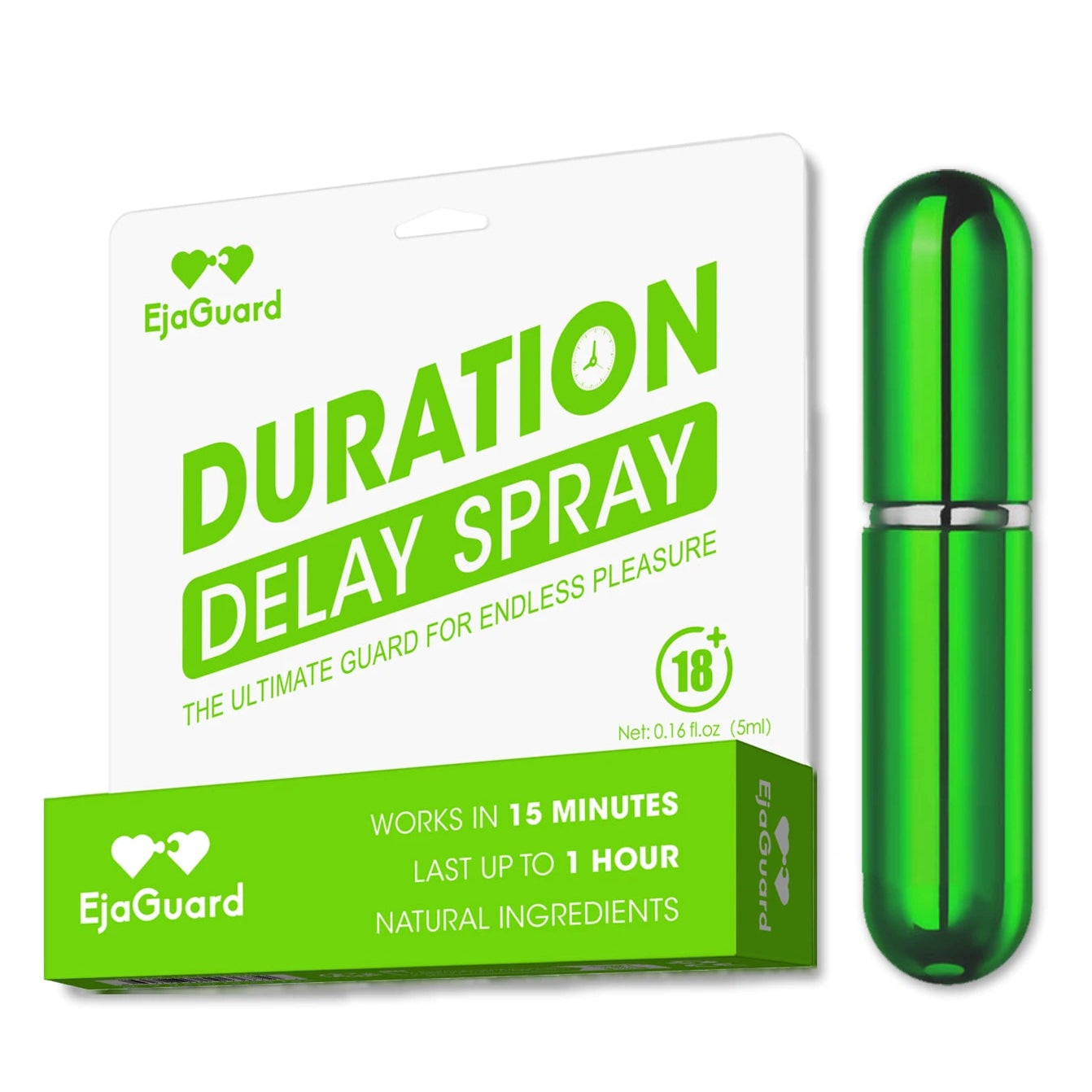
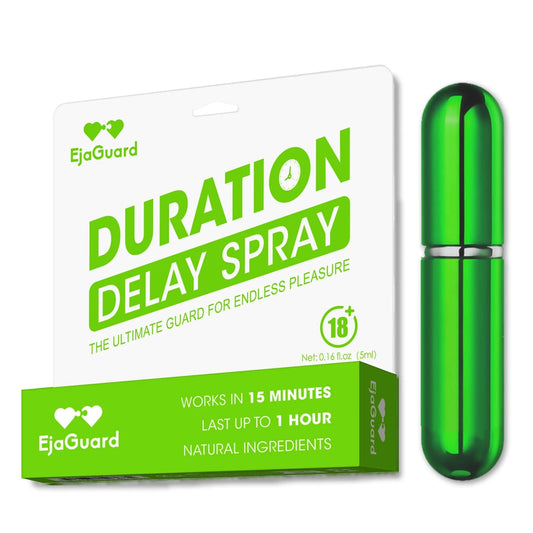
EjaGuard is one product in the delay-spray category that readers may wish to learn about when comparing available options. Its product information page provides details about the product itself. As with any topical product, it is important to read the current ingredient list and directions rather than assuming its effects or suitable use based on the category alone.

The most important consideration is whether a product is appropriate for the individual and whether its use is consistent with the manufacturer's instructions. Do not assume that more product will provide better control, and do not apply it to irritated or broken skin. Pay attention to warnings about partner transfer and follow any instructions regarding washing or waiting before sexual contact.
Readers can also consult EjaGuard's guide to using delay spray for product-use information. This should be treated as product guidance, not as a substitute for medical assessment. If a person has persistent PE, significant distress, an unexplained change in sexual function, or questions about medication interactions, it is worth speaking with a qualified healthcare professional.

11. When to Seek Professional Advice
It may be helpful to speak with a healthcare professional if ejaculation is consistently difficult to delay, causes significant distress, or affects relationships and quality of life. You do not need to wait until the problem becomes severe before asking for advice.
An assessment typically begins with a medical and sexual history. A clinician may ask when the problem started, whether it occurs consistently, how much control the person feels they have, and whether it is associated with anxiety, erection difficulties, pain, urinary symptoms, medication changes, or other concerns.
The AUA/SMSNA clinical guideline supports an individualized assessment rather than assuming that every person with PE has the same underlying cause. Depending on the history and findings, a clinician may discuss behavioral approaches, counseling, medication, topical treatments, or other appropriate options.
If someone also suspects they may have ADHD, that concern can be raised during the appointment or with a clinician who evaluates adult ADHD. A sexual health professional and an ADHD clinician may address different aspects of the situation, and coordination can be useful when symptoms or treatments overlap.
Seek prompt medical advice if ejaculation difficulties occur alongside new or significant pain, blood in semen, urinary symptoms, or a sudden change in sexual function. These symptoms do not necessarily indicate a serious condition, but they deserve appropriate evaluation rather than being attributed automatically to ADHD or anxiety.
Most importantly, seeking help is not an admission of failure. Sexual function is affected by a combination of physical, psychological, interpersonal, and situational factors. A clear assessment can help separate those factors and make treatment decisions more targeted.
12. A More Balanced Approach to ADHD and PE
ADHD and premature ejaculation may be related for some people, but the relationship is not yet fully understood. Emerging research suggests an association between ADHD and sexual difficulties, including PE, while differences in study design and the observational nature of much of the evidence limit conclusions about cause and effect.
Attention regulation, impulsivity, emotional responses, anxiety, medication effects, and sexual context may all be relevant to an individual's experience. None should be assumed to explain every case, and PE alone does not indicate ADHD.
A practical approach begins with identifying the actual difficulty. Some men may benefit from learning to recognize rising arousal, adjusting stimulation, or reducing performance pressure. Others may need a medical assessment, medication review, counseling, or a combination of strategies. A delay spray may be one option for managing sensation, but it does not replace assessment of other contributing factors.
The aim should not be to force every sexual encounter to meet a particular time target. It is to develop a more comfortable and reliable sense of control, reduce distress, and find an approach that fits the person's needs.
If you are experiencing both attention-related difficulties and concerns about ejaculation, you do not need to decide on your own whether one causes the other. Treat them as valid concerns, discuss them openly with a qualified professional when needed, and use the available evidence as a guide rather than a reason to label yourself.
Can ADHD be related to premature ejaculation? Explore what current research says about attention, impulsivity, emotional regulation, medication, and sexual control. Learn why the association does not prove causation, which practical strategies may help, and when to consider professional advice or treatment options.

